Mehendi / Henna
Lawsonia inermis
Also known as Egyptian Priven, Cypress Shrub, Camphire, Samphire
- Habit
- Shrub
- Found in India
- Maharashtra, Telangana, Tamil Nadu & more
- Flowering
- December-May
How to identify Mehendi
Identify Mehendi by combining habit, leaf characters, flower or fruit details, location, and its family pattern. Do not rely on one feature alone.
- Look for a shrub habit.
- Check the distinctive field mark: Leaves used to make henna dye.
- Confirm leaf arrangement: Opposite.
- Confirm flower colour: White.
- Confirm fruit type: Capsule.
- Use the leaf pattern: opposite leaf arrangement, simple leaves, entire leaf margins, pinnate venation.
- In season, compare flowering and fruiting time: December-May.
Plant Details
- Scientific name
- Lawsonia inermis
- Genus
- Lawsonia
- Family
- Lythraceae
- Habit
- Shrub
- Habitat
- Grown as hedge plant
- Habitat type
- Cultivated
- Distribution
- Central Asia, India; cultivated throughout warm tropics
- Found in India
- Maharashtra, Telangana, Tamil Nadu, Kerala, Rajasthan, Andhra Pradesh, Gujarat, Puducherry, Chhattisgarh, Assam, Haryana, Karnataka, West Bengal, Andaman & Nicobar Islands, Bihar, Himachal Pradesh, Uttarakhand
- Flowering & fruiting
- December-May
- Conservation status
- Not Evaluated (NE)
Leaf characters
- Leaf arrangement
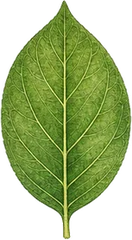
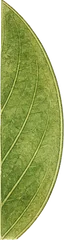
- OppositerecordedTwo leaves arise from the stem at the same point, facing each other.“The leaves grow opposite each other on the stem.” — Wikipedia, CC BY-SA 4.0
Typical of the family
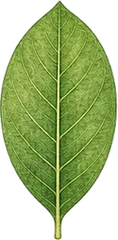
Characters marked “recorded” are for Mehendi itself; the rest are typical of the Lythraceae family.
Flower & fruit characters
- Flower colour
- Whiterecorded
- Fruit type
- CapsulerecordedA dry fruit from a fused ovary that splits open at maturity to release seeds.“Henna fruits are small, brownish capsules, 4–8 mm (0.16–0.31 in) in diameter, with 32–49 seeds per fruit, and open irregularly into four splits.” — Wikipedia, CC BY-SA 4.0
Typical of the family
- Flower symmetry
- Zygomorphic (bilaterally symmetrical)
- Fruit
- Berry
Characters marked “recorded” are for Mehendi itself; the rest are typical of the Lythraceae family — flowering plants only.
Local Names
- Hindi
- Mehendi मेहेंदी, Mehendi, Mehndi
- Nepali
- मेहन्दीको बोट
- Bengali
- Mehedi, মেহেদি, মেহেদী
- Tamil
- Marithondi, Marudaani, மருதோன்றி
- Telugu
- గోరింట, గోరింటాకు
- Kannada
- ಗೋರಂಟಿ Goranti, ಮದರಂಗಿ Madarangi, ಮದರಂಗ Madaranga, Gorante
- Malayalam
- Mailanchi, മൈലാഞ്ചി, Henna
- Marathi
- मेंदी Mendi, Mendhi, मेंदी
- Sanskrit
- Mendika
- Gujarati
- Medi
- Odia
- Benjati
- Punjabi
- Mehndri
- Urdu
- Mehndri, Henna
Mehendi in India
Henna is the shrub behind India's mehndi — Mehendi मेहेंदी (Hindi), Marithondi (Tamil), గోరింట (Telugu), ಗೋರಂಟಿ Goranti (Kannada), Mailanchi (Malayalam), मेंदी Mendi (Marathi). Lawsonia inermis is grown across Maharashtra, Tamil Nadu, Andhra Pradesh, Telangana, Kerala, Rajasthan, with Rajasthan's Sojat a famous henna-growing centre, and is also planted as a fragrant hedge.
Uses
Its dried, powdered leaves stain skin and hair a rich red-brown and are central to weddings, festivals and everyday hair colouring across India. The fragrant flowers are used in perfumery, and the plant has attributed cooling uses in tradition.
How to Identify Mehendi
A much-branched shrub, sometimes spine-tipped, with small, smooth, opposite oval leaves. It carries dense clusters of small, sweetly fragrant cream-white to pink flowers, followed by tiny round capsules. The leaves are the source of the dye.
Frequently Asked Questions
- What is Henna called in different Indian languages?
- Mehendi मेहेंदी (Hindi); Marithondi (Tamil); గోరింట (Telugu); ಗೋರಂಟಿ Goranti (Kannada); Mailanchi (Malayalam); मेंदी Mendi (Marathi); Mehedi (Bengali); Medi (Gujarati); Benjati (Odia); Mehndri (Punjabi); Mendika (Sanskrit).
- Which part of henna is used for mehndi?
- The leaves are dried and ground to a powder; the lawsone pigment in them stains skin and hair the characteristic red-brown.
- Where is henna grown in India?
- It is grown across the drier regions, with Sojat in Rajasthan especially renowned as a major henna-producing centre.
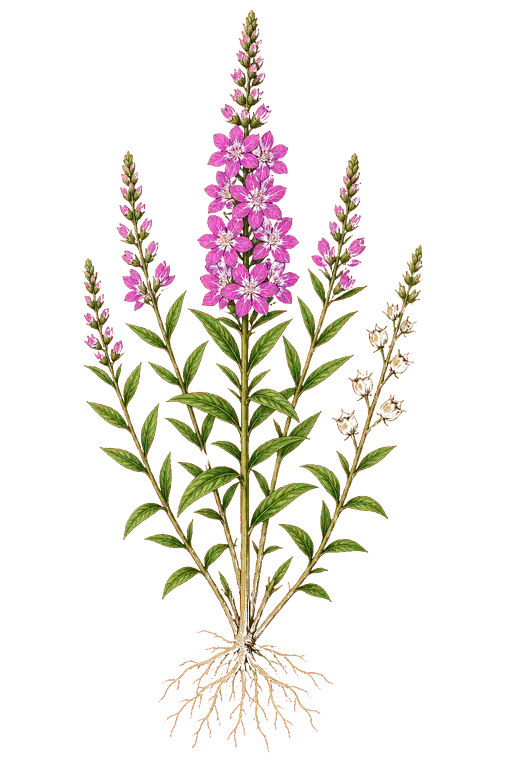
Lythraceae
Loosestrife/Henna family
Mehendi belongs to the Lythraceae family.
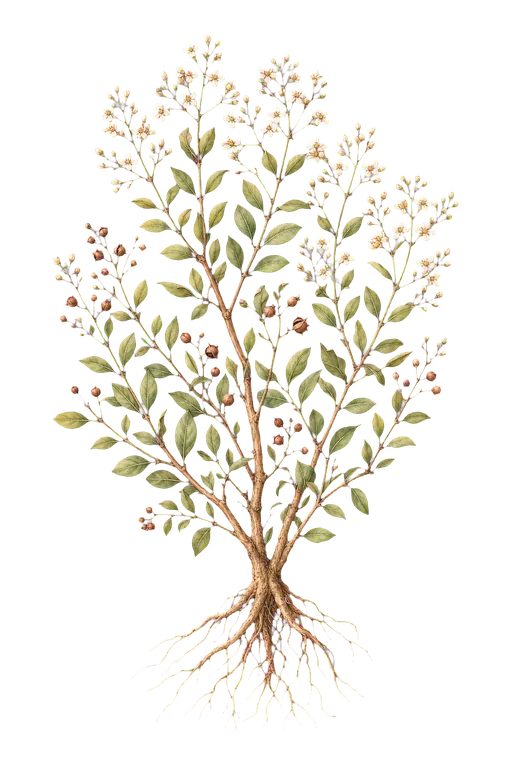
The illustration represents the family — not necessarily this exact species.
Explore the Lythraceae familySnap it. Know it.
Point your camera at Mehendi or any plant and SASYA identifies it instantly — on-device, offline, and private.
Common plant problems
If you are starting from symptoms instead of a diagnosis, use the plant disease symptom checker to narrow the cause before treating.
All plant problem & care guidesMore in Lythraceae
View all LythraceaeSources: GBIF — Lawsonia inermis (India distribution & vernacular names) (CC BY 4.0) · iNaturalist — Lawsonia inermis (regional names, India observations) (CC BY 4.0) · Wikipedia — Lawsonia inermis (background/comprehension only) (CC BY-SA 4.0)