
Jarul / Pride Of India
Lagerstroemia speciosa
Also known as Queen Crape Myrtle, Queen Of Flowers
- Habit
- Tree
- Found in India
- Maharashtra, Karnataka, Tamil Nadu & more
- Flowering
- March-January
How to identify Jarul
Identify Jarul by combining habit, leaf characters, flower or fruit details, location, and its family pattern. Do not rely on one feature alone.
- Look for a tree habit.
- Check the distinctive field mark: Crinkled, crepe-paper-textured petals.
- Confirm leaf type: Simple.
- Confirm leaf shape: Elliptic.
- Confirm flower colour: Purple.
- Confirm flower arrangement: Panicle.
- In season, compare flowering and fruiting time: March-January.
Plant Details
- Scientific name
- Lagerstroemia speciosa
- Genus
- Lagerstroemia
- Family
- Lythraceae
- Habit
- Tree
- Habitat
- Semi-evergreen and Evergreen forests, mostly along banks of streams
- Native to
- India
- Distribution
- Indo-Malesia, Pakistan, Myanmar, New Guinea, China, Indonesia
- Found in India
- Maharashtra, Karnataka, Tamil Nadu, West Bengal, Kerala, Odisha, Telangana, Andhra Pradesh, Bihar, Rajasthan, Assam, Uttar Pradesh, Mizoram, Gujarat, Madhya Pradesh, Delhi, Goa, Arunachal Pradesh, Uttarakhand, Jharkhand, Chandigarh, Chhattisgarh, Puducherry, Andaman & Nicobar Islands, Haryana, Jammu & Kashmir, Manipur, Meghalaya
- Flowering & fruiting
- March-January
- Conservation status
- Not Evaluated (NE)
Leaf characters
- Leaf type
- SimplerecordedA single, undivided leaf blade.“The leaves are simple, deciduous, oval to elliptic with stout petiole, 8–15 cm (3.1–5.9 in) long and 3–7 cm (1.2–2.8 in) broad, with an acute apex.” — Wikipedia, CC BY-SA 4.0
- Leaf shape
- EllipticrecordedWidest at the middle, tapering evenly at both ends.“The leaves are simple, deciduous, oval to elliptic with stout petiole, 8–15 cm (3.1–5.9 in) long and 3–7 cm (1.2–2.8 in) broad, with an acute apex.” — Wikipedia, CC BY-SA 4.0
- Leaf surface
- GlabrousrecordedSmooth, hairless.“It has simple leaves with, glabrous, large, elliptic or oblong lanceolate.” — Wikipedia, CC BY-SA 4.0
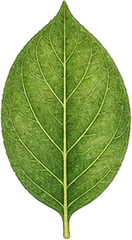
Characters marked “recorded” are for Jarul itself; the rest are typical of the Lythraceae family.
Flower & fruit characters
- Flower colour
- PurplerecordedPurple or violet
- Flower arrangement
- PaniclerecordedA branching cluster of clusters.“The flowers are produced in erect panicles 20–40 cm (7.9–15.7 in) long, each flower with six white to purple petals 2–3.5 cm (0.79–1.38 in) long.” — Wikipedia, CC BY-SA 4.0
- Fruit type
- CapsulerecordedA dry fruit from a fused ovary that splits open at maturity to release seeds.“The fruits are ellipsoid or sub-globose woody capsules.” — Wikipedia, CC BY-SA 4.0
Typical of the family
- Flower symmetry
- Zygomorphic (bilaterally symmetrical)
- Fruit
- Berry
Characters marked “recorded” are for Jarul itself; the rest are typical of the Lythraceae family — flowering plants only.
Local Names
- Hindi
- जरूल Jarul, Ajhar, Arjuna, Bondaro
- Bengali
- জারুল Jarul, জারুল
- Tamil
- செம்மருதம் Cem-Marutam, கதலி Kadali, பூமருது Pu-Marutu
- Telugu
- సొగసులచెట్టు Sogasulachettu, వారగోగు Varagogu, సొగసులచెట్టు
- Kannada
- ಚೆಳ್ಳೆ Chelle, ಹೊಳೆ ದಾಸವಾಳ Hole Daasavaala, ಹೊಳೆಮತ್ತಿ Holematti
- Malayalam
- അടന്പു Adambu, മണിമരുത് Manimaruth, പൂമരുത് Puumaruth
- Marathi
- जारूळ Jarul, मोठा बोंडारा Motha Bondara, ताम्हण Tamhan
About Jarul
Pride of India (Lagerstroemia speciosa) is a tree in the Lythraceae family. In India it has been recorded in Maharashtra, Karnataka, Tamil Nadu and 25 other states. It grows in semi-evergreen and Evergreen forests, mostly along banks of streams. Flowering and fruiting run from March to January.
Uses
Locally it is long used in traditional medicine, cut for timber and furniture and planted as an ornamental. Those medicinal uses are traditional attributions, not medical advice.
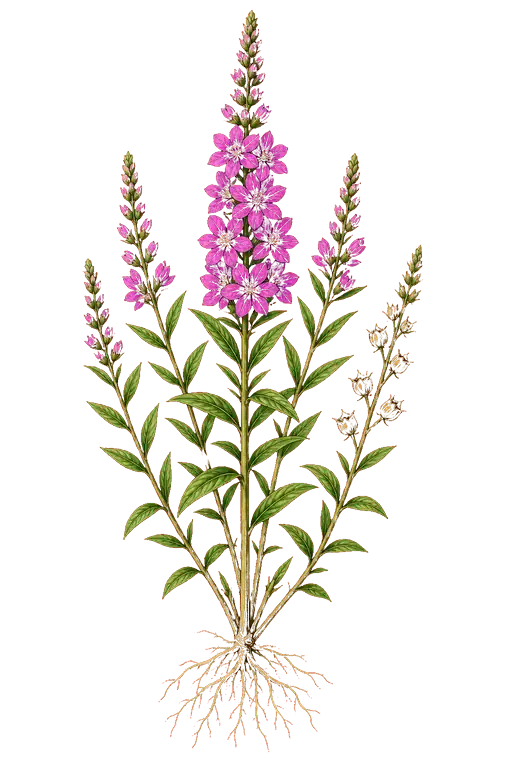
Lythraceae
Loosestrife/Henna family
Jarul belongs to the Lythraceae family.
The illustration represents the family — not necessarily this exact species.
Explore the Lythraceae familySnap it. Know it.
Point your camera at Jarul or any plant and SASYA identifies it instantly — on-device, offline, and private.
Common plant problems
If you are starting from symptoms instead of a diagnosis, use the plant disease symptom checker to narrow the cause before treating.
All plant problem & care guides