
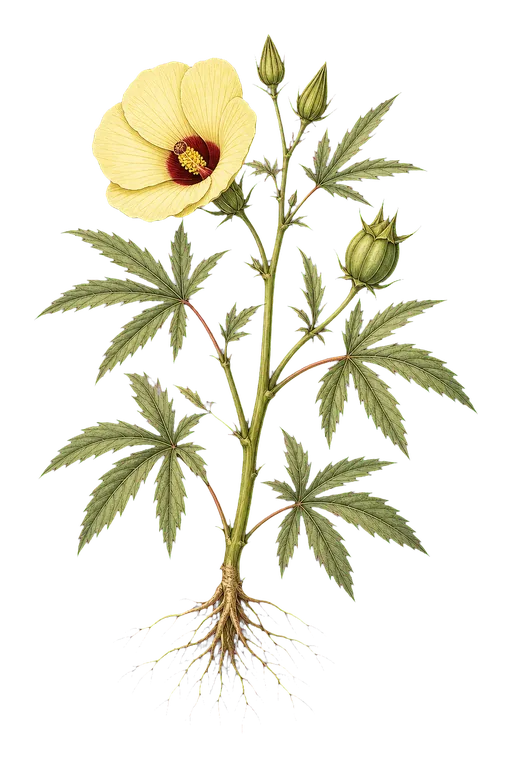
Patsan / Hemp
Hibiscus cannabinus
Also known as Kenap, Mesta Deccan Hemp
- Habit
- Shrub
- Found in India
- Karnataka, Himachal Pradesh, Madhya Pradesh & more
- Flowering
- September-January
How to identify Patsan
Identify Patsan by combining habit, leaf characters, flower or fruit details, location, and its family pattern. Do not rely on one feature alone.
- Look for a shrub habit.
- Confirm leaf shape: Lanceolate.
- Confirm leaf margin: Lobed.
- Confirm flower colour: Yellow.
- Confirm fruit type: Capsule.
- Use the leaf pattern: alternate leaf arrangement, simple leaves, toothed leaf margins, palmate venation.
- In season, compare flowering and fruiting time: September-January.
Plant Details
- Scientific name
- Hibiscus cannabinus
- Genus
- Hibiscus
- Family
- Malvaceae
- Habit
- Shrub
- Native to
- Africa
- Distribution
- Tropical & sub-Tropical regions of the World
- Found in India
- Karnataka, Himachal Pradesh, Madhya Pradesh, Maharashtra, Tamil Nadu, Uttarakhand
- Flowering & fruiting
- September-January
- Conservation status
- Not Evaluated (NE)
Leaf characters
- Leaf shape
- LanceolaterecordedLong and narrow, tapering to a point, like a lance head.“leaves near the base of the stems are deeply lobed (3 to 7 lobes) and leaves near the top of the stem are shallowly lobed or unlobed lanceolate.” — Wikipedia, CC BY-SA 4.0
- Leaf margin
- LobedrecordedThe edge is divided into rounded or pointed sections that don't reach the midrib.“leaves near the base of the stems are deeply lobed (3 to 7 lobes) and leaves near the top of the stem are shallowly lobed or unlobed lanceolate.” — Wikipedia, CC BY-SA 4.0

Typical of the family
- Arrangement
- Alternate
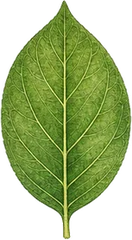

Characters marked “recorded” are for Patsan itself; the rest are typical of the Malvaceae family.
Flower & fruit characters
- Flower colour
- Yellowrecorded
- Fruit type
- CapsulerecordedA dry fruit from a fused ovary that splits open at maturity to release seeds.“The fruit is a capsule 2 cm (0.8 in) in diameter and contains several seeds.” — Wikipedia, CC BY-SA 4.0
Typical of the family
- Flower symmetry
- Actinomorphic (radially symmetrical)
- Inflorescence
- Solitary
- Fruit
- Capsule
Characters marked “recorded” are for Patsan itself; the rest are typical of the Malvaceae family — flowering plants only.
Local Names
- Hindi
- पटसन Patsan, सन San
- Bengali
- Patsan, Ambari
- Tamil
- பலுஂகு Palungu, Pulimanji, புளிச்சக்கீரை
- Kannada
- ಪುಂಡಿ Pundi, ಗೋಗು Gogu ಪುಂಡ್ರಿಕೆ Pundrike ಹೊಲದಪುಂಡ್ರಿಕೆ Holada pundrike, ಪಿಂಡಿ Pindi
- Malayalam
- കംജരു Kanjaru, മെസ്റ്റ, Kenaf
- Marathi
- अंबाडी Ambadi
Patsan in India
Kenaf or mesta is grown both for fibre and for its tangy edible leaves — पटसन Patsan (Hindi), பலுஂகு Palungu (Tamil), ಪುಂಡಿ Pundi (Kannada), കംജരു Kanjaru (Malayalam), अंबाडी Ambadi (Marathi), Patsan (Bengali). Hibiscus cannabinus is cultivated across Tamil Nadu, Telangana, Maharashtra, Andhra Pradesh, Mizoram, Karnataka, a relative of jute and a kitchen-garden green.
Uses
It is an important bast-fibre crop (a jute substitute) used for sacking, rope and paper, and at the same time its pleasantly sour leaves (ambadi/gongura/pulicha keerai) are a beloved cooking green, made into dals, chutneys and the famous gongura pickle.
How to Identify Patsan
A tall, slender annual with often reddish prickly stems and deeply palmately lobed (hemp-like) upper leaves. The large pale-yellow hibiscus flowers have a deep maroon centre, and the leaves and calyces have a distinctly sour taste.
Frequently Asked Questions
- What is Hemp called in different Indian languages?
- पटसन Patsan (Hindi); பலுஂகு Palungu (Tamil); ಪುಂಡಿ Pundi (Kannada); കംജരു Kanjaru (Malayalam); अंबाडी Ambadi (Marathi); Patsan (Bengali).
- Is mesta the same as gongura?
- Yes — the sour leaves of this plant are the gongura / ambadi / pulicha keerai used in dals, chutneys and the famous gongura pickle.
- What is kenaf fibre used for?
- Kenaf is a bast-fibre crop used like jute for sacking, rope, twine and paper, while the same plant's leaves are eaten as a sour green.
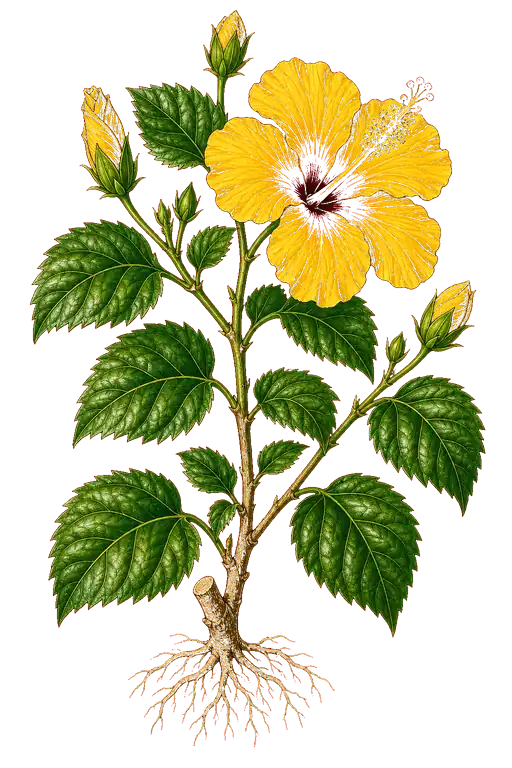
Malvaceae
Mallow/Hibiscus family
Patsan belongs to the Malvaceae family.
The illustration represents the family — not necessarily this exact species.
Explore the Malvaceae familySnap it. Know it.
Point your camera at Patsan or any plant and SASYA identifies it instantly — on-device, offline, and private.
Common plant problems
If you are starting from symptoms instead of a diagnosis, use the plant disease symptom checker to narrow the cause before treating.
All plant problem & care guidesMore in Malvaceae
View all MalvaceaeSources: GBIF — Hibiscus cannabinus (India distribution & vernacular names) (CC BY 4.0) · iNaturalist — Hibiscus cannabinus (regional names, India observations) (CC BY 4.0) · Wikipedia — Hibiscus cannabinus (background/comprehension only) (CC BY-SA 4.0)