
Kumbhi / Ceylon Oak Tree
Careya arborea
Also known as Wild Guava, Kumbi Tree, Patana Oak, Slow Match Tree
- Habit
- Tree
- Found in India
- Maharashtra, Karnataka, Kerala & more
- Flowering
- February-August
How to identify Kumbhi
Identify Kumbhi by combining habit, leaf characters, flower or fruit details, location, and its family pattern. Do not rely on one feature alone.
- Look for a tree habit.
- Check the distinctive field mark: Large white-pink flowers with a mass of stamens (wild guava).
- Confirm flower colour: White.
- In season, compare flowering and fruiting time: February-August.
- In India, compare location records such as Maharashtra, Karnataka, Kerala, Tamil Nadu and nearby regions.
- Confirm it sits within the Lecythidaceae family pattern, then compare close relatives before deciding it is Kumbhi.
Plant Details
- Scientific name
- Careya arborea
- Genus
- Careya
- Family
- Lecythidaceae
- Habit
- Tree
- Habitat
- Moist and dry deciduous forests, also in the plains
- Habitat type
- Forest
- Distribution
- Tropical Asia
- Found in India
- Maharashtra, Karnataka, Kerala, Tamil Nadu, Telangana, Goa, Chhattisgarh, Madhya Pradesh, Assam, Gujarat, Odisha, Uttarakhand, West Bengal, Andhra Pradesh, Arunachal Pradesh, Himachal Pradesh, Uttar Pradesh
- Flowering & fruiting
- February-August
- Conservation status
- Not Evaluated (NE)
Flower & fruit characters
- Flower colour
- Whiterecorded
Characters marked “recorded” are for Kumbhi itself; the rest are typical of the Lecythidaceae family — flowering plants only.
Local Names
- Hindi
- कुम्भी Kumbhi,कुंबी kumbi
- Nepali
- कुम्भी Kumbhee, भोर्ले Bhorle
- Bengali
- Vakamba, Kumhi, Kumbhi, কুম্ভি
- Tamil
- Aima, Karekku, Puta-tanni-maram, கல் தேக்கு
- Kannada
- ಅಲಗವ್ವೆಲೆ Alagavvele, ದಡ್ಡಾಲ, ದದ್ದಾಲ Daddala
- Malayalam
- Alam, Paer, Peelam
- Marathi
- कुम्भा Kumbha, कुंभा, कुंभी
Kumbhi in India
This deciduous tree, known as कुम्भी Kumbhi (Hindi), Aima (Tamil), ಅಲಗವ್ವೆಲೆ Alagavvele (Kannada), Alam (Malayalam), कुम्भा Kumbha (Marathi), Vakamba (Bengali), is a common sight in dry forest. Careya arborea is found across , typically in dry and moist deciduous forest.
Uses
Its wood has been used for construction and tool handles, and its bark, leaves and flowers have a history of traditional folk use in various regions — an attributed traditional use, not a medical claim.
How to Identify Kumbhi
A deciduous tree with large, broad leaves clustered near the branch tips, turning red before falling. Large, showy flowers with numerous long white-to-pink stamens open at night and have a strong fragrance, followed by a large, hard, round to egg-shaped fruit.
Frequently Asked Questions
- What is Ceylon Oak Tree called in different Indian languages?
- कुम्भी Kumbhi (Hindi); Aima (Tamil); ಅಲಗವ್ವೆಲೆ Alagavvele (Kannada); Alam (Malayalam); कुम्भा Kumbha (Marathi); Vakamba (Bengali).
- Why do the leaves turn red before falling?
- Like many deciduous trees, it reabsorbs chlorophyll before shedding leaves in the dry season, revealing red and orange pigments already present in the leaf.
- Why do the flowers open at night?
- Its large, fragrant, pale flowers are adapted to attract night-active pollinators such as moths and bats.
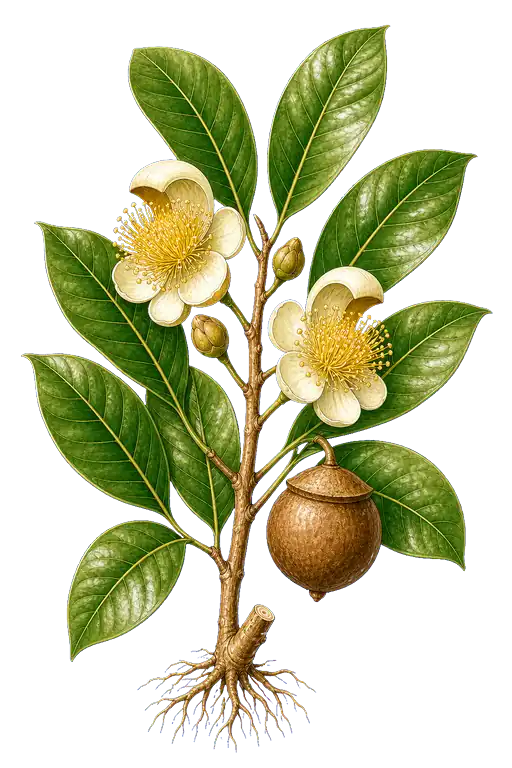
Lecythidaceae
Lecythis Or Brasil Nut Family
Kumbhi belongs to the Lecythidaceae family.
The illustration represents the family — not necessarily this exact species.
Explore the Lecythidaceae familySnap it. Know it.
Point your camera at Kumbhi or any plant and SASYA identifies it instantly — on-device, offline, and private.
Common plant problems
If you are starting from symptoms instead of a diagnosis, use the plant disease symptom checker to narrow the cause before treating.
All plant problem & care guidesMore in Lecythidaceae
View all LecythidaceaeSources: GBIF — Careya arborea (India distribution & vernacular names) (CC BY 4.0) · Wikipedia — Careya arborea (background/comprehension only) (CC BY-SA 4.0)