
Bankhanghi / Hairy Indian Mallow
Abutilon hirtum
- Habit
- Shrub
- Found in India
- Tamil Nadu, Karnataka, Andhra Pradesh & more
- Flowering
- September-April
How to identify Bankhanghi
Identify Bankhanghi by combining habit, leaf characters, flower or fruit details, location, and its family pattern. Do not rely on one feature alone.
- Look for a shrub habit.
- Confirm leaf margin: Ordinary.
- Confirm flower colour: Yellow.
- In season, compare flowering and fruiting time: September-April.
- In India, compare location records such as Tamil Nadu, Karnataka, Andhra Pradesh, Gujarat and nearby regions.
- Confirm it sits within the Malvaceae family pattern, then compare close relatives before deciding it is Bankhanghi.
Plant Details
- Scientific name
- Abutilon hirtum
- Genus
- Abutilon
- Family
- Malvaceae
- Habit
- Shrub
- Native to
- Old World tropics
- Distribution
- Tropical & sub-Tropical regions of the Old World
- Found in India
- Tamil Nadu, Karnataka, Andhra Pradesh, Gujarat, Maharashtra, West Bengal, Kerala, Uttarakhand, Madhya Pradesh, Rajasthan, Telangana, Himachal Pradesh, Odisha
- Flowering & fruiting
- September-April
- Conservation status
- Not Evaluated (NE)
Leaf characters
- Leaf margin
- Ordinaryrecorded
Typical of the family
- Arrangement
- Alternate
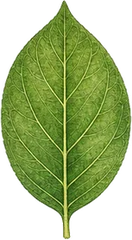

Characters marked “recorded” are for Bankhanghi itself; the rest are typical of the Malvaceae family.
Flower & fruit characters
- Flower colour
- Yellowrecorded
Typical of the family
- Flower symmetry
- Actinomorphic (radially symmetrical)
- Inflorescence
- Solitary
- Fruit
- Capsule
Characters marked “recorded” are for Bankhanghi itself; the rest are typical of the Malvaceae family — flowering plants only.
Local Names
- Hindi
- बनकंघी Bankhanghi
- Tamil
- Vadattuti
- Kannada
- ಹೆತ್ತುತ್ತಿ Hettutti
- Malayalam
- Kuruntotti, ഊരകം
- Marathi
- बनकंघी Bankhanghi
About Bankhanghi
A member of the Malvaceae family, Hairy Indian Mallow (Abutilon hirtum) is a shrub. In India it has been recorded in Tamil Nadu, Karnataka, Andhra Pradesh and 10 other states. Flowering and fruiting run from September to April.
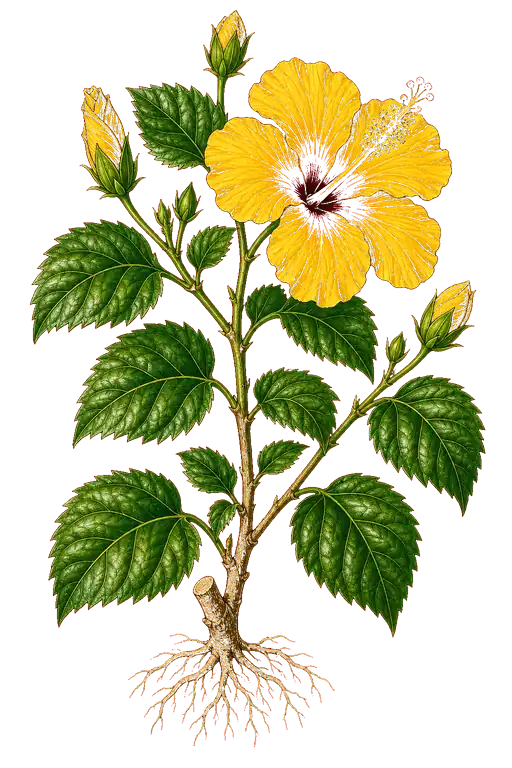
Malvaceae
Mallow/Hibiscus family
Bankhanghi belongs to the Malvaceae family.
The illustration represents the family — not necessarily this exact species.
Explore the Malvaceae familySnap it. Know it.
Point your camera at Bankhanghi or any plant and SASYA identifies it instantly — on-device, offline, and private.
Common plant problems
If you are starting from symptoms instead of a diagnosis, use the plant disease symptom checker to narrow the cause before treating.
All plant problem & care guides