

Ghamara Bhaji / Coat Buttons
Tridax procumbens
Also known as Mexican Daisy
- Habit
- Herb
- Found in India
- Maharashtra, Tamil Nadu, Telangana & more
- Flowering
- Throughout the year
How to identify Ghamara Bhaji
Identify Ghamara Bhaji by combining habit, leaf characters, flower or fruit details, location, and its family pattern. Do not rely on one feature alone.
- Look for a herb habit.
- Check the distinctive field mark: Very common trailing lawn weed with small white daisies.
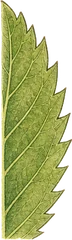
- Confirm leaf margin: Toothed.
- Confirm leaf surface: Glabrous (smooth, hairless).
- Confirm flower colour: Yellow.
- Confirm fruit type: Achene.
- Use the leaf pattern: opposite leaf arrangement, simple leaves, toothed leaf margins, pinnate venation.
Plant Details
- Scientific name
- Tridax procumbens
- Genus
- Tridax
- Family
- Asteraceae
- Habit
- Herb
- Habitat
- On plains to 1000m
- Habitat type
- Plains
- Native to
- Central America
- Distribution
- Tropics of the World
- Found in India
- Maharashtra, Tamil Nadu, Telangana, Andhra Pradesh, Kerala, Uttar Pradesh, Gujarat, Karnataka, Rajasthan, Odisha, West Bengal, Uttarakhand, Goa, Chhattisgarh, Madhya Pradesh, Bihar, Delhi, Puducherry, Assam, Haryana, Punjab, Himachal Pradesh, Jharkhand, Chandigarh, Jammu & Kashmir, Tripura, Arunachal Pradesh, Lakshadweep, Meghalaya, Sikkim
- Flowering & fruiting
- Throughout the year
- Conservation status
- Not Evaluated (NE)
Leaf characters
- Leaf margin
- ToothedrecordedA saw-like or jagged edge (serrate or dentate).“The leaves are toothed and generally arrowhead-shaped.” — Wikipedia, CC BY-SA 4.0
- Leaf surface
- Glabrous (smooth, hairless)recorded
Typical of the family
- Arrangement
- Opposite
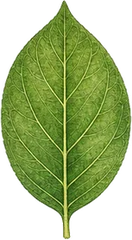
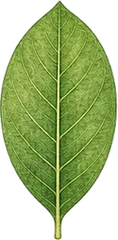
Characters marked “recorded” are for Ghamara Bhaji itself; the rest are typical of the Asteraceae family.
Flower & fruit characters
- Flower colour
- Yellowrecorded
- Fruit type
- AchenerecordedA small, dry, single-seeded fruit that does not split open.“Its fruit is a hard achene covered with stiff hairs and having a feathery, plumelike white pappus at one end.” — Wikipedia, CC BY-SA 4.0
Typical of the family
- Flower symmetry
- Actinomorphic (radially symmetrical)
- Inflorescence
- Head
- Fruit
- Achene
Characters marked “recorded” are for Ghamara Bhaji itself; the rest are typical of the Asteraceae family — flowering plants only.
Local Names
- Hindi
- घमरा भाजी Ghamara Bhaji, कानफुली Kanphuli, खल मुरिया Khal Muriya
- Nepali
- हुसुरे झार Husure Jhaar, कुरकुरे झार Kurakure Jhaar, पुतली झार Putalee Jhaar
- Bengali
- কানাইয়া Kanaiya, কানফুলি Kanaphuli, পরদেশি ভাঙড়া Pardesi Bhangara
- Tamil
- கிணற்றுப்பாசான் Kinarruppacan, வெட்டுக்காயப் பூண்டு Vettukkaya-P-Puntu, வெட்டுக்காயத்தழை Vettukkaaya-Thalai
- Telugu
- బలపాకు Balapaaku, గాయపాకు Gaayapaaku, గడ్డిచేమంతి Gaddi Chamanthi
- Kannada
- ಅಡ್ಡಿಕೆ ಸೊಪ್ಪು Addike Soppu, ಅಟ್ಟಿಗೆ ಸೊಪ್ಪು Attige Soppu, ಗಬ್ಬು ಸಣ್ಣ ಶಾವಂತಿ Gabbu Sanna Shaavanthi
- Malayalam
- കുമ്മിണിപ്പച്ച Kumminippacha, കുറികൂട്ടിചീര Kurikootticheera, മുറിയമ്പച്ചില Muriyampachila
- Marathi
- बंदुकीचे फूल Bandukiche Phul, दगडी पाला Dagadi Paala, एकदांडी Ekdandi, एकदांडी
- Gujarati
- પરદેશી ભાંગરો
Ghamara Bhaji in India
This small daisy is one of the commonest weeds of Indian roadsides, gardens and waste ground — घमरा भाजी Ghamara Bhaji (Hindi), கிணற்றுப்பாசான் Kinarruppacan (Tamil), బలపాకు Balapaaku (Telugu), ಅಡ್ಡಿಕೆ ಸೊಪ್ಪು Addike Soppu (Kannada), കുമ്മിണിപ്പച്ച Kumminippacha (Malayalam), बंदुकीचे फूल Bandukiche Phul (Marathi). Tridax procumbens, from Central America, has naturalised throughout the country and is recorded across Maharashtra, Tamil Nadu, Telangana, Andhra Pradesh, Kerala, Gujarat.
Uses
Despite being a weed, it is a well-known household first-aid plant: crushed leaves are a traditional remedy applied to minor cuts to stop bleeding — an attributed folk use, not medical advice. It is also grazed by livestock and visited by butterflies.
How to Identify Ghamara Bhaji
A low, sprawling, rough-hairy herb with toothed, roughly arrow-shaped leaves. The small flower heads sit on long, thin stalks and have a yellow centre ringed by a few pale, three-toothed white-to-cream ray florets, followed by a fluffy parachute seed head.
Frequently Asked Questions
- What is Coat Buttons called in different Indian languages?
- घमरा भाजी Ghamara Bhaji (Hindi); கிணற்றுப்பாசான் Kinarruppacan (Tamil); బలపాకు Balapaaku (Telugu); ಅಡ್ಡಿಕೆ ಸೊಪ್ಪು Addike Soppu (Kannada); കുമ്മിണിപ്പച്ച Kumminippacha (Malayalam); बंदुकीचे फूल Bandukiche Phul (Marathi); কানাইয়া Kanaiya (Bengali); પરદેશી ભાંગરો (Gujarati).
- What is Tridax (ghamra) used for?
- Crushed Tridax leaves are a common household remedy applied to small cuts and grazes to help stop bleeding; this is a traditional use rather than medical advice.
- Is Tridax a native Indian plant?
- No — it originates in Central America but has naturalised so thoroughly that it is now one of the most familiar weeds across India.
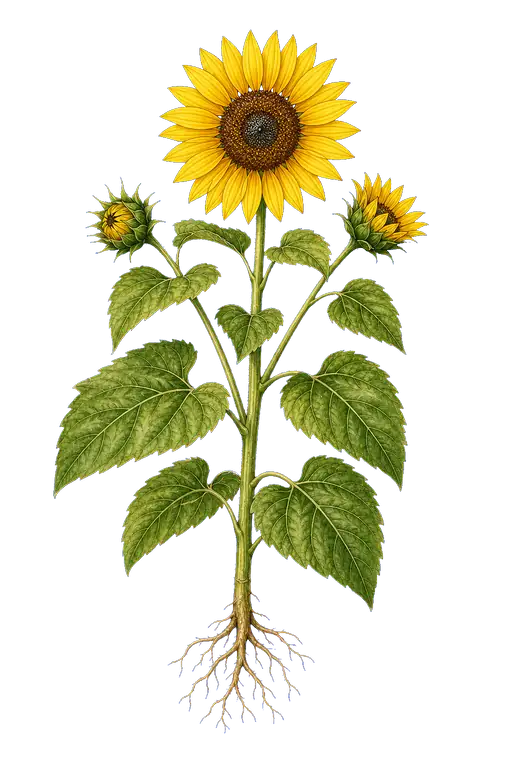
Asteraceae
Daisy/Sunflower family
Ghamara Bhaji belongs to the Asteraceae family.
The illustration represents the family — not necessarily this exact species.
Explore the Asteraceae familySnap it. Know it.
Point your camera at Ghamara Bhaji or any plant and SASYA identifies it instantly — on-device, offline, and private.
Common plant problems
If you are starting from symptoms instead of a diagnosis, use the plant disease symptom checker to narrow the cause before treating.
All plant problem & care guidesMore in Asteraceae
View all AsteraceaeSources: GBIF — Tridax procumbens (India distribution & vernacular names) (CC BY 4.0) · iNaturalist — Tridax procumbens (regional names, India observations) (CC BY 4.0) · Wikipedia — Tridax procumbens (background/comprehension only) (CC BY-SA 4.0)