
Chimine / Wight Thunbergia
Thunbergia fragrans var. fragrans
Also known as Thunbergia Wight Gem
- Habit
- Climber
- Flowering
- Throughout the year
How to identify Chimine
Identify Chimine by combining habit, leaf characters, flower or fruit details, location, and its family pattern. Do not rely on one feature alone.
- Look for a climber habit.
- Confirm leaf surface: Glabrous (smooth, hairless).
- Confirm flower colour: Purple.
- In season, compare flowering and fruiting time: Throughout the year.
- Confirm it sits within the Acanthaceae family pattern, then compare close relatives before deciding it is Chimine.
Plant Details
- Scientific name
- Thunbergia fragrans var. fragrans
- Genus
- Thunbergia
- Family
- Acanthaceae
- Habit
- Climber
- Habitat
- Dry Evergreen forests
- Habitat type
- Forest
- Distribution
- India, Sri Lanka, China, Nepal, Myanmar, Indo-Malaysia, Australia, Burma
- Flowering & fruiting
- Throughout the year
- Conservation status
- Not Evaluated (NE)
Leaf characters
- Leaf surface
- Glabrous (smooth, hairless)recorded
Typical of the family
- Arrangement
- Opposite
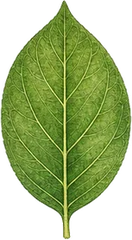


Characters marked “recorded” are for Chimine itself; the rest are typical of the Acanthaceae family.
Flower & fruit characters
- Flower colour
- PurplerecordedPurple or violet
Typical of the family
- Flower symmetry
- Zygomorphic (bilaterally symmetrical)
- Inflorescence
- Spike
- Fruit
- Capsule
Characters marked “recorded” are for Chimine itself; the rest are typical of the Acanthaceae family — flowering plants only.
Local Names
- Hindi
- चिमीन Chimine
- Tamil
- இந்திரபுஷ்பி Intirapushpi, காச நங்கை Kaasa Nangai, தண்ணிக் கொடி Thanni Kodi
- Telugu
- ఇంద్రతీగ Indrathige, పాలతీగ Palathiga
- Kannada
- ಹೆಗಲ ಬಳ್ಳಿ Hegala Balli, ಇಂದ್ರಪುಷ್ಪ Indrapushpa
- Malayalam
- നൂർവൻ വള്ളി Noorvan Valli
- Marathi
- चिमणी Chimani, चिमीन Chimine, चिमिन
About Chimine
Wight Thunbergia (Thunbergia fragrans var. fragrans) belongs to the Acanthaceae family, where it grows as a climber. It grows in dry Evergreen forests. It flowers and fruits through much of the year.
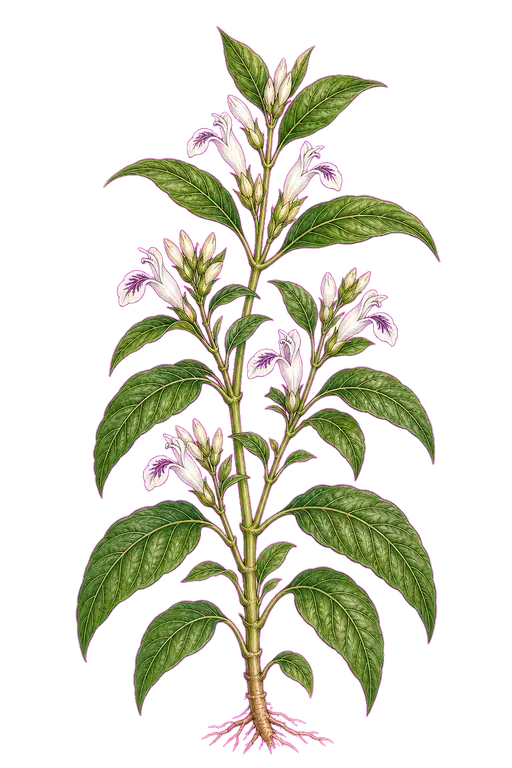
Acanthaceae
Acanthus family
Chimine belongs to the Acanthaceae family.
The illustration represents the family — not necessarily this exact species.
Explore the Acanthaceae familySnap it. Know it.
Point your camera at Chimine or any plant and SASYA identifies it instantly — on-device, offline, and private.
Common plant problems
If you are starting from symptoms instead of a diagnosis, use the plant disease symptom checker to narrow the cause before treating.
All plant problem & care guides