Hara Chirayata / Creat
Andrographis paniculata
- Habit
- Herb
- Found in India
- Tamil Nadu, Telangana, Kerala & more
- Flowering
- March-December
How to identify Hara Chirayata
Identify Hara Chirayata by combining habit, leaf characters, flower or fruit details, location, and its family pattern. Do not rely on one feature alone.
- Look for a herb habit.
- Check the distinctive field mark: Intensely bitter medicinal herb (king of bitters/kalmegh).
- Confirm leaf shape: Lanceolate.
- Confirm leaf surface: Glabrous.
- Confirm flower colour: White.
- Confirm flower arrangement: Panicle.
- Use the leaf pattern: opposite leaf arrangement, simple leaves, entire leaf margins, pinnate venation.
Plant Details
- Scientific name
- Andrographis paniculata
- Genus
- Andrographis
- Family
- Acanthaceae
- Habit
- Herb
- Habitat
- Scrub forests and plains
- Native to
- India, Sri Lanka
- Distribution
- India, Sri Lanka
- Found in India
- Tamil Nadu, Telangana, Kerala, West Bengal, Madhya Pradesh, Chhattisgarh, Maharashtra, Uttar Pradesh, Andhra Pradesh, Karnataka, Goa, Odisha, Gujarat, Jharkhand, Rajasthan, Assam, Bihar, Puducherry, Tripura, Himachal Pradesh, Uttarakhand
- Flowering & fruiting
- March-December
- Conservation status
- Not Evaluated (NE)
Leaf characters
- Leaf shape
- LanceolaterecordedLong and narrow, tapering to a point, like a lance head.“The lance-shaped leaves have hairless blades measuring up to 8 cm (3.1 in) long by 2.5 cm (0.98 in).” — Wikipedia, CC BY-SA 4.0
- Leaf surface
- GlabrousrecordedSmooth, hairless.“The lance-shaped leaves have hairless blades measuring up to 8 cm (3.1 in) long by 2.5 cm (0.98 in).” — Wikipedia, CC BY-SA 4.0
Typical of the family
- Arrangement
- Opposite
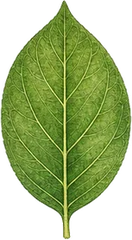
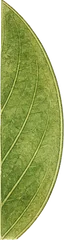

Characters marked “recorded” are for Hara Chirayata itself; the rest are typical of the Acanthaceae family.
Flower & fruit characters
- Flower colour
- Whiterecorded
- Flower arrangement
- PaniclerecordedA branching cluster of clusters.“The small flowers are pink, solitary, arranged in lax spreading racemes or panicles.” — Wikipedia, CC BY-SA 4.0
- Fruit type
- CapsulerecordedA dry fruit from a fused ovary that splits open at maturity to release seeds.“The fruit is a capsule around 2 cm (0.79 in) long and a few millimeters wide.” — Wikipedia, CC BY-SA 4.0
Typical of the family
- Flower symmetry
- Zygomorphic (bilaterally symmetrical)
- Inflorescence
- Spike
- Fruit
- Capsule
Characters marked “recorded” are for Hara Chirayata itself; the rest are typical of the Acanthaceae family — flowering plants only.
Local Names
- Hindi
- हरा चिरायता hara chirayata, कालमेघ kalmegh, कल्पनाथ kalpanath
- Nepali
- अंकुरि फुल ankuri phul, कालमेघ kalamegha, कलपनाथ kalapnath
- Bengali
- কালমেঘ kalmegh, কালমেঘ
- Tamil
- நிலவேம்பு nilavempu, நிலவேம்பு
- Kannada
- ನೆಲಬೇವು Nelabevu, ಊರಕಿರಿಯಾತು Urakiriyatu
- Malayalam
- കിരിയാത്ത kiriyatta, നിലവേപ്പ് nilavepp
- Marathi
- कालमेघ kalamegha, कल्प kalpa, ओले किरायत ole kirayat
- Sinhala
- හීන් බිම් කොහොඹ
Hara Chirayata in India
Kalmegh is famed for being one of the bitterest of all herbs — हरा चिरायता hara chirayata (Hindi), நிலவேம்பு nilavempu (Tamil), ನೆಲಬೇವು Nelabevu (Kannada), കിരിയാത്ത kiriyatta (Malayalam), कालमेघ kalamegha (Marathi), কালমেঘ kalmegh (Bengali), the 'king of bitters'. Andrographis paniculata is recorded across Telangana, Tamil Nadu, Kerala, West Bengal, Madhya Pradesh, Chhattisgarh, in the understorey and on cultivated ground.
Uses
The whole plant is a celebrated traditional remedy in Ayurveda, Siddha and Unani, taken for fevers and the liver — an attributed traditional use described for information, not medical advice. It is cultivated for the herbal trade across India.
How to Identify Hara Chirayata
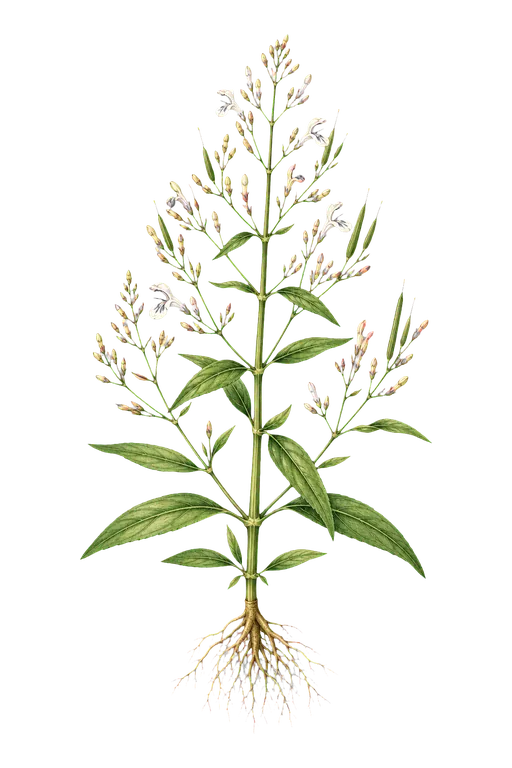
A slender erect annual herb with four-angled green stems and narrow, pointed, lance-shaped leaves. Small white flowers marked with rose-purple spots are carried on spreading sprays, followed by slim erect capsules. Every part tastes extremely bitter.
Frequently Asked Questions
- What is Creat called in different Indian languages?
- हरा चिरायता hara chirayata (Hindi); நிலவேம்பு nilavempu (Tamil); ನೆಲಬೇವು Nelabevu (Kannada); കിരിയാത്ത kiriyatta (Malayalam); कालमेघ kalamegha (Marathi); কালমেঘ kalmegh (Bengali).
- Why is kalmegh called the king of bitters?
- Every part of the plant is intensely bitter — among the most bitter of medicinal herbs — which is reflected in its English name.
- What is kalmegh used for?
- It is a classical Ayurvedic, Siddha and Unani remedy associated with fevers and liver health; this is a traditional, attributed use and not medical advice.
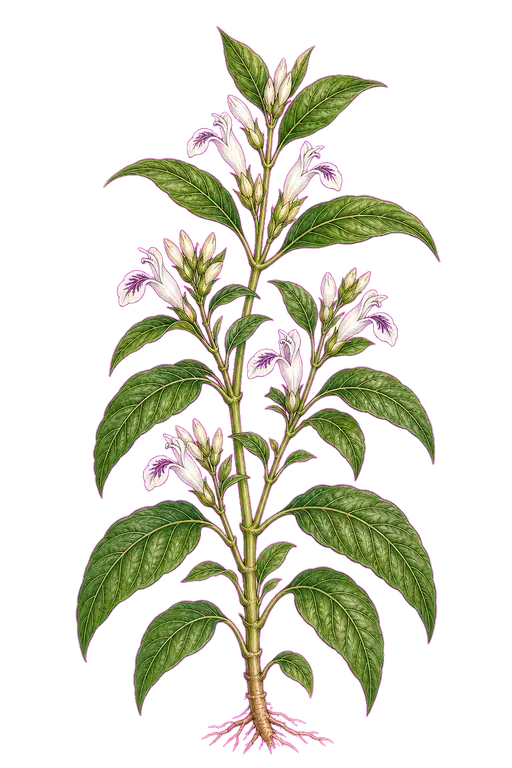
Acanthaceae
Acanthus family
Hara Chirayata belongs to the Acanthaceae family.
The illustration represents the family — not necessarily this exact species.
Explore the Acanthaceae familySnap it. Know it.
Point your camera at Hara Chirayata or any plant and SASYA identifies it instantly — on-device, offline, and private.
Common plant problems
If you are starting from symptoms instead of a diagnosis, use the plant disease symptom checker to narrow the cause before treating.
All plant problem & care guidesMore in Acanthaceae
View all AcanthaceaeSources: GBIF — Andrographis paniculata (India distribution & vernacular names) (CC BY 4.0) · iNaturalist — Andrographis paniculata (regional names, India observations) (CC BY 4.0) · Wikipedia — Andrographis paniculata (background/comprehension only) (CC BY-SA 4.0)