Piliya / Yellow Bells
Tecoma stans
Also known as Trumpet-Flower, Yellow Elder
- Habit
- Tree
- Found in India
- Tamil Nadu, Karnataka, Maharashtra & more
- Flowering
- Throughout the year
How to identify Piliya
Identify Piliya by combining habit, leaf characters, flower or fruit details, location, and its family pattern. Do not rely on one feature alone.
- Look for a tree habit.
- Confirm leaf arrangement: Opposite.
- Confirm leaf type: Pinnately compound.
- Confirm flower colour: Yellow.
- Confirm fruit type: Capsule.
- In season, compare flowering and fruiting time: Throughout the year.
- In India, compare location records such as Tamil Nadu, Karnataka, Maharashtra, Telangana and nearby regions.
Plant Details
- Scientific name
- Tecoma stans
- Genus
- Tecoma
- Family
- Bignoniaceae
- Habit
- Tree
- Native to
- America
- Distribution
- Widely cultivated
- Found in India
- Tamil Nadu, Karnataka, Maharashtra, Telangana, Andhra Pradesh, Rajasthan, Gujarat, West Bengal, Kerala, Delhi, Uttar Pradesh, Bihar, Odisha, Goa, Chhattisgarh, Uttarakhand, Assam, Madhya Pradesh, Chandigarh, Haryana, Himachal Pradesh, Punjab, Jharkhand, Puducherry, Arunachal Pradesh, Manipur, Nagaland, Tripura
- Flowering & fruiting
- Throughout the year
- Conservation status
- Not Evaluated (NE)
Leaf characters
- Leaf arrangement
- OppositerecordedTwo leaves arise from the stem at the same point, facing each other.“It features opposite odd-pinnate green leaves, with 3 to 13 serrate, 8- to 10-cm-long leaflets.” — Wikipedia, CC BY-SA 4.0
- Leaf type
- Pinnately compoundrecordedLeaflets are arranged in rows along a central stalk, like a feather.
- Leaf shape
- LanceolaterecordedLong and narrow, tapering to a point, like a lance head.“The leaflets, glabrous on both sides, have a lanceolate blade 2–10 cm long and 1–4 cm wide, with a long acuminate apex and a wedge-shaped base.” — Wikipedia, CC BY-SA 4.0
- Leaf margin
- ToothedrecordedA saw-like or jagged edge (serrate or dentate).“It features opposite odd-pinnate green leaves, with 3 to 13 serrate, 8- to 10-cm-long leaflets.” — Wikipedia, CC BY-SA 4.0
- Leaf surface
- GlabrousrecordedSmooth, hairless.“The leaflets, glabrous on both sides, have a lanceolate blade 2–10 cm long and 1–4 cm wide, with a long acuminate apex and a wedge-shaped base.” — Wikipedia, CC BY-SA 4.0
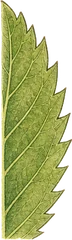
Typical of the family
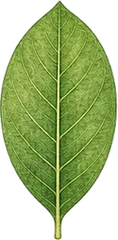
Characters marked “recorded” are for Piliya itself; the rest are typical of the Bignoniaceae family.
Flower & fruit characters
- Flower colour
- Yellowrecorded
- Fruit type
- CapsulerecordedA dry fruit from a fused ovary that splits open at maturity to release seeds.“The fruits, narrow capsules, arise from two carpels and are up to 25 cm long.” — Wikipedia, CC BY-SA 4.0
Typical of the family
- Flower symmetry
- Zygomorphic (bilaterally symmetrical)
- Inflorescence
- Panicle
- Fruit
- Capsule
Characters marked “recorded” are for Piliya itself; the rest are typical of the Bignoniaceae family — flowering plants only.
Local Names
- Hindi
- Piliya पीलिया
- Bengali
- Chandaprabha
- Tamil
- Sonnapatti
- Telugu
- Pachagotla
- Kannada
- ಕೊರಾನೆಚೆಲ್ಲಾರ್ Koranechellar
- Marathi
- Ghanti ful घंटी फुल
- Gujarati
- વસંત
- Sinhala
- කැළණිතිස්ස
About Piliya
A member of the Bignoniaceae family, Yellow bells (Tecoma stans) is a tree. In India it has been recorded in Tamil Nadu, Karnataka, Maharashtra and 25 other states. It flowers and fruits through much of the year.
Uses
It is long used in traditional medicine, cut for timber and furniture and planted as an ornamental. Those medicinal uses are traditional attributions, not medical advice. Parts of this plant are reported as poisonous — treat it as unsafe to eat and wash your hands after handling.
In culture
It is used as an official or regional emblem.
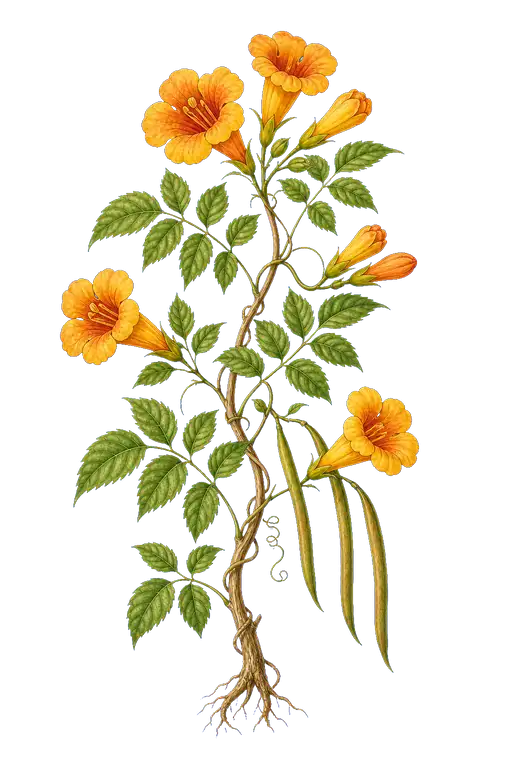
Bignoniaceae
Trumpet vine family
Piliya belongs to the Bignoniaceae family.
The illustration represents the family — not necessarily this exact species.
Explore the Bignoniaceae familySnap it. Know it.
Point your camera at Piliya or any plant and SASYA identifies it instantly — on-device, offline, and private.
Common plant problems
If you are starting from symptoms instead of a diagnosis, use the plant disease symptom checker to narrow the cause before treating.
All plant problem & care guides