

Mexican Marigold
Tagetes erecta
- Found in India
- Uttarakhand, Andhra Pradesh, Kerala & more
How to identify Mexican Marigold
Identify Mexican Marigold by combining habit, leaf characters, flower or fruit details, location, and its family pattern. Do not rely on one feature alone.
- Check the distinctive field mark: Cultivated marigold with pungent-smelling leaves.
- Confirm leaf arrangement: Opposite.
- Confirm leaf type: Pinnately compound.
- Confirm flower colour: Orange.
- Confirm flower arrangement: Solitary.
- Use the leaf pattern: opposite leaf arrangement, compound leaves, toothed leaf margins, pinnate venation.
- In India, compare location records such as Uttarakhand, Andhra Pradesh, Kerala, Maharashtra and nearby regions.
Plant Details
- Scientific name
- Tagetes erecta
- Genus
- Tagetes
- Family
- Asteraceae
- Found in India
- Uttarakhand, Andhra Pradesh, Kerala, Maharashtra, Tamil Nadu, West Bengal, Chhattisgarh, Karnataka, Telangana, Assam, Himachal Pradesh, Punjab, Rajasthan, Uttar Pradesh, Bihar, Delhi, Gujarat, Odisha, Madhya Pradesh, Goa, Haryana, Jammu & Kashmir, Meghalaya, Tripura, Arunachal Pradesh, Manipur, Puducherry
- Conservation status
- Not Evaluated (NE)
Leaf characters
- Leaf arrangement
- OppositerecordedTwo leaves arise from the stem at the same point, facing each other.“Opposite leaves at the bottom alternate at the top, up to 20 cm long, pinnate, composed of 11 to 17 leaflets, lanceolate to linear-lanceolate, up to 5 cm long and 1.5 cm wide, acut” — Wikipedia, CC BY-SA 4.0
- Leaf type
- Pinnately compoundrecordedLeaflets are arranged in rows along a central stalk, like a feather.“Opposite leaves at the bottom alternate at the top, up to 20 cm long, pinnate, composed of 11 to 17 leaflets, lanceolate to linear-lanceolate, up to 5 cm long and 1.5 cm wide, acut” — Wikipedia, CC BY-SA 4.0
- Leaf shape
- LanceolaterecordedLong and narrow, tapering to a point, like a lance head.“Opposite leaves at the bottom alternate at the top, up to 20 cm long, pinnate, composed of 11 to 17 leaflets, lanceolate to linear-lanceolate, up to 5 cm long and 1.5 cm wide, acut” — Wikipedia, CC BY-SA 4.0
- Leaf margin
- ToothedrecordedA saw-like or jagged edge (serrate or dentate).“Opposite leaves at the bottom alternate at the top, up to 20 cm long, pinnate, composed of 11 to 17 leaflets, lanceolate to linear-lanceolate, up to 5 cm long and 1.5 cm wide, acut” — Wikipedia, CC BY-SA 4.0
- Leaf surface
- Glabrous (smooth, hairless)recorded
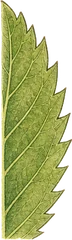
Typical of the family

Characters marked “recorded” are for Mexican Marigold itself; the rest are typical of the Asteraceae family.
Flower & fruit characters
- Flower colour
- Orangerecorded
- Flower arrangement
- SolitaryrecordedA single flower borne alone, not in a cluster.“The main characteristic of the flowers is that they are grouped in small heads or in solitary inflorescences, on peduncles up to 15 cm long, they are liguladas of yellow colors to ” — Wikipedia, CC BY-SA 4.0
- Fruit type
- AchenerecordedA small, dry, single-seeded fruit that does not split open.“The fruits and seeds are: linear achenes 7 to 10 mm long, smooth or slightly covered with stiff hairs at the corners.” — Wikipedia, CC BY-SA 4.0
Typical of the family
- Flower symmetry
- Actinomorphic (radially symmetrical)
- Inflorescence
- Head
- Fruit
- Achene
Characters marked “recorded” are for Mexican Marigold itself; the rest are typical of the Asteraceae family — flowering plants only.
Local Names
- Telugu
- బంతిపువ్వు
- Malayalam
- ചെണ്ടുമല്ലി
- Marathi
- झेंडू
Mexican Marigold in India
The marigold is India's festival and garland flower above all others — బంతిపువ్వు (Telugu), ചെണ്ടുമല്ലി (Malayalam), झेंडू (Marathi). Tagetes erecta is grown across Uttarakhand, Andhra Pradesh, Kerala, Maharashtra, Karnataka, Tamil Nadu for the vast demand at weddings, pujas and festivals like Diwali and Dussehra.
Uses
Its dense orange and yellow flower heads are strung into the garlands and toran that decorate doorways, deities and celebrations, and are grown commercially in huge quantities. Marigolds are also planted among crops as a natural pest-repellent companion plant.
How to Identify Mexican Marigold
A bushy annual with strongly scented, ferny pinnate leaves divided into many toothed leaflets. The flower heads are large, rounded and densely double in bright yellow to deep orange, with a distinctive pungent smell that helps identify them.
How to Keep It Healthy in India
Marigold is grown like a short-season flower crop: quick roots first, then buds, then repeated picking. Use full sun, a well-drained loamy mix, and steady watering after the top soil begins to dry. Too much water during monsoon causes root and stem rot; too much nitrogen gives tall leafy plants with fewer flowers. Pinch young plants once to make them branch, feed lightly with compost and a phosphorus/potassium-rich flowering feed, and deadhead old blooms so new buds keep forming. In north India it performs strongly in the cooler festival season, while in humid coastal areas drainage and air movement matter more.
Frequently Asked Questions
- What is Mexican Marigold called in different Indian languages?
- బంతిపువ్వు (Telugu); ചെണ്ടുമല്ലി (Malayalam); झेंडू (Marathi).
- Why are marigolds used in Indian festivals?
- Their abundant, long-lasting orange and yellow blooms are ideal for the garlands and toran used at weddings, pujas and festivals like Diwali and Dussehra.
- Do marigolds repel pests?
- Yes — they are commonly planted among vegetables as a companion plant said to help deter certain soil pests and insects.
- Why are my marigolds growing leaves but not flowers?
- They usually need more direct sun, less nitrogen fertiliser, better drainage, or pinching/deadheading to push branching and fresh buds.
Asteraceae
Daisy/Sunflower family
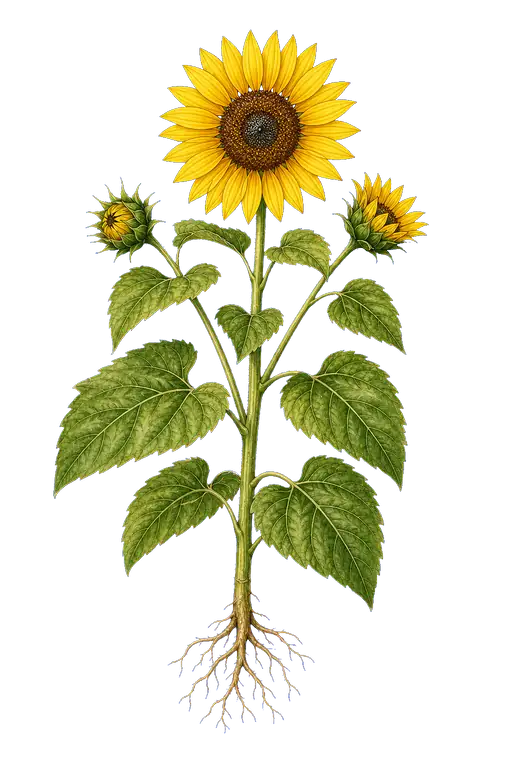
Mexican Marigold belongs to the Asteraceae family.
The illustration represents the family — not necessarily this exact species.
Explore the Asteraceae familySnap it. Know it.
Point your camera at Mexican Marigold or any plant and SASYA identifies it instantly — on-device, offline, and private.
Common plant problems
If you are starting from symptoms instead of a diagnosis, use the plant disease symptom checker to narrow the cause before treating.
All plant problem & care guidesMore in Asteraceae
View all AsteraceaeSources: GBIF — Tagetes erecta (India distribution & vernacular names) (CC BY 4.0) · iNaturalist — Tagetes erecta (regional names, India observations) (CC BY 4.0) · Wikipedia — Tagetes erecta (background/comprehension only) (CC BY-SA 4.0)