

Jamun / Indian Blackberry
Syzygium cumini
Also known as Black Plum, Jambolan, Jambu, Jambol, Jaman, Java Plum, Naval, Neredu
- Habit
- Tree
- Found in India
- Maharashtra, Tamil Nadu, Telangana & more
- Flowering
- December-July
How to identify Jamun
Identify Jamun by combining habit, leaf characters, flower or fruit details, location, and its family pattern. Do not rely on one feature alone.
- Look for a tree habit.
- Confirm fruit type: Berry.
- Use the leaf pattern: opposite leaf arrangement, simple leaves, entire leaf margins, pinnate venation.
- In season, compare flowering and fruiting time: December-July.
- In India, compare location records such as Maharashtra, Tamil Nadu, Telangana, Karnataka and nearby regions.
- Confirm it sits within the Myrtaceae family pattern, then compare close relatives before deciding it is Jamun.
Plant Details
- Scientific name
- Syzygium cumini
- Genus
- Syzygium
- Family
- Myrtaceae
- Habit
- Tree
- Habitat
- Evergreen forests and also in the plains
- Habitat type
- Forest
- Distribution
- India, Sri Lanka, sub-tropical Himalayas, Malaysia, Australia
- Found in India
- Maharashtra, Tamil Nadu, Telangana, Karnataka, Rajasthan, Andhra Pradesh, Gujarat, Kerala, Uttarakhand, West Bengal, Delhi, Chhattisgarh, Odisha, Uttar Pradesh, Assam, Madhya Pradesh, Himachal Pradesh, Mizoram, Punjab, Goa, Haryana, Puducherry, Arunachal Pradesh, Sikkim, Jammu & Kashmir, Jharkhand, Meghalaya
- Flowering & fruiting
- December-July
- Conservation status
- Not Evaluated (NE)
Leaf characters
- Arrangement
- Opposite
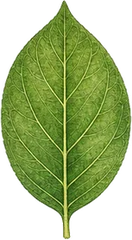


Characters marked “recorded” are for Jamun itself; the rest are typical of the Myrtaceae family.
Flower & fruit characters
- Fruit type
- BerryrecordedA fleshy fruit with seeds embedded directly in the pulp, no central stone.“The fruits develop by May or June and resemble large berries;” — Wikipedia, CC BY-SA 4.0
Typical of the family
- Flower symmetry
- Actinomorphic (radially symmetrical)
- Inflorescence
- Cyme
- Fruit
- Berry
Characters marked “recorded” are for Jamun itself; the rest are typical of the Myrtaceae family — flowering plants only.
Local Names
- Hindi
- जामुन Jamun, jaman,जामुन jamun
- Nepali
- जामुन Jaamun, कालो जामुन Kaalo Jaamun, फ़णिर Phanir
- Bengali
- জাম, কালোজাম, জামঃ
- Tamil
- நாகை Nagai, இலவங்கம், நாவல்
- Telugu
- నేరేడు Neredu, నేరేడు, జంబు
- Kannada
- ನೇಱಿಲ್ Neril, ನೀಱಲು Neeralu, ನೀರಲ Neerala
- Malayalam
- ഞാവൽ, Jambul, ജാമുൻ
- Marathi
- जांभूळ Jambhul, जम्बुफल Jambufal, जांभूळ
- Sanskrit
- जम्बूफलम्
- Punjabi
- ਜਾਮਣ
- Sinhala
- මාදං
Jamun in India
Jamun is the purple-fruited tree of the Indian monsoon — जामुन Jamun (Hindi), நாகை Nagai (Tamil), నేరేడు Neredu (Telugu), ನೇಱಿಲ್ Neril (Kannada), ഞാവൽ (Malayalam), जांभूळ Jambhul (Marathi). Syzygium cumini is grown and naturalised across Maharashtra, Tamil Nadu, Telangana, Karnataka, Rajasthan, Andhra Pradesh, lining roads and orchards and fruiting through the rains.
Uses
The astringent-sweet purple fruit is eaten fresh, often with salt, and turns the tongue violet. Jamun seeds and bark are among the best-known traditional remedies associated with blood-sugar in Ayurveda — an attributed use, not medical advice. The hard wood is durable underwater.
How to Identify Jamun
A large evergreen with dense, dark glossy foliage and smooth pale bark. The leaves smell faintly of turpentine when crushed, and small fragrant white flowers give way to oblong fruit that ripens from green through pink to deep purple-black.
Frequently Asked Questions
- What is Indian Blackberry called in different Indian languages?
- जामुन Jamun (Hindi); நாகை Nagai (Tamil); నేరేడు Neredu (Telugu); ನೇಱಿಲ್ Neril (Kannada); ഞാവൽ (Malayalam); जांभूळ Jambhul (Marathi); জাম (Bengali); ਜਾਮਣ (Punjabi); जम्बूफलम् (Sanskrit).
- When is jamun in season in India?
- Jamun fruits mainly through the monsoon — roughly June to August across much of India.
- Are jamun seeds useful?
- Jamun seed powder is a widely cited traditional remedy in Ayurveda; this is an attributed traditional use and not a substitute for medical advice.
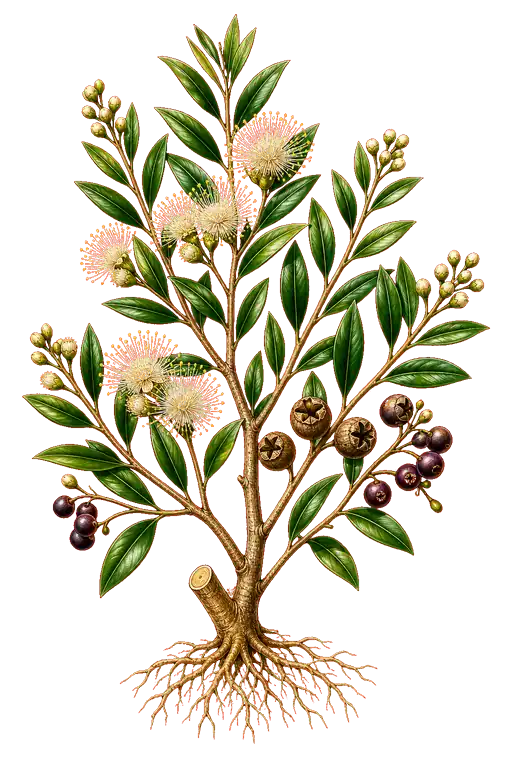
Myrtaceae
Myrtle/Eucalyptus family
Jamun belongs to the Myrtaceae family.
The illustration represents the family — not necessarily this exact species.
Explore the Myrtaceae familySnap it. Know it.
Point your camera at Jamun or any plant and SASYA identifies it instantly — on-device, offline, and private.
Common plant problems
If you are starting from symptoms instead of a diagnosis, use the plant disease symptom checker to narrow the cause before treating.
All plant problem & care guidesMore in Myrtaceae
View all MyrtaceaeSources: GBIF — Syzygium cumini (India distribution & vernacular names) (CC BY 4.0) · iNaturalist — Syzygium cumini (regional names, India observations) (CC BY 4.0) · Wikipedia — Syzygium cumini (background/comprehension only) (CC BY-SA 4.0)