
Udal / Elephant Rope Tree
Sterculia villosa
- Habit
- Tree
- Found in India
- Andaman & Nicobar Islands, Arunachal Pradesh, Maharashtra & more
- Flowering
- January-June
How to identify Udal
Identify Udal by combining habit, leaf characters, flower or fruit details, location, and its family pattern. Do not rely on one feature alone.
- Look for a tree habit.
- Check the distinctive field mark: Fibrous bark used for rope (elephant rope tree).
- Confirm leaf shape: Orbicular (round).
- Confirm leaf margin: Lobed.
- Confirm flower colour: Yellow-green.
- Confirm flower arrangement: Panicle.
- In season, compare flowering and fruiting time: January-June.
Plant Details
- Scientific name
- Sterculia villosa
- Genus
- Sterculia
- Family
- Sterculiaceae
- Habit
- Tree
- Habitat
- Deciduous forests
- Habitat type
- Forest
- Native to
- Indian subcontinent
- Distribution
- South Asia, Myanmar
- Found in India
- Andaman & Nicobar Islands, Arunachal Pradesh, Maharashtra, Assam, Mizoram, Uttarakhand, Bihar, Karnataka, Kerala, Himachal Pradesh, Meghalaya, Tamil Nadu
- Flowering & fruiting
- January-June
- Conservation status
- Not Evaluated (NE)
Leaf characters
- Leaf shape
- Orbicular (round)recorded
- Leaf margin
- LobedrecordedThe edge is divided into rounded or pointed sections that don't reach the midrib.“A leaf from this plant is characterized by a petiole about 25–40 cm long and by a lamina composed of 5-7-lobes, approximately 20–40 cm long and wide.” — Wikipedia, CC BY-SA 4.0
- Leaf surface
- TomentoserecordedDensely covered in matted, woolly hairs.“The leaves are glabrescent on the top but tomentose on the bottom.” — Wikipedia, CC BY-SA 4.0

Typical of the family
- Arrangement
- Alternate
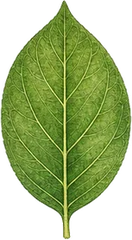

Characters marked “recorded” are for Udal itself; the rest are typical of the Sterculiaceae family.
Flower & fruit characters
- Flower colour
- Yellow-greenrecorded
- Flower arrangement
- PaniclerecordedA branching cluster of clusters.“The elephant rope tree's panicles are about 15–30 cm long, rusty in color and pendulous.” — Wikipedia, CC BY-SA 4.0
Typical of the family
- Flower symmetry
- Actinomorphic (radially symmetrical)
- Inflorescence
- Panicle
- Fruit
- Capsule
Characters marked “recorded” are for Udal itself; the rest are typical of the Sterculiaceae family — flowering plants only.
Local Names
- Hindi
- ऊदल Udal
- Nepali
- ओदाने Odaane, ओदाने
- Bengali
- উদাল Udal, উদাল
- Tamil
- ஆனைநார் Anai-Nar, ஓடல் Otal, தணக்கு Tanakku
- Kannada
- ಬಿಳಿತಾಳೆ Bilitaale, ಕೈತಾಳೆ Kaitaale
- Malayalam
- വക്ക Vakka, വക്ക
- Marathi
- कुडाल Kudal, सारडा Saardaa, सरडोळ Sardol
About Udal
A member of the Sterculiaceae family, Elephant rope tree (Sterculia villosa) is a tree. In India it has been recorded in Andaman & Nicobar Islands, Arunachal Pradesh, Maharashtra and 9 other states. It grows in deciduous forests. Flowering and fruiting run from January to June.
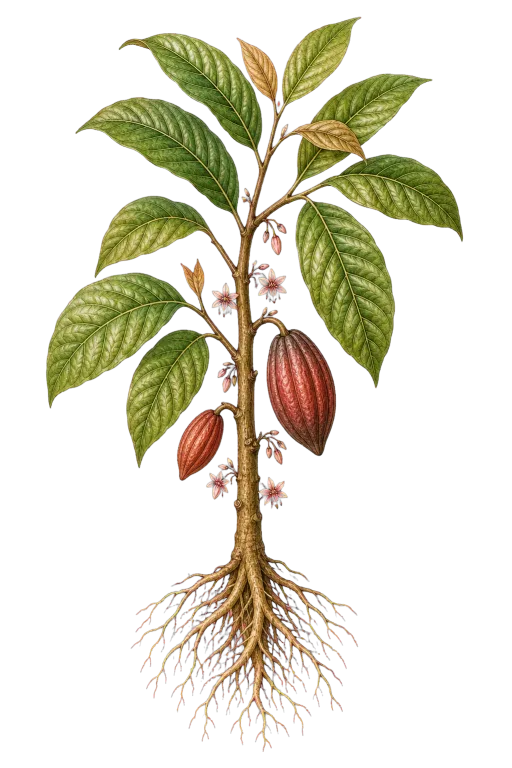
Sterculiaceae
Cacao/Cola family
Udal belongs to the Sterculiaceae family.
The illustration represents the family — not necessarily this exact species.
Explore the Sterculiaceae familySnap it. Know it.
Point your camera at Udal or any plant and SASYA identifies it instantly — on-device, offline, and private.
Common plant problems
If you are starting from symptoms instead of a diagnosis, use the plant disease symptom checker to narrow the cause before treating.
All plant problem & care guides