
Kulu / Kateera-Gum
Sterculia urens
Also known as Katira, Sterculia Gum, Gum Karaya
- Habit
- Tree
- Found in India
- Maharashtra, Rajasthan, Madhya Pradesh & more
- Flowering
- October-May
How to identify Kulu
Identify Kulu by combining habit, leaf characters, flower or fruit details, location, and its family pattern. Do not rely on one feature alone.
- Look for a tree habit.
- Check the distinctive field mark: Peeling papery bark yielding edible gum (gum karaya).
- Confirm leaf arrangement: Alternate.
- Confirm leaf type: Simple.
- Confirm flower colour: Yellow-green.
- In season, compare flowering and fruiting time: October-May.
- In India, compare location records such as Maharashtra, Rajasthan, Madhya Pradesh, Gujarat and nearby regions.
Plant Details
- Scientific name
- Sterculia urens
- Genus
- Sterculia
- Family
- Sterculiaceae
- Habit
- Tree
- Habitat
- Moist and dry deciduous forests, also scrub forests
- Native to
- India
- Distribution
- India, Myanmar, Sri Lanka, Malaysia
- Found in India
- Maharashtra, Rajasthan, Madhya Pradesh, Gujarat, Delhi, Telangana, Tamil Nadu, Goa, Karnataka, Kerala, Andhra Pradesh, Chhattisgarh, Odisha, West Bengal, Bihar, Dadra & Nagar Haveli, Haryana, Uttarakhand
- Flowering & fruiting
- October-May
- Conservation status
- Not Evaluated (NE)
Leaf characters
- Leaf arrangement
- AlternaterecordedOne leaf per node, arranged in a spiral or zigzag up the stem.“The leaves are alternate, simple, hairy beneath and have three to five palmate lobes.” — Wikipedia, CC BY-SA 4.0
- Leaf type
- SimplerecordedA single, undivided leaf blade.“The leaves are alternate, simple, hairy beneath and have three to five palmate lobes.” — Wikipedia, CC BY-SA 4.0
- Leaf shape
- Elliptic (widest at middle)recorded
- Leaf margin
- LobedrecordedThe edge is divided into rounded or pointed sections that don't reach the midrib.“The leaves are alternate, simple, hairy beneath and have three to five palmate lobes.” — Wikipedia, CC BY-SA 4.0
- Leaf surface
- PubescentrecordedCovered in short, soft hairs.“The leaves are alternate, simple, hairy beneath and have three to five palmate lobes.” — Wikipedia, CC BY-SA 4.0
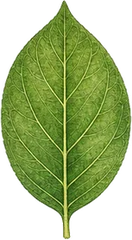
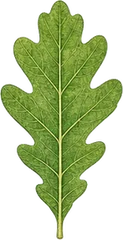
Typical of the family

Characters marked “recorded” are for Kulu itself; the rest are typical of the Sterculiaceae family.
Flower & fruit characters
- Flower colour
- Yellow-greenrecorded
Typical of the family
- Flower symmetry
- Actinomorphic (radially symmetrical)
- Inflorescence
- Panicle
- Fruit
- Capsule
Characters marked “recorded” are for Kulu itself; the rest are typical of the Sterculiaceae family — flowering plants only.
Local Names
- Hindi
- Kulu कुलु, Kulu
- Tamil
- Kavalam Tam, செந்தனுக்கு
- Telugu
- Kavili
- Kannada
- Kurdu, ಕಂದೋಲಿ Kandoli, ಕೆಂಪುದಾಳೆ Kempudaale, ಕೆಂಪುದಾಳೆ
- Malayalam
- Paravakka, തൊണ്ടി
- Marathi
- Sardol, कहांडळ
- Gujarati
- કડાયો
Kulu in India
This distinctive tree, known as Kulu कुलु (Hindi), Kavalam Tam (Tamil), Kavili (Telugu), Kurdu (Kannada), Paravakka (Malayalam), Sardol (Marathi), is the source of gum karaya, a widely traded natural gum. Sterculia urens is found across Maharashtra, Rajasthan, Madhya Pradesh, Gujarat, NCT of Delhi, Telangana, typically on dry, rocky hillsides.
Uses
Its natural gum (gum karaya) is tapped from cuts in the bark and used industrially as a thickener and stabiliser in food, textiles and pharmaceuticals.
How to Identify Kulu
A distinctive tree with smooth, pale, papery bark that peels in flakes, often looking almost white or silvery from a distance. Leaves are large and lobed, clustered near the branch tips. Cuts in the bark exude a translucent gum that hardens into irregular lumps.
Frequently Asked Questions
- What is Kateera-gum called in different Indian languages?
- Kulu कुलु (Hindi); Kavalam Tam (Tamil); Kavili (Telugu); Kurdu (Kannada); Paravakka (Malayalam); Sardol (Marathi); કડાયો (Gujarati).
- What is gum karaya used for?
- It's a natural thickener and stabiliser widely used in food processing, textiles, cosmetics and pharmaceuticals, tapped directly from cuts in the tree's bark.
- Why does the bark look so pale?
- Its thin, papery outer bark peels away in flakes, revealing a smooth, pale under-layer that gives the trunk a distinctive whitish appearance, especially visible in the dry season.
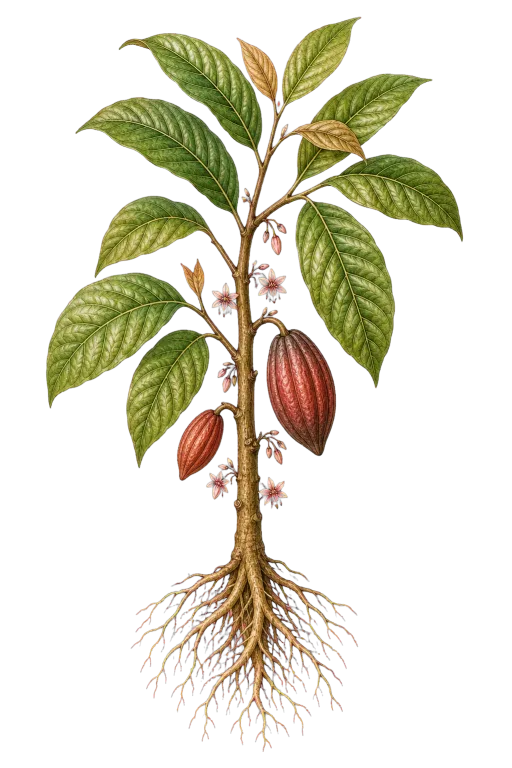
Sterculiaceae
Cacao/Cola family
Kulu belongs to the Sterculiaceae family.
The illustration represents the family — not necessarily this exact species.
Explore the Sterculiaceae familySnap it. Know it.
Point your camera at Kulu or any plant and SASYA identifies it instantly — on-device, offline, and private.
Common plant problems
If you are starting from symptoms instead of a diagnosis, use the plant disease symptom checker to narrow the cause before treating.
All plant problem & care guidesMore in Sterculiaceae
View all SterculiaceaeSources: GBIF — Sterculia urens (India distribution & vernacular names) (CC BY 4.0) · Wikipedia — Sterculia urens (background/comprehension only) (CC BY-SA 4.0)