
Til / Sesame
Sesamum indicum
Also known as Gingelly Oil, Gingelly, Beniseed, Simsim
- Habit
- Herb
- Found in India
- Maharashtra, Kerala, Tamil Nadu & more
- Flowering
- Throughout the year
How to identify Til
Identify Til by combining habit, leaf characters, flower or fruit details, location, and its family pattern. Do not rely on one feature alone.
- Look for a herb habit.
- Check the distinctive field mark: Cultivated for sesame seed oil.
- Confirm leaf arrangement: Opposite.
- Confirm leaf margin: Entire.
- Confirm fruit type: Capsule.
- In season, compare flowering and fruiting time: Throughout the year.
- In India, compare location records such as Maharashtra, Kerala, Tamil Nadu, Telangana and nearby regions.
Plant Details
- Scientific name
- Sesamum indicum
- Genus
- Sesamum
- Family
- Pedaliaceae
- Habit
- Herb
- Habitat
- Cultivated
- Habitat type
- Cultivated
- Native to
- Tropical Africa, Asia
- Distribution
- Warmer regions of the world
- Found in India
- Maharashtra, Kerala, Tamil Nadu, Telangana, Karnataka, Rajasthan, Goa, Gujarat, Andhra Pradesh, West Bengal, Chhattisgarh, Madhya Pradesh, Puducherry, Odisha, Uttar Pradesh, Uttarakhand, Assam, Bihar, Delhi, Haryana, Arunachal Pradesh, Daman & Diu, Himachal Pradesh, Jammu & Kashmir, Chandigarh, Dadra & Nagar Haveli, Mizoram
- Flowering & fruiting
- Throughout the year
- Conservation status
- Not Evaluated (NE)
Leaf characters
- Leaf arrangement
- OppositerecordedTwo leaves arise from the stem at the same point, facing each other.“Sesame is a perennial plant growing 50 to 100 cm (1 ft 8 in to 3 ft 3 in) tall, with opposite leaves 4 to 14 cm (2 to 6 in) long with an entire margin;” — Wikipedia, CC BY-SA 4.0
- Leaf margin
- EntirerecordedA smooth, unbroken edge with no teeth or notches.“Sesame is a perennial plant growing 50 to 100 cm (1 ft 8 in to 3 ft 3 in) tall, with opposite leaves 4 to 14 cm (2 to 6 in) long with an entire margin;” — Wikipedia, CC BY-SA 4.0
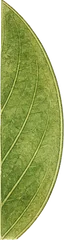
Characters marked “recorded” are for Til itself; the rest are typical of the Pedaliaceae family.
Flower & fruit characters
- Fruit type
- CapsulerecordedA dry fruit from a fused ovary that splits open at maturity to release seeds.“The fruit is a capsule, normally pubescent.” — Wikipedia, CC BY-SA 4.0
Characters marked “recorded” are for Til itself; the rest are typical of the Pedaliaceae family — flowering plants only.
Local Names
- Hindi
- gingelly, til,तिल til
- Nepali
- कालो तिल
- Bengali
- তিল
- Tamil
- எள்
- Telugu
- నువ్వులు
- Kannada
- ಎಳ್ಳು
- Malayalam
- എള്ള്
- Marathi
- तीळ
- Sanskrit
- Tila
- Punjabi
- ਤਿਲ
Til in India
Sesame, known across India as gingelly (Hindi), எள் (Tamil), నువ్వులు (Telugu), ಎಳ್ಳು (Kannada), എള്ള് (Malayalam), तीळ (Marathi), is one of the subcontinent's oldest cultivated oilseeds. Sesamum indicum is grown across Maharashtra, Kerala, Tamil Nadu, Telangana, Karnataka, Rajasthan, mostly as a rain-fed crop in the drier months.
Uses
The seeds are pressed for til/gingelly oil, a staple cooking and massage oil in several regions, and are eaten whole — toasted into chutneys, pressed into til laddus and chikki, especially around Makar Sankranti and Lohri.
How to Identify Til
An erect, softly hairy annual herb to about a metre tall, with opposite lance-shaped leaves. Tubular, foxglove-like flowers are pale pink to white with darker throat markings, followed by an upright four-angled seed capsule that splits open when ripe — the seeds inside are the giveaway.
Frequently Asked Questions
- What is Sesame called in different Indian languages?
- gingelly (Hindi); எள் (Tamil); నువ్వులు (Telugu); ಎಳ್ಳು (Kannada); എള്ള് (Malayalam); तीळ (Marathi); তিল (Bengali); ਤਿਲ (Punjabi); Tila (Sanskrit).
- Why does sesame 'pop' when the pod is ready?
- The capsule dries and splits open lengthwise at maturity, flinging out the tiny seeds — the origin of the phrase 'open sesame'.
- Is gingelly oil the same as sesame oil?
- Yes — gingelly oil is simply the regional (South Indian) name for oil pressed from Sesamum indicum seeds.
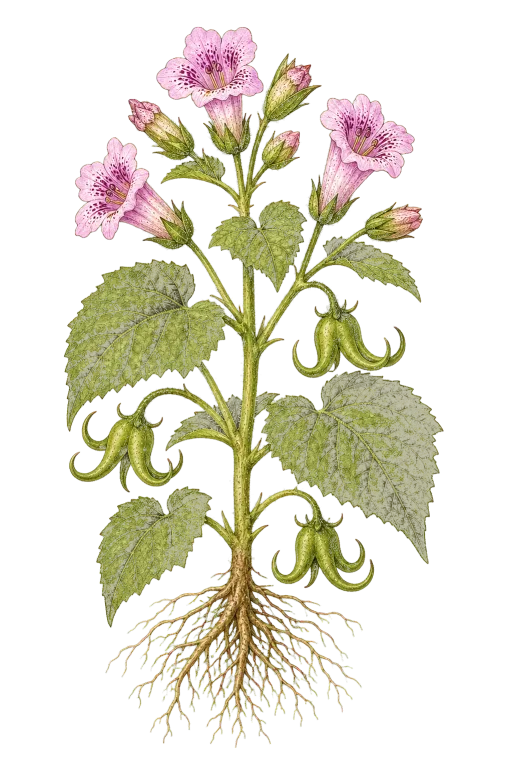
Pedaliaceae
Pedalium Or Sesame Family
Til belongs to the Pedaliaceae family.
The illustration represents the family — not necessarily this exact species.
Explore the Pedaliaceae familySnap it. Know it.
Point your camera at Til or any plant and SASYA identifies it instantly — on-device, offline, and private.
Common plant problems
If you are starting from symptoms instead of a diagnosis, use the plant disease symptom checker to narrow the cause before treating.
All plant problem & care guidesMore in Pedaliaceae
View all PedaliaceaeSources: GBIF — Sesamum indicum (India distribution & vernacular names) (CC BY 4.0) · Wikipedia — Sesamum indicum (background/comprehension only) (CC BY-SA 4.0)