
Eekh / Sugar Cane
Saccharum officinarum
Also known as Noble Cane
- Habit
- Herb
- Found in India
- Bihar, Tamil Nadu, Uttarakhand & more
- Flowering
- October-December
How to identify Eekh
Identify Eekh by combining habit, leaf characters, flower or fruit details, location, and its family pattern. Do not rely on one feature alone.
- Look for a herb habit.
- Check the distinctive field mark: Cultivated for sugar, thick juicy canes.
- Confirm leaf arrangement: Alternate.
- Confirm leaf shape: Linear.
- Confirm flower arrangement: Panicle.
- Confirm fruit surface: Smooth, not spiny.
- In season, compare flowering and fruiting time: October-December.
Plant Details
- Scientific name
- Saccharum officinarum
- Genus
- Saccharum
- Family
- Poaceae
- Habit
- Herb
- Distribution
- Cultivated throughout the tropics
- Found in India
- Bihar, Tamil Nadu, Uttarakhand, Andhra Pradesh, Rajasthan, Arunachal Pradesh, Chhattisgarh, Karnataka, Puducherry, West Bengal, Assam, Gujarat, Kerala, Madhya Pradesh, Maharashtra, Manipur
- Flowering & fruiting
- October-December
- Conservation status
- Not Evaluated (NE)
Leaf characters
- Leaf arrangement
- AlternaterecordedOne leaf per node, arranged in a spiral or zigzag up the stem.“They are jointed, nodes being present at the bases of the alternate leaves.” — Wikipedia, CC BY-SA 4.0
- Leaf shape
- LinearrecordedVery long and narrow with roughly parallel sides.“The elongated, linear, green leaves have thick midribs and saw-toothed edges and grow to a length of about 30 to 60 centimetres (12 to 24 inches) and width of 5 cm (2 in).” — Wikipedia, CC BY-SA 4.0
- Leaf margin
- ToothedrecordedA saw-like or jagged edge (serrate or dentate).“The elongated, linear, green leaves have thick midribs and saw-toothed edges and grow to a length of about 30 to 60 centimetres (12 to 24 inches) and width of 5 cm (2 in).” — Wikipedia, CC BY-SA 4.0
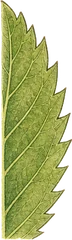
Typical of the family
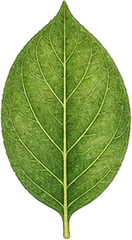

Characters marked “recorded” are for Eekh itself; the rest are typical of the Poaceae family.
Flower & fruit characters
- Flower arrangement
- PaniclerecordedA branching cluster of clusters.“The terminal inflorescence is a panicle up to 60 cm (24 in) long, a pinkish plume that is broadest at the base and tapering towards the top.” — Wikipedia, CC BY-SA 4.0
- Fruit surface
- Smooth, not spinyrecorded
Typical of the family
- Flower symmetry
- Actinomorphic (radially symmetrical)
- Inflorescence
- Spike
- Fruit
- Grain
Characters marked “recorded” are for Eekh itself; the rest are typical of the Poaceae family — flowering plants only.
Local Names
- Hindi
- ईख Eekh, गन्ना Ganna
- Tamil
- கரும்பு Karumbu, புண்டறம் Pundaram, செங்கரும்பு
- Telugu
- Cheruku, సెకారం అఫిష్ననారమ్, చెరకు
- Kannada
- Petta patti kabbu, ಖಬ್ಬೂ Khabbu
- Malayalam
- Karibpu
- Marathi
- ऊस Oos
- Punjabi
- ਗੰਨਾ
About Eekh
Sugar Cane (Saccharum officinarum) belongs to the Poaceae family, where it grows as a herb. In India it has been recorded in Bihar, Tamil Nadu, Uttarakhand and 13 other states. Flowering and fruiting run from October to December.
Uses
Locally it is long used in traditional medicine and harvested for fodder. Those medicinal uses are traditional attributions, not medical advice.
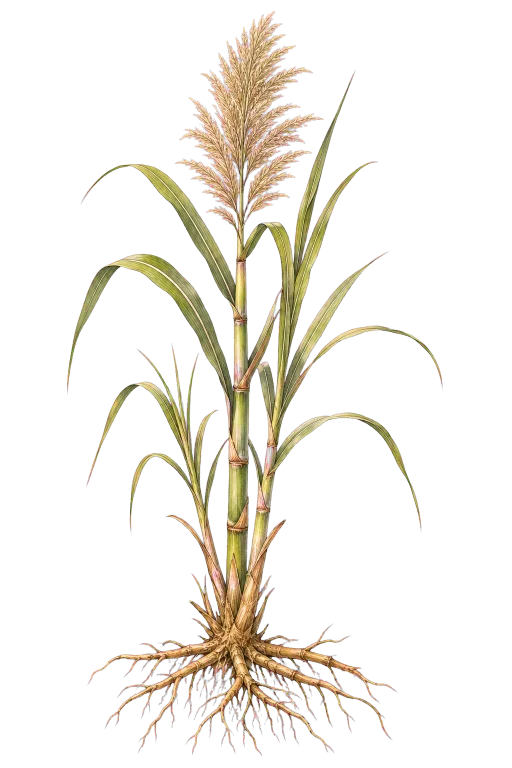
Poaceae
Grass family
Eekh belongs to the Poaceae family.
The illustration represents the family — not necessarily this exact species.
Explore the Poaceae familySnap it. Know it.
Point your camera at Eekh or any plant and SASYA identifies it instantly — on-device, offline, and private.
Common plant problems
If you are starting from symptoms instead of a diagnosis, use the plant disease symptom checker to narrow the cause before treating.
All plant problem & care guides