
Baranal / Cana Brava
Arundo donax
Also known as Carrizo, Giant Red, Wild Cane
- Habit
- Herb
- Found in India
- Rajasthan, Himachal Pradesh, Uttarakhand & more
- Flowering
- August-June
How to identify Baranal
Identify Baranal by combining habit, leaf characters, flower or fruit details, location, and its family pattern. Do not rely on one feature alone.
- Look for a herb habit.
- Check the distinctive field mark: Very tall reed-like canes, giant reed.
- Confirm leaf arrangement: Alternate.
- Confirm leaf surface: Pubescent.
- Confirm fruit surface: Smooth, not spiny.
- In season, compare flowering and fruiting time: August-June.
- In India, compare location records such as Rajasthan, Himachal Pradesh, Uttarakhand, Jammu & Kashmir and nearby regions.
Plant Details
- Scientific name
- Arundo donax
- Genus
- Arundo
- Family
- Poaceae
- Habit
- Herb
- Habitat
- Along banks of streams and backwaters
- Native to
- Tropical Asia
- Distribution
- Mediterranean region eastwards to North Africa, India-Pakistan; introduced into many parts of the World
- Found in India
- Rajasthan, Himachal Pradesh, Uttarakhand, Jammu & Kashmir, Punjab, Tamil Nadu, Maharashtra, Uttar Pradesh, West Bengal, Delhi, Manipur, Nagaland, Arunachal Pradesh, Chandigarh, Gujarat, Kerala, Meghalaya, Mizoram
- Flowering & fruiting
- August-June
- Conservation status
- Least Concern (LC)
Leaf characters
- Leaf arrangement
- AlternaterecordedOne leaf per node, arranged in a spiral or zigzag up the stem.“The grey-green swordlike leaves are alternate, 30 to 60 centimetres (12 to 24 in) long and 2 to 6 centimetres (0.79 to 2.36 in) wide with a tapered tip, and have a hairy tuft at th” — Wikipedia, CC BY-SA 4.0
- Leaf surface
- PubescentrecordedCovered in short, soft hairs.“The grey-green swordlike leaves are alternate, 30 to 60 centimetres (12 to 24 in) long and 2 to 6 centimetres (0.79 to 2.36 in) wide with a tapered tip, and have a hairy tuft at th” — Wikipedia, CC BY-SA 4.0
Typical of the family
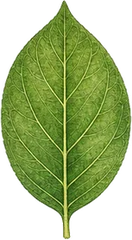


Characters marked “recorded” are for Baranal itself; the rest are typical of the Poaceae family.
Flower & fruit characters
- Fruit surface
- Smooth, not spinyrecorded
Typical of the family
- Flower symmetry
- Actinomorphic (radially symmetrical)
- Inflorescence
- Spike
- Fruit
- Grain
Characters marked “recorded” are for Baranal itself; the rest are typical of the Poaceae family — flowering plants only.
Local Names
- Hindi
- Baranal, baru, Doka
- Nepali
- ठूलो नर्कट Thoolo Narkat, नर्कट
- Bengali
- নাল
- Tamil
- caravanam, koraikkuccu, korukachi
- Telugu
- adavikikasa-gaddi, adavikikkasagadi, kaki veduru
- Kannada
- baalada kaddi, bilee laalada kaddi, hulagilu hullu
- Malayalam
- Oodappullu, Arundo donax
- Marathi
- Nal, देवनाळ
Baranal in India
This very tall grass, known as Baranal (Hindi), caravanam (Tamil), adavikikasa-gaddi (Telugu), baalada kaddi (Kannada), Oodappullu (Malayalam), Nal (Marathi), forms dense stands along waterways. Arundo donax is found across Rajasthan, Himachal Pradesh, Uttarakhand, Jammu and Kashmir, Punjab, Tamil Nadu, typically along riverbanks, canals and damp ground.
Uses
Its tall, cane-like stems are cut for garden screens, trellis stakes and traditional matting, and in some traditions the stems have been used to make simple reed instruments.
How to Identify Baranal
A very tall, robust, bamboo-like grass, often reaching several metres, with broad, greyish-green leaves arranged along a stout, jointed cane. Large, plume-like flower heads appear at the stem tips, silvery to purplish when fresh.
Frequently Asked Questions
- What is Cana brava called in different Indian languages?
- Baranal (Hindi); caravanam (Tamil); adavikikasa-gaddi (Telugu); baalada kaddi (Kannada); Oodappullu (Malayalam); Nal (Marathi); নাল (Bengali).
- Is giant reed the same as bamboo?
- No — despite its tall, cane-like appearance, Arundo donax is a true grass in a different family from bamboo, though the two are often confused and used for similar purposes.
- Why does it grow so densely along rivers?
- It spreads readily via its rhizomes in moist ground, quickly forming dense stands along riverbanks, canals and other consistently damp sites.
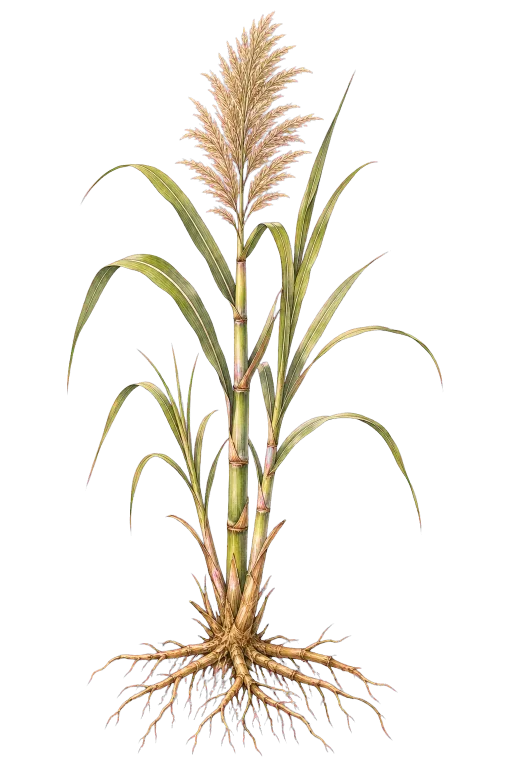
Poaceae
Grass family
Baranal belongs to the Poaceae family.
The illustration represents the family — not necessarily this exact species.
Explore the Poaceae familySnap it. Know it.
Point your camera at Baranal or any plant and SASYA identifies it instantly — on-device, offline, and private.
Common plant problems
If you are starting from symptoms instead of a diagnosis, use the plant disease symptom checker to narrow the cause before treating.
All plant problem & care guidesMore in Poaceae
View all PoaceaeSources: GBIF — Arundo donax (India distribution & vernacular names) (CC BY 4.0) · Wikipedia — Arundo donax (background/comprehension only) (CC BY-SA 4.0)