

Lal Amrud / Guava Tree
Psidium guajava
Also known as Guava, Guajava, Common Guava
- Habit
- Tree
- Found in India
- Telangana, Kerala, Tamil Nadu & more
- Flowering
- Throughout the year
How to identify Lal Amrud
Identify Lal Amrud by combining habit, leaf characters, flower or fruit details, location, and its family pattern. Do not rely on one feature alone.
- Look for a tree habit.
- Confirm flower colour: White-cream.
- Use the leaf pattern: opposite leaf arrangement, simple leaves, entire leaf margins, pinnate venation.
- In season, compare flowering and fruiting time: Throughout the year.
- In India, compare location records such as Telangana, Kerala, Tamil Nadu, Maharashtra and nearby regions.
- Confirm it sits within the Myrtaceae family pattern, then compare close relatives before deciding it is Lal Amrud.
Plant Details
- Scientific name
- Psidium guajava
- Genus
- Psidium
- Family
- Myrtaceae
- Habit
- Tree
- Native to
- Tropical America
- Distribution
- Tropical & sub-Tropical regions of the Old World
- Found in India
- Telangana, Kerala, Tamil Nadu, Maharashtra, Andhra Pradesh, West Bengal, Karnataka, Uttarakhand, Assam, Rajasthan, Uttar Pradesh, Madhya Pradesh, Mizoram, Delhi, Chhattisgarh, Odisha, Goa, Bihar, Haryana, Punjab, Tripura, Gujarat, Puducherry, Manipur, Sikkim, Himachal Pradesh, Jharkhand, Meghalaya, Arunachal Pradesh, Dadra & Nagar Haveli, Jammu & Kashmir, Lakshadweep
- Flowering & fruiting
- Throughout the year
- Conservation status
- Not Evaluated (NE)
Leaf characters
- Arrangement
- Opposite
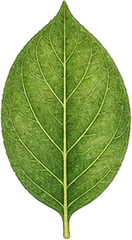
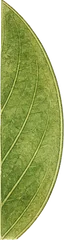
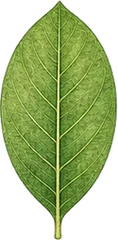
Characters marked “recorded” are for Lal Amrud itself; the rest are typical of the Myrtaceae family.
Flower & fruit characters
- Flower colour
- White-creamrecorded
Typical of the family
- Flower symmetry
- Actinomorphic (radially symmetrical)
- Inflorescence
- Cyme
- Fruit
- Berry
Characters marked “recorded” are for Lal Amrud itself; the rest are typical of the Myrtaceae family — flowering plants only.
Local Names
- Hindi
- लाल अमरूद Lal amrud, amrood
- Tamil
- கொய்யா
- Kannada
- ಸೀಬೆ
- Marathi
- पेरु, पेरू, प्सिडियम ग्वाजाव्हा
Lal Amrud in India
Guava is one of India's most common fruit trees, planted in gardens and orchards alike — लाल अमरूद Lal amrud (Hindi), கொய்யா (Tamil), ಸೀಬೆ (Kannada), पेरु (Marathi). Though native to tropical America, Psidium guajava is now grown throughout the country and is recorded across Kerala, Tamil Nadu, Maharashtra, Telangana, West Bengal, Andhra Pradesh.
Uses
The fruit is eaten fresh, often with a little salt and chilli, and made into the firm jelly-sweet known across North India. Guava leaves are a widely cited home remedy brewed as a tea — an attributed traditional use, not medical advice.
How to Identify Lal Amrud
A small tree with smooth, mottled bark that flakes to leave a pale, patchy surface, and oval leaves with neat parallel side-veins. The white flowers have a brush of many stamens, and the round to pear-shaped fruit has a sweet, musky aroma when ripe.
Frequently Asked Questions
- What is Guava Tree called in different Indian languages?
- लाल अमरूद Lal amrud (Hindi); கொய்யா (Tamil); ಸೀಬೆ (Kannada); पेरु (Marathi).
- Are guava leaves useful?
- Guava leaves are a long-standing home remedy in India, usually brewed as a tea; this is a traditional use and not a substitute for medical advice.
- When do guavas fruit in India?
- Guava can fruit more than once a year in much of India, with a major season typically in the cooler winter months when the fruit is sweetest.
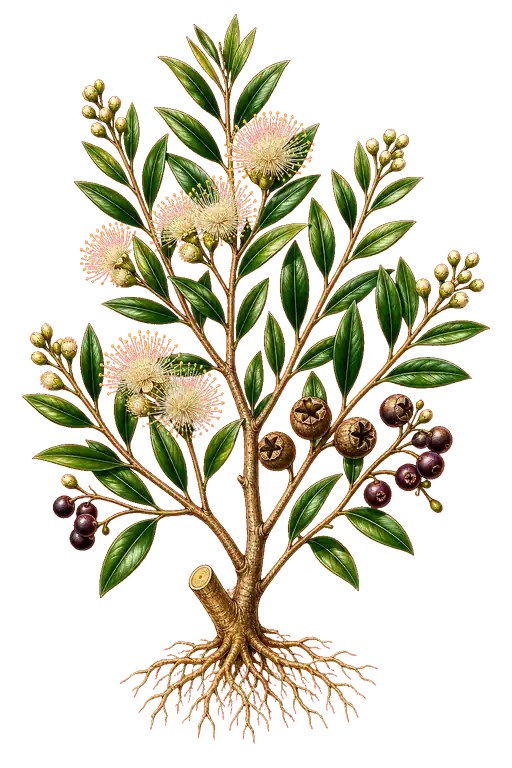
Myrtaceae
Myrtle/Eucalyptus family
Lal Amrud belongs to the Myrtaceae family.
The illustration represents the family — not necessarily this exact species.
Explore the Myrtaceae familySnap it. Know it.
Point your camera at Lal Amrud or any plant and SASYA identifies it instantly — on-device, offline, and private.
Common plant problems
If you are starting from symptoms instead of a diagnosis, use the plant disease symptom checker to narrow the cause before treating.
All plant problem & care guidesMore in Myrtaceae
View all MyrtaceaeSources: GBIF — Psidium guajava (India distribution & vernacular names) (CC BY 4.0) · iNaturalist — Psidium guajava (regional names, India observations) (CC BY 4.0) · Wikipedia — Psidium guajava (background/comprehension only) (CC BY-SA 4.0)