
Bili Gorante / Malabar False Eranthemum
Pseuderanthemum malabaricum
- Habit
- Undershrub
- Found in India
- Karnataka, Kerala, Maharashtra
- Flowering
- November-February
How to identify Bili Gorante
Identify Bili Gorante by combining habit, leaf characters, flower or fruit details, location, and its family pattern. Do not rely on one feature alone.
- Look for a undershrub habit.
- Confirm leaf surface: Glabrous (smooth, hairless).
- Confirm flower colour: Purple.
- In season, compare flowering and fruiting time: November-February.
- In India, compare location records such as Karnataka, Kerala, Maharashtra.
- Confirm it sits within the Acanthaceae family pattern, then compare close relatives before deciding it is Bili Gorante.
Plant Details
- Scientific name
- Pseuderanthemum malabaricum
- Genus
- Pseuderanthemum
- Family
- Acanthaceae
- Habit
- Undershrub
- Distribution
- India, Sri Lanka
- Found in India
- Karnataka, Kerala, Maharashtra
- Flowering & fruiting
- November-February
- Conservation status
- Not Evaluated (NE)
Leaf characters
- Leaf surface
- Glabrous (smooth, hairless)recorded
Typical of the family
- Arrangement
- Opposite
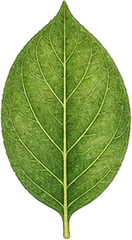


Characters marked “recorded” are for Bili Gorante itself; the rest are typical of the Acanthaceae family.
Flower & fruit characters
- Flower colour
- PurplerecordedPurple or violet
Typical of the family
- Flower symmetry
- Zygomorphic (bilaterally symmetrical)
- Inflorescence
- Spike
- Fruit
- Capsule
Characters marked “recorded” are for Bili Gorante itself; the rest are typical of the Acanthaceae family — flowering plants only.
Local Names
- Tamil
- புள்ளி போட்ட பூச்செடி Pulli Potta Poochedi
- Telugu
- చుక్క మల్లె Chukka Malle
- Kannada
- ಬಿಳಿ ಗೋರಂಟೆ Bili Gorante
- Malayalam
- ചുട്ടിമുല്ല Chuttimulla
- Marathi
- ठिपके पाकळी Thipake Pakali
Bili Gorante in India
Malabar false eranthemum is a peninsular India and Sri Lanka undershrub, with SASYA records from Karnataka, Kerala and Maharashtra. Its regional names include புள்ளி போட்ட பூச்செடி Pulli potta poochedi (Tamil), ಚುಕ್ಕ ಮಲ್ಲೆ Chukka malle (Telugu), ಬಿಳಿ ಗೋರಂಟೆ Bili gorante (Kannada), ചുട്ടിമുല്ല Chuttimulla (Malayalam), and ठिपके पाकळी Thipake pakali (Marathi).
Uses
It is mainly useful as an identification plant for moist peninsular habitats and native-plant gardens. Its spotted flowers and regional distribution make it a strong candidate for local flora searches rather than a general houseplant query.
How to Identify Bili Gorante
Identify it as a low undershrub in Acanthaceae with opposite leaves and pale flowers marked with purple or violet spotting. The search clue 'restricted to peninsular India and Sri Lanka' fits its distribution: when the plant is seen in the Western Ghats or nearby peninsular regions, check this species before broader ornamental Pseuderanthemum names.
Frequently Asked Questions
- Why is Pseuderanthemum malabaricum linked to peninsular India and Sri Lanka?
- SASYA's mapped records and taxon sources place it mainly in the peninsular India-Sri Lanka region, rather than as a widely distributed pan-tropical weed.
- How do I identify Malabar false eranthemum?
- Look for an Acanthaceae undershrub with opposite leaves and pale flowers that carry purple or violet spotting. Region matters: Karnataka, Kerala and Maharashtra records make it more likely in the Western Ghats belt.
- What are local names for Pseuderanthemum malabaricum?
- Recorded names include Pulli potta poochedi in Tamil, Chukka malle in Telugu, Bili gorante in Kannada, Chuttimulla in Malayalam and Thipake pakali in Marathi.
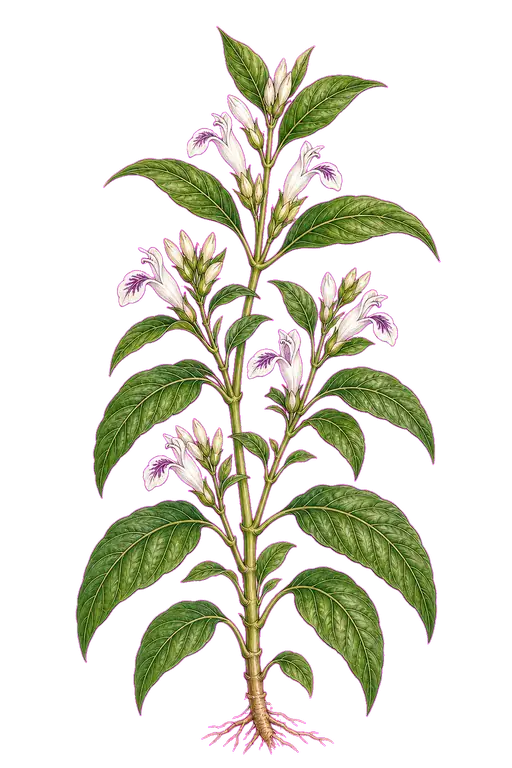
Acanthaceae
Acanthus family
Bili Gorante belongs to the Acanthaceae family.
The illustration represents the family — not necessarily this exact species.
Explore the Acanthaceae familySnap it. Know it.
Point your camera at Bili Gorante or any plant and SASYA identifies it instantly — on-device, offline, and private.
Common plant problems
If you are starting from symptoms instead of a diagnosis, use the plant disease symptom checker to narrow the cause before treating.
All plant problem & care guidesMore in Acanthaceae
View all AcanthaceaeSources: GBIF — Pseuderanthemum malabaricum (CC BY 4.0) · iNaturalist — Pseuderanthemum malabaricum (CC BY 4.0)