
Jangli Isabgol / Greater Plantain
Plantago major
- Habit
- Herb
- Found in India
- Uttarakhand, Himachal Pradesh, Jammu & Kashmir & more
How to identify Jangli Isabgol
Identify Jangli Isabgol by combining habit, leaf characters, flower or fruit details, location, and its family pattern. Do not rely on one feature alone.
- Look for a herb habit.
- Check the distinctive field mark: Broad basal leaves, common lawn weed (greater plantain).
- Confirm leaf arrangement: Basal.
- Confirm leaf margin: Entire.
- Confirm flower colour: Green.
- Confirm flower arrangement: Spike.
- In India, compare location records such as Uttarakhand, Himachal Pradesh, Jammu & Kashmir, Arunachal Pradesh and nearby regions.
Plant Details
- Scientific name
- Plantago major
- Genus
- Plantago
- Family
- Plantaginaceae
- Habit
- Herb
- Found in India
- Uttarakhand, Himachal Pradesh, Jammu & Kashmir, Arunachal Pradesh, Delhi, Karnataka, Madhya Pradesh, Maharashtra, Manipur, Meghalaya, Punjab, Sikkim, Tamil Nadu, Telangana, West Bengal
- Conservation status
- Not Evaluated (NE)
Leaf characters
- Leaf arrangement
- BasalrecordedLeaves cluster at the base of the plant rather than along a stem.“Plantago major is a herbaceous, perennial plant with a rosette of leaves 15–30 centimetres (6–12 inches), exceptionally 70 centimetres (28 inches), in diameter.” — Wikipedia, CC BY-SA 4.0
- Leaf margin
- EntirerecordedA smooth, unbroken edge with no teeth or notches.“Each leaf is oval-shaped, 3–18 cm (1–7 in) long and 2–11 cm (3⁄4–4+1⁄4 in) broad, rarely up to 30 cm (12 in) long and 21 cm (8 in) broad, with an acute apex, a smooth margin, and a” — Wikipedia, CC BY-SA 4.0
- Leaf surface
- GlabrousrecordedSmooth, hairless.“Each leaf is oval-shaped, 3–18 cm (1–7 in) long and 2–11 cm (3⁄4–4+1⁄4 in) broad, rarely up to 30 cm (12 in) long and 21 cm (8 in) broad, with an acute apex, a smooth margin, and a” — Wikipedia, CC BY-SA 4.0
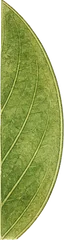
Characters marked “recorded” are for Jangli Isabgol itself; the rest are typical of the Plantaginaceae family.
Flower & fruit characters
- Flower colour
- GreenrecordedGreen or greenish
- Flower arrangement
- SpikerecordedFlowers arranged directly on a central stem without individual stalks.“The flowers are small, greenish-brown with purple stamens, produced in a dense spike 1–20 cm (0–8 in) (rarely to 40 cm (16 in)) long on top of a stem 2–18 cm (1–7 in) (rarely to 70” — Wikipedia, CC BY-SA 4.0
Typical of the family
- Flower symmetry
- Zygomorphic (bilaterally symmetrical)
- Fruit
- Capsule
Characters marked “recorded” are for Jangli Isabgol itself; the rest are typical of the Plantaginaceae family — flowering plants only.
Local Names
- Hindi
- जंगली ईसबगोल Jangli Isabgol, लहुरिया Lahuriya
- Nepali
- चमचे झार Chamche Jhar, इसबगोल Isabgol
- Tamil
- இசப்புக்கோல் விதை Ishappukol Vitai
- Kannada
- ಸಿರಪೊಟ್ಲ ಗಿಡ Sirapotla Gida
- Marathi
- बारटंग Baartang
About Jangli Isabgol
Greater plantain (Plantago major) belongs to the Plantaginaceae family, where it grows as a herb. In India it has been recorded in Uttarakhand, Himachal Pradesh, Jammu & Kashmir and 12 other states.
Uses
It is grown for parts that are eaten, long used in traditional medicine and planted as an ornamental. Those medicinal uses are traditional attributions, not medical advice.
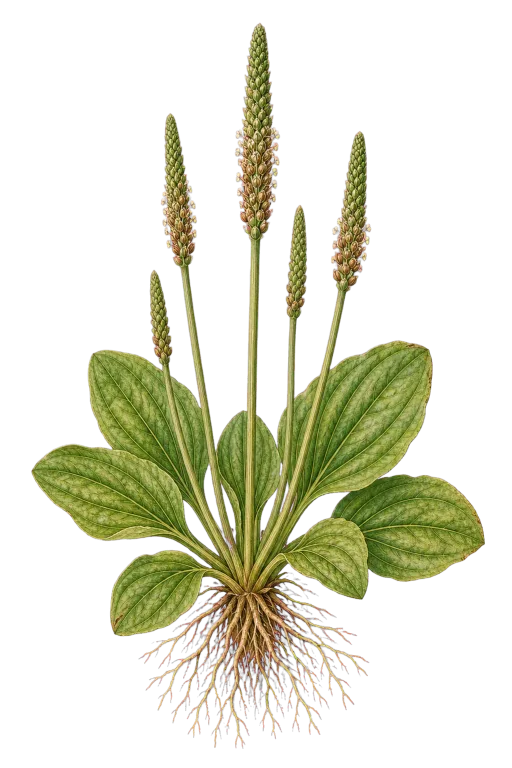
Plantaginaceae
Plantain family
Jangli Isabgol belongs to the Plantaginaceae family.
The illustration represents the family — not necessarily this exact species.
Explore the Plantaginaceae familySnap it. Know it.
Point your camera at Jangli Isabgol or any plant and SASYA identifies it instantly — on-device, offline, and private.
Common plant problems
If you are starting from symptoms instead of a diagnosis, use the plant disease symptom checker to narrow the cause before treating.
All plant problem & care guides