
Gul-E Meymoon / Snapdragon
Antirrhinum majus
- Found in India
- Uttar Pradesh, Bihar, Uttarakhand & more
How to identify Gul-E Meymoon
Identify Gul-E Meymoon by combining habit, leaf characters, flower or fruit details, location, and its family pattern. Do not rely on one feature alone.
- Check the distinctive field mark: Two-lipped 'dragon mouth' flowers that open when squeezed (snapdragon).
- Confirm leaf arrangement: Opposite.
- Confirm leaf type: Simple.
- Confirm flower colour: Purple.
- Confirm flower arrangement: Spike.
- In India, compare location records such as Uttar Pradesh, Bihar, Uttarakhand, Jammu & Kashmir and nearby regions.
- Confirm it sits within the Plantaginaceae family pattern, then compare close relatives before deciding it is Gul-E Meymoon.
Plant Details
- Scientific name
- Antirrhinum majus
- Genus
- Antirrhinum
- Family
- Plantaginaceae
- Found in India
- Uttar Pradesh, Bihar, Uttarakhand, Jammu & Kashmir, West Bengal, Chhattisgarh, Maharashtra, Manipur, Rajasthan
- Conservation status
- Not Evaluated (NE)
Leaf characters
- Leaf arrangement
- OppositerecordedTwo leaves arise from the stem at the same point, facing each other.“The opposite leaves are simple, elliptic or ovate to broad-lanceolate, sometimes linear and usually bleak.” — Wikipedia, CC BY-SA 4.0
- Leaf type
- SimplerecordedA single, undivided leaf blade.“The opposite leaves are simple, elliptic or ovate to broad-lanceolate, sometimes linear and usually bleak.” — Wikipedia, CC BY-SA 4.0
- Leaf shape
- LanceolaterecordedLong and narrow, tapering to a point, like a lance head.“The leaves are spirally arranged, broadly lanceolate, 1–7 cm long and 2–2.5 cm broad.” — Wikipedia, CC BY-SA 4.0
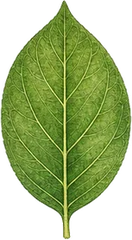
Characters marked “recorded” are for Gul-E Meymoon itself; the rest are typical of the Plantaginaceae family.
Flower & fruit characters
- Flower colour
- PurplerecordedPurple or violet
- Flower arrangement
- SpikerecordedFlowers arranged directly on a central stem without individual stalks.“The flowers are produced on a tall spike, each flower is 3.5-4.5 cm long, zygomorphic, with two 'lips' closing the corolla tube lobed divided into three parts and is purple red, al” — Wikipedia, CC BY-SA 4.0
- Fruit type
- CapsulerecordedA dry fruit from a fused ovary that splits open at maturity to release seeds.“The fruit is an ovoid capsule 10–14 mm diameter shaped like a skull, containing numerous small seeds.” — Wikipedia, CC BY-SA 4.0
Typical of the family
- Flower symmetry
- Zygomorphic (bilaterally symmetrical)
- Fruit
- Capsule
Characters marked “recorded” are for Gul-E Meymoon itself; the rest are typical of the Plantaginaceae family — flowering plants only.
Local Names
- Urdu
- Gul-e meymoon ﮔﹹﻞﹺ ﻣﻴﻤﯘﻥ
- Nepali
- बाघमुखे फूल Baghmukhe phool
About Gul-E Meymoon
Snapdragon (Antirrhinum majus) is a species in the Plantaginaceae family. In India it has been recorded in Uttar Pradesh, Bihar, Uttarakhand and 6 other states.
Uses
In practice it is planted as an ornamental.
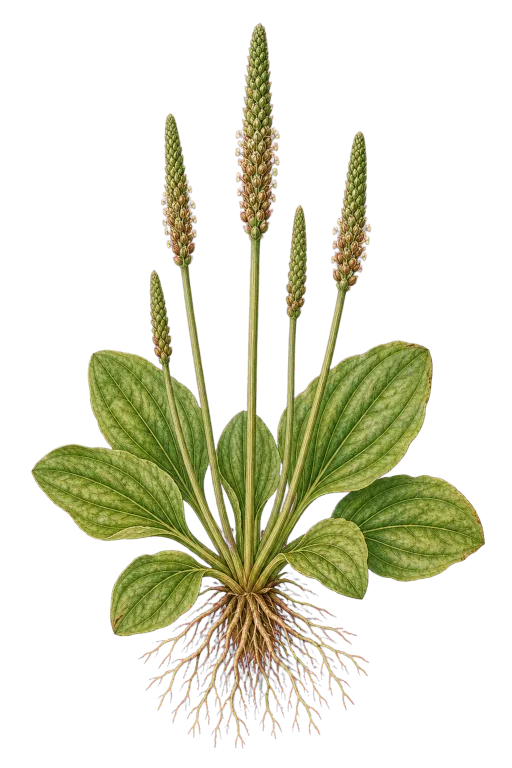
Plantaginaceae
Plantain family
Gul-E Meymoon belongs to the Plantaginaceae family.
The illustration represents the family — not necessarily this exact species.
Explore the Plantaginaceae familySnap it. Know it.
Point your camera at Gul-E Meymoon or any plant and SASYA identifies it instantly — on-device, offline, and private.
Common plant problems
If you are starting from symptoms instead of a diagnosis, use the plant disease symptom checker to narrow the cause before treating.
All plant problem & care guides