
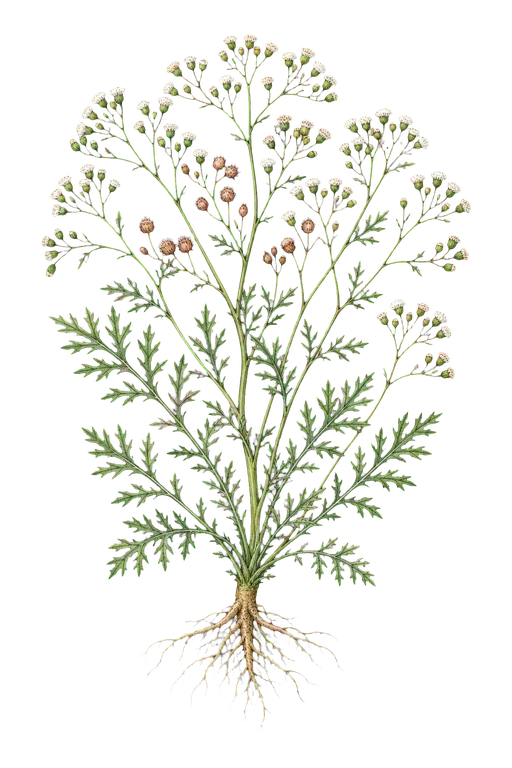
Gajar Ghas / Congress Weed
Parthenium hysterophorus
Also known as Parthenium, Santa Maria Fever Few, Carrot Grass
- Habit
- Undershrub
- Found in India
- Tamil Nadu, Maharashtra, Andhra Pradesh & more
- Flowering
- Throughout the year
How to identify Gajar Ghas
Identify Gajar Ghas by combining habit, leaf characters, flower or fruit details, location, and its family pattern. Do not rely on one feature alone.
- Look for a undershrub habit.
- Check the distinctive field mark: Invasive allergenic weed (congress grass).
- Confirm leaf surface: Hirsute (coarsely hairy).
- Confirm flower colour: White.
- Use the leaf pattern: alternate leaf arrangement, simple leaves, lobed leaf margins, pinnate venation.
- In season, compare flowering and fruiting time: Throughout the year.
- In India, compare location records such as Tamil Nadu, Maharashtra, Andhra Pradesh, Telangana and nearby regions.
Plant Details
- Scientific name
- Parthenium hysterophorus
- Genus
- Parthenium
- Family
- Asteraceae
- Habit
- Undershrub
- Habitat
- A weed of human habitaitons
- Habitat type
- Wasteland
- Native to
- America
- Distribution
- Pantropical
- Found in India
- Tamil Nadu, Maharashtra, Andhra Pradesh, Telangana, Karnataka, Uttar Pradesh, Gujarat, Uttarakhand, Rajasthan, West Bengal, Odisha, Madhya Pradesh, Bihar, Chhattisgarh, Delhi, Haryana, Kerala, Assam, Punjab, Himachal Pradesh, Chandigarh, Jharkhand, Jammu & Kashmir, Mizoram, Daman & Diu, Manipur, Puducherry
- Flowering & fruiting
- Throughout the year
- Conservation status
- Not Evaluated (NE)
Leaf characters
- Leaf surface
- Hirsute (coarsely hairy)recorded
Typical of the family
- Arrangement
- Alternate
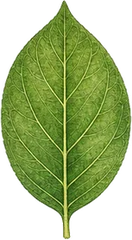
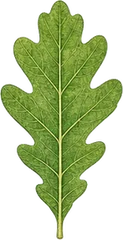

Characters marked “recorded” are for Gajar Ghas itself; the rest are typical of the Asteraceae family.
Flower & fruit characters
- Flower colour
- Whiterecorded
Typical of the family
- Flower symmetry
- Actinomorphic (radially symmetrical)
- Inflorescence
- Head
- Fruit
- Achene
Characters marked “recorded” are for Gajar Ghas itself; the rest are typical of the Asteraceae family — flowering plants only.
Local Names
- Hindi
- गाजर घास gajar ghas, चटक चांदनी Chatak Chandani,गाजर घास gajara ghas
- Tamil
- காங்கிரஸ் களை
- Telugu
- వయ్యారిభామ
- Kannada
- ಪಾರ್ಥೇನಿಯಮ್
- Malayalam
- കോൺഗ്രസ് പുല്ല്
- Marathi
- गाजर गवत
- Gujarati
- કોંગ્રેસ ઘાસ
Gajar Ghas in India
Congress grass is one of India's most hated invasive weeds — गाजर घास gajar ghas (Hindi), காங்கிரஸ் களை (Tamil), వయ్యారిభామ (Telugu), ಪಾರ್ಥೇನಿಯಮ್ (Kannada), കോൺഗ്രസ് പുല്ല് (Malayalam), गाजर गवत (Marathi), also 'carrot grass'. Parthenium hysterophorus is recorded across Tamil Nadu, Maharashtra, Andhra Pradesh, Telangana, Karnataka, Gujarat, blanketing roadsides, fields and waste ground.
Uses
It has no positive everyday use and is a serious problem: it causes skin allergies (dermatitis) and respiratory allergy in people, is toxic to livestock, and aggressively displaces crops and native plants. It is a species to remove (with gloves), not cultivate.
How to Identify Gajar Ghas
An erect, much-branched annual herb with soft, deeply cut, carrot-like (feathery) pale-green leaves. It carries many small creamy-white flower heads, each a tiny five-pointed button, and a single plant can produce thousands of seeds.
Frequently Asked Questions
- What is Congress Weed called in different Indian languages?
- गाजर घास gajar ghas (Hindi); காங்கிரஸ் களை (Tamil); వయ్యారిభామ (Telugu); ಪಾರ್ಥೇನಿಯಮ್ (Kannada); കോൺഗ്രസ് പുല്ല് (Malayalam); गाजर गवत (Marathi); કોંગ્રેસ ઘાસ (Gujarati).
- Why is congress grass harmful?
- It triggers skin and respiratory allergies in people, is toxic to livestock, and aggressively crowds out crops and native vegetation.
- How do you identify congress grass?
- Look for an erect weed with feathery, carrot-like pale-green leaves and many small five-pointed creamy-white flower heads on roadsides and waste ground.
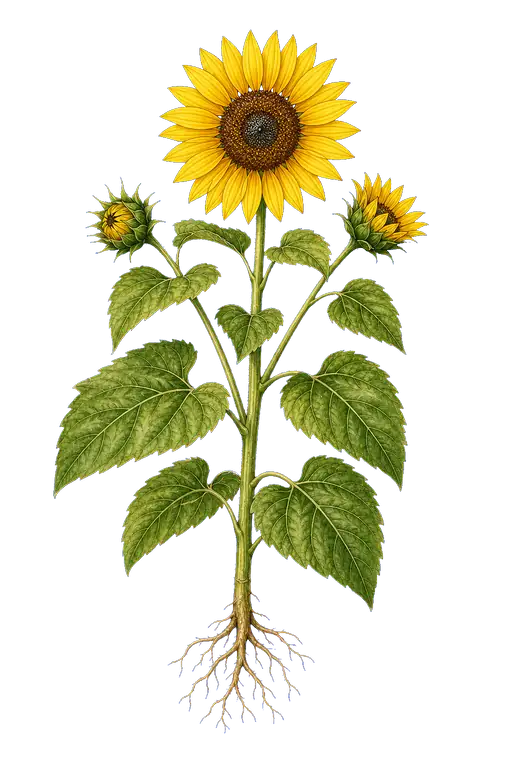
Asteraceae
Daisy/Sunflower family
Gajar Ghas belongs to the Asteraceae family.
The illustration represents the family — not necessarily this exact species.
Explore the Asteraceae familySnap it. Know it.
Point your camera at Gajar Ghas or any plant and SASYA identifies it instantly — on-device, offline, and private.
Common plant problems
If you are starting from symptoms instead of a diagnosis, use the plant disease symptom checker to narrow the cause before treating.
All plant problem & care guidesMore in Asteraceae
View all AsteraceaeSources: GBIF — Parthenium hysterophorus (India distribution & vernacular names) (CC BY 4.0) · iNaturalist — Parthenium hysterophorus (regional names, India observations) (CC BY 4.0) · Wikipedia — Parthenium hysterophorus (background/comprehension only) (CC BY-SA 4.0)