
Gulga / Mangrove Palm
Nypa fruticans
- Habit
- Palm (Cluster)
- Found in India
- West Bengal, Odisha
- Flowering
- Throughout the year
Plant Details
- Scientific name
- Nypa fruticans
- Genus
- Nypa
- Family
- Arecaceae
- Habit
- Palm (Cluster)
- Distribution
- Coastal areas of Indo-Pacific region, Australia, Sri Lanka, Malay Archipelago
- Found in India
- West Bengal, Odisha
- Flowering & fruiting
- Throughout the year
- Conservation status
- Not Evaluated (NE)
Leaf characters
- Arrangement
- Alternate



Typical of the Arecaceae family — a field-mark hint, not measured for this exact species.
Flower & fruit characters
Typical of the Arecaceae family — flowering plants only; individual species can differ.
Local Names
- Hindi
- गुलगा Gulga
- Kannada
- ನೀರತೆಂಗು Neerthengu
- Bengali
- গোলপাতা, golpatta
About Gulga
Mangrove Palm (Nypa fruticans) is a palm (cluster) belonging to the Arecaceae family (Palm family). Members of this family are generally characterised by alternate spiral pinnate/palmate compound leaves, branched spadix flower clusters, drupe/berry fruit. It is usually grown in outdoor settings. It occurs across Coastal areas of Indo-Pacific region, Australia, Sri Lanka, Malay Archipelago. It flowers and fruits through much of the year.
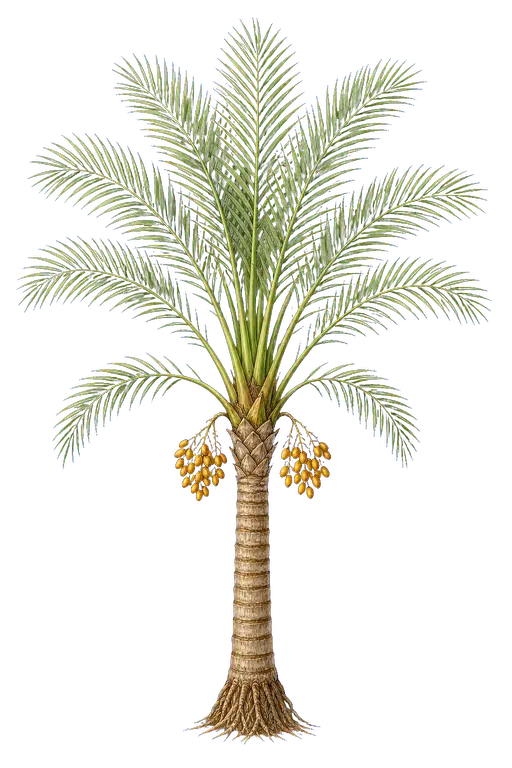
Arecaceae
Palm family
Gulga belongs to the Arecaceae family.
The illustration represents the family — not necessarily this exact species.
Explore the Arecaceae family →Snap it. Know it.
Point your camera at Gulga or any plant and SASYA identifies it instantly — on-device, offline, and private.