
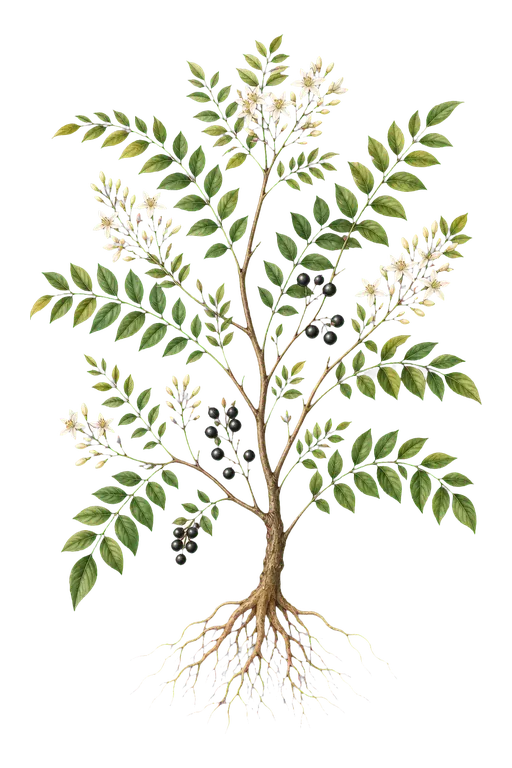
Kari Patta / Curry Leaf Tree
Murraya koenigii
Also known as Curry Bush
- Habit
- Tree
- Found in India
- Maharashtra, Tamil Nadu, Kerala & more
- Flowering
- Throughout the year
How to identify Kari Patta
Identify Kari Patta by combining habit, leaf characters, flower or fruit details, location, and its family pattern. Do not rely on one feature alone.
- Look for a tree habit.
- Check the distinctive field mark: Strong curry aroma.
- Confirm leaf type: Pinnately compound.
- Confirm fruit type: Berry.
- Use the leaf pattern: alternate leaf arrangement, compound leaves, toothed leaf margins, pinnate venation.
- In season, compare flowering and fruiting time: Throughout the year.
- In India, compare location records such as Maharashtra, Tamil Nadu, Kerala, West Bengal and nearby regions.
Plant Details
- Scientific name
- Murraya koenigii
- Genus
- Murraya
- Family
- Rutaceae
- Habit
- Tree
- Habitat
- Cultivated
- Habitat type
- Cultivated
- Native to
- Indian subcontinent
- Distribution
- India, Sri Lanka, Myanmar, Indo-China
- Found in India
- Maharashtra, Tamil Nadu, Kerala, West Bengal, Uttarakhand, Telangana, Andhra Pradesh, Rajasthan, Karnataka, Uttar Pradesh, Assam, Delhi, Gujarat, Madhya Pradesh, Chhattisgarh, Goa, Odisha, Bihar, Himachal Pradesh, Punjab, Puducherry, Arunachal Pradesh, Chandigarh, Haryana, Meghalaya, Mizoram, Tripura, Jammu & Kashmir, Manipur, Sikkim
- Flowering & fruiting
- Throughout the year
- Conservation status
- Not Evaluated (NE)
Leaf characters
- Leaf type
- Pinnately compoundrecordedLeaflets are arranged in rows along a central stalk, like a feather.
Typical of the family
- Arrangement
- Alternate
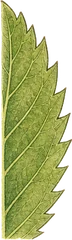

Characters marked “recorded” are for Kari Patta itself; the rest are typical of the Rutaceae family.
Flower & fruit characters
- Fruit type
- BerryrecordedA fleshy fruit with seeds embedded directly in the pulp, no central stone.“The berry pulp is edible, with a sweet flavor.” — Wikipedia, CC BY-SA 4.0
Typical of the family
- Flower symmetry
- Actinomorphic (radially symmetrical)
- Inflorescence
- Cyme
- Fruit
- Berry
Characters marked “recorded” are for Kari Patta itself; the rest are typical of the Rutaceae family — flowering plants only.
Local Names
- Hindi
- कढ़ी पत्ते का पेड़,करी पत्ता kari patta,मीठी नीम mithi nim,कढीपत्ता पेड kadhipatta ped
- Bengali
- বারসুঙ্গা
- Tamil
- கறிவேம்பு, கறிவேப்பிலை
- Telugu
- కరివేపాకు
- Kannada
- ಕರಿಬೇವಿನ ಮರ, ಕರಿಬೇವು ಸೊಪ್ಪು ಮರ, ಬೈಸೊಪ್ಪು ಮರ
- Malayalam
- കറിവേപ്പ്, Curry Tree, കരിയേപ്പ്
- Marathi
- कढीलिंब, कडी पत्ता, कडीपत्ता
Kari Patta in India
The curry leaf tree is a kitchen-garden staple across India, called कढ़ी पत्ते का पेड़ (Hindi), கறிவேம்பு (Tamil), కరివేపాకు (Telugu), ಕರಿಬೇವಿನ ಮರ (Kannada), കറിവേപ്പ് (Malayalam), कढीलिंब (Marathi). Native to the Indian subcontinent, Murraya koenigii is widely cultivated and recorded across Maharashtra, Tamil Nadu, Andhra Pradesh, Kerala, Uttarakhand, West Bengal, often as a potted plant on balconies and in backyards for a steady supply of fresh leaves.
Uses
The aromatic leaves are central to South and West Indian cooking, fried in hot oil at the start of a tempering (tadka) for dals, sambar, rasam and chutneys. The leaves are used fresh; dried ones lose most of their fragrance. The plant also has attributed uses in traditional medicine.
How to Identify Kari Patta
A small, slender tree or shrub in the citrus family with glossy pinnate leaves of many small leaflets that release a distinctive savoury aroma when crushed. Clusters of small white flowers are followed by tiny berries that ripen black. The smell instantly separates it from the bitter, look-alike neem.
Frequently Asked Questions
- What is Curry Leaf Tree called in different Indian languages?
- कढ़ी पत्ते का पेड़ (Hindi); கறிவேம்பு (Tamil); కరివేపాకు (Telugu); ಕರಿಬೇವಿನ ಮರ (Kannada); കറിവേപ്പ് (Malayalam); कढीलिंब (Marathi); বারসুঙ্গা (Bengali).
- Why is my curry leaf plant not bushy?
- Curry leaf bushes out when the growing tips are pinched and leaves are harvested regularly; it also prefers full sun and warmth, slowing in cold weather.
- Are curry leaves and curry powder related?
- No — curry leaves are the fresh leaves of Murraya koenigii used in tempering, while 'curry powder' is a separate blend of ground spices.
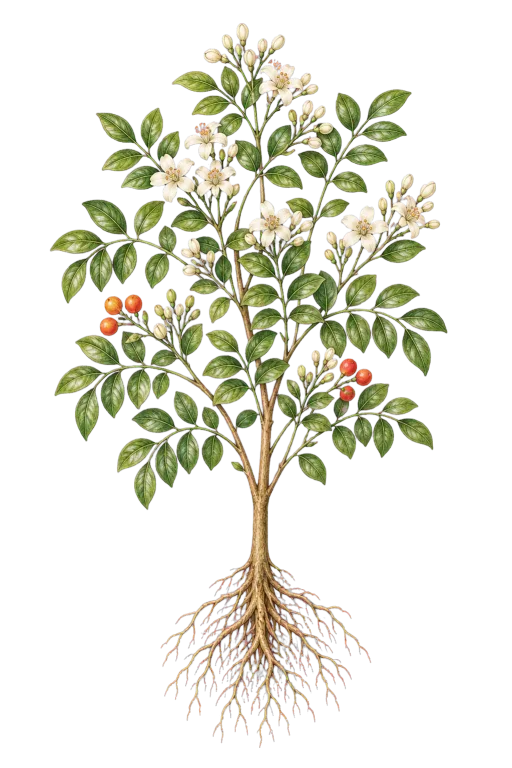
Rutaceae
Citrus/Rue family
Kari Patta belongs to the Rutaceae family.
The illustration represents the family — not necessarily this exact species.
Explore the Rutaceae familySnap it. Know it.
Point your camera at Kari Patta or any plant and SASYA identifies it instantly — on-device, offline, and private.
Common plant problems
If you are starting from symptoms instead of a diagnosis, use the plant disease symptom checker to narrow the cause before treating.
All plant problem & care guidesMore in Rutaceae
View all RutaceaeSources: GBIF — Murraya koenigii (India distribution & vernacular names) (CC BY 4.0) · iNaturalist — Murraya koenigii (regional names, India observations) (CC BY 4.0) · Wikipedia — Murraya koenigii (background/comprehension only) (CC BY-SA 4.0)