
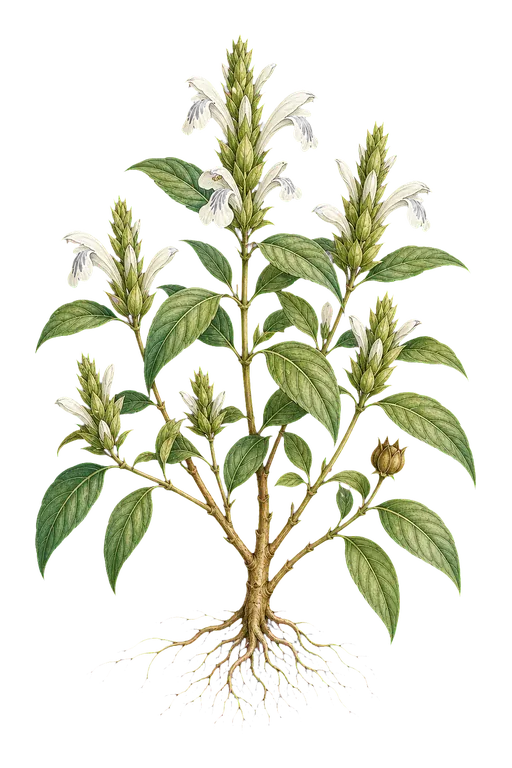
Arus / Vasa
Justicia adhatoda
Also known as Vasaka, Malabar Nut, Adhatoda
- Habit
- Shrub
- Found in India
- Rajasthan, Maharashtra, Delhi & more
- Flowering
- October-March
How to identify Arus
Identify Arus by combining habit, leaf characters, flower or fruit details, location, and its family pattern. Do not rely on one feature alone.
- Look for a shrub habit.
- Check the distinctive field mark: Widely used medicinal shrub (Vasaka/Malabar nut).
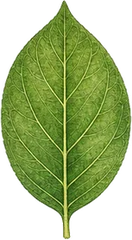
- Confirm leaf shape: Lanceolate.
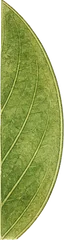
- Confirm leaf surface: Glabrous.
- Confirm flower colour: White.
- Confirm fruit type: Capsule.
- Use the leaf pattern: opposite leaf arrangement, simple leaves, entire leaf margins, pinnate venation.
Plant Details
- Scientific name
- Justicia adhatoda
- Genus
- Justicia
- Family
- Acanthaceae
- Habit
- Shrub
- Habitat
- Plains
- Habitat type
- Plains
- Native to
- Indo-Himalaya
- Distribution
- India, sub-tropical Himalayas, China, Malaya Peninsula, Nepal
- Found in India
- Rajasthan, Maharashtra, Delhi, Karnataka, Uttarakhand, Gujarat, West Bengal, Kerala, Assam, Himachal Pradesh, Tamil Nadu, Haryana, Punjab, Andhra Pradesh, Chhattisgarh, Jammu & Kashmir, Manipur, Meghalaya, Uttar Pradesh, Arunachal Pradesh, Goa, Mizoram, Odisha
- Flowering & fruiting
- October-March
- Conservation status
- Not Evaluated (NE)
Leaf characters
- Leaf shape
- LanceolaterecordedLong and narrow, tapering to a point, like a lance head.“Justicia adhatoda is a shrub with 10-20 lance-shaped leaves 8-9 centimeters in length by four wide.” — Wikipedia, CC BY-SA 4.0
- Leaf surface
- GlabrousrecordedSmooth, hairless.“They are oppositely arranged, smooth-edged, and borne on short petioles.” — Wikipedia, CC BY-SA 4.0
Typical of the family
- Arrangement
- Opposite

Characters marked “recorded” are for Arus itself; the rest are typical of the Acanthaceae family.
Flower & fruit characters
- Flower colour
- Whiterecorded
- Fruit type
- CapsulerecordedA dry fruit from a fused ovary that splits open at maturity to release seeds.“Fruits are pubescent, and are with club-shaped capsules.” — Wikipedia, CC BY-SA 4.0
Typical of the family
- Flower symmetry
- Zygomorphic (bilaterally symmetrical)
- Inflorescence
- Spike
- Fruit
- Capsule
Characters marked “recorded” are for Arus itself; the rest are typical of the Acanthaceae family — flowering plants only.
Local Names
- Hindi
- अरुस arus, अड़ूसा arusa, प्रामाद्य pramadya, Arusa
- Nepali
- असुरो asuro, कालो भासक kalo bhasaka, अडेसो
- Bengali
- বাসক basak, Basak, বাসক
- Tamil
- ஆசலை acalai, ஆடாதோடை atatotai, ஆட்டுசம் attucam, Atatotai
- Telugu
- అడ్డసరం
- Kannada
- ಆಡುಸೋಗೆ Aadusoge, ಕರ್ಚಿ Karchi, ಅಡ್ಡಸರ Addasara, Adusoge
- Malayalam
- ആടലോടകം aatalootakam, ആടലോടകം, Aatalootakam
- Marathi
- अडुळसा adulasa, Adulasa, adulsa, अडुळसा
- Sanskrit
- Vasaka, वसाका
- Gujarati
- Aradusi, અરડૂસી
- Odia
- ବସକ
- Punjabi
- Basuti, ਅਡੂਸਾ
- Assamese
- Boga bahok, বাকাসা
- Urdu
- ادوسा
- Sinhala
- ආඩතෝඩා
Arus in India
Vasaka is a familiar hedge shrub long used in Ayurveda — अरुस arus (Hindi), ஆசலை acalai (Tamil), అడ్డసరం (Telugu), ಆಡುಸೋಗೆ Aadusoge (Kannada), ആടലോടകം aatalootakam (Malayalam), अडुळसा adulasa (Marathi), also called Malabar nut. Justicia adhatoda is recorded across Rajasthan, Maharashtra, NCT of Delhi, Karnataka, Uttarakhand, Gujarat, common on roadsides and field edges.
Uses
Its leaves are one of the most classic traditional remedies for coughs and respiratory complaints in Ayurveda and Unani — an attributed traditional use, not medical advice. It is also planted as a quick hedge, and the leaves are used as a green manure and bio-pesticide.
How to Identify Arus
A dense evergreen shrub with large, lance-shaped opposite leaves that smell strong when crushed. It bears showy white two-lipped flowers marked with pink or purple veining in the throat, clustered in short spikes — typical of the Acanthus family.
Frequently Asked Questions
- What is Vasa called in different Indian languages?
- अरुस arus (Hindi); ஆசலை acalai (Tamil); అడ్డసరం (Telugu); ಆಡುಸೋಗೆ Aadusoge (Kannada); ആടലോടകം aatalootakam (Malayalam); अडुळसा adulasa (Marathi); বাসক basak (Bengali); Aradusi (Gujarati); ବସକ (Odia); Basuti (Punjabi); Vasaka (Sanskrit).
- What is vasaka (adusa) used for?
- Its leaves are a classical Ayurvedic and Unani remedy associated with coughs and the respiratory system; this is a traditional, attributed use and not medical advice.
- How do you identify vasaka?
- Look for a bushy shrub with large lance-shaped opposite leaves and white two-lipped flowers veined with pink-purple in the throat.
Acanthaceae
Acanthus family
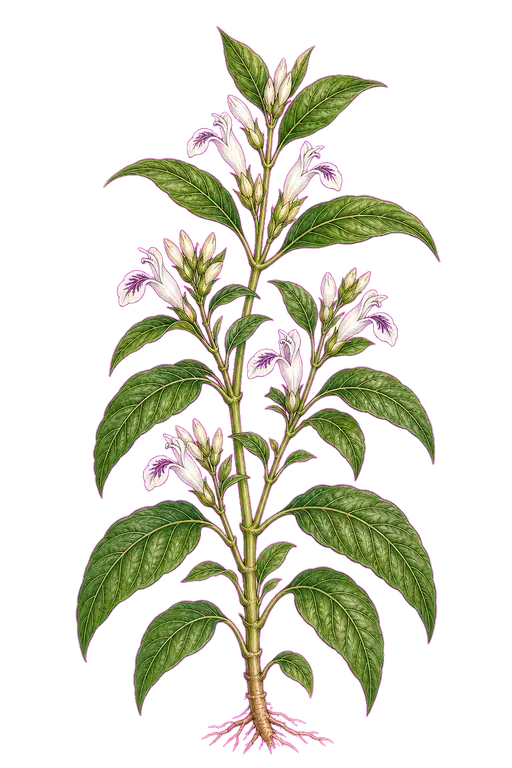
Arus belongs to the Acanthaceae family.
The illustration represents the family — not necessarily this exact species.
Explore the Acanthaceae familySnap it. Know it.
Point your camera at Arus or any plant and SASYA identifies it instantly — on-device, offline, and private.
Common plant problems
If you are starting from symptoms instead of a diagnosis, use the plant disease symptom checker to narrow the cause before treating.
All plant problem & care guidesMore in Acanthaceae
View all AcanthaceaeSources: GBIF — Justicia adhatoda (India distribution & vernacular names) (CC BY 4.0) · iNaturalist — Justicia adhatoda (regional names, India observations) (CC BY 4.0) · Wikipedia — Justicia adhatoda (background/comprehension only) (CC BY-SA 4.0)