
Mukuram / Looking-Glass Tree
Heritiera littoralis
- Habit
- Tree
- Found in India
- Andaman & Nicobar Islands, Kerala, Maharashtra
- Flowering
- July-January
How to identify Mukuram
Identify Mukuram by combining habit, leaf characters, flower or fruit details, location, and its family pattern. Do not rely on one feature alone.
- Look for a tree habit.
- Check the distinctive field mark: Silvery, mirror-like leaf underside (looking-glass tree).
- Confirm leaf shape: Elliptic (widest at middle).
- Confirm flower colour: Yellow-green.
- Confirm flower arrangement: Panicle.
- In season, compare flowering and fruiting time: July-January.
- In India, compare location records such as Andaman & Nicobar Islands, Kerala, Maharashtra.
Plant Details
- Scientific name
- Heritiera littoralis
- Genus
- Heritiera
- Family
- Sterculiaceae
- Habit
- Tree
- Habitat
- Evergreen forests
- Habitat type
- Forest
- Native to
- Old World tropics
- Distribution
- India, Andamans, Myanmar, Malesia, Philippines
- Found in India
- Andaman & Nicobar Islands, Kerala, Maharashtra
- Flowering & fruiting
- July-January
- Conservation status
- Least Concern (LC)
Leaf characters
- Leaf shape
- Elliptic (widest at middle)recorded
Typical of the family
- Arrangement
- Alternate

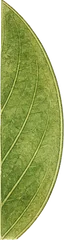

Characters marked “recorded” are for Mukuram itself; the rest are typical of the Sterculiaceae family.
Flower & fruit characters
- Flower colour
- Yellow-greenrecorded
- Flower arrangement
- PaniclerecordedA branching cluster of clusters.“The inflorescences are axillary panicles, and as this species is monoecious, they bear both pistillate (functionally female) and staminate (functionally male) flowers on the same p” — Wikipedia, CC BY-SA 4.0
- Fruit type
- LegumerecordedA dry pod that splits open along two seams (typical of the pea/bean family).“The fruit is a flattened, ellipsoid, indehiscent, brown woody pod which is derived from the carpel, and contains a single seed.” — Wikipedia, CC BY-SA 4.0
Typical of the family
- Flower symmetry
- Actinomorphic (radially symmetrical)
- Inflorescence
- Panicle
- Fruit
- Capsule
Characters marked “recorded” are for Mukuram itself; the rest are typical of the Sterculiaceae family — flowering plants only.
Local Names
- Bengali
- সুন্দরী sundari
- Kannada
- ಚಂದ ಮರ chanda mara
- Malayalam
- മുകുരം mukuram
- Marathi
- सुंदरी sundari
About Mukuram
Looking-glass Tree (Heritiera littoralis) belongs to the Sterculiaceae family, where it grows as a tree. In India it has been recorded in Andaman & Nicobar Islands, Kerala and Maharashtra. It grows in evergreen forests. Flowering and fruiting run from July to January.
Uses
It is grown for parts that are eaten and cut for timber and furniture. Parts of this plant are reported as poisonous — treat it as unsafe to eat and wash your hands after handling.
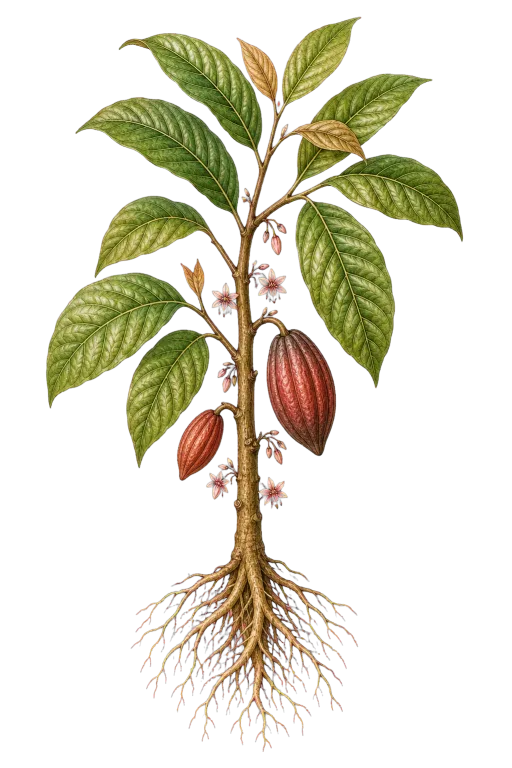
Sterculiaceae
Cacao/Cola family
Mukuram belongs to the Sterculiaceae family.
The illustration represents the family — not necessarily this exact species.
Explore the Sterculiaceae familySnap it. Know it.
Point your camera at Mukuram or any plant and SASYA identifies it instantly — on-device, offline, and private.
Common plant problems
If you are starting from symptoms instead of a diagnosis, use the plant disease symptom checker to narrow the cause before treating.
All plant problem & care guides