
Kharsiya / Manystem Cudweed
Gnaphalium polycaulon
- Habit
- Herb
- Found in India
- Maharashtra, Uttarakhand, Karnataka & more
- Flowering
- November-May
How to identify Kharsiya
Identify Kharsiya by combining habit, leaf characters, flower or fruit details, location, and its family pattern. Do not rely on one feature alone.
- Look for a herb habit.
- Confirm leaf shape: Linear.
- Confirm leaf surface: Tomentose.
- Confirm flower colour: White.
- Confirm flower arrangement: Head.
- In season, compare flowering and fruiting time: November-May.
- In India, compare location records such as Maharashtra, Uttarakhand, Karnataka, Telangana and nearby regions.
Plant Details
- Scientific name
- Gnaphalium polycaulon
- Genus
- Gnaphalium
- Family
- Asteraceae
- Habit
- Herb
- Habitat
- Wet places
- Habitat type
- Wetland
- Distribution
- Pantropical
- Found in India
- Maharashtra, Uttarakhand, Karnataka, Telangana, Delhi, Himachal Pradesh, Jammu & Kashmir, Rajasthan, Uttar Pradesh
- Flowering & fruiting
- November-May
- Conservation status
- Not Evaluated (NE)
Leaf characters
- Leaf shape
- LinearrecordedVery long and narrow with roughly parallel sides.“Leaves are narrowly linear, up to 4.5 cm (1.8 in) long.” — Wikipedia, CC BY-SA 4.0
- Leaf surface
- TomentoserecordedDensely covered in matted, woolly hairs.“Stems, leaves and phyllaries are covered with a dense coat of woolly hairs, giving the plant a whitish appearance.” — Wikipedia, CC BY-SA 4.0
Typical of the family
- Arrangement
- Alternate
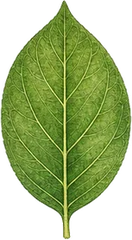

Characters marked “recorded” are for Kharsiya itself; the rest are typical of the Asteraceae family.
Flower & fruit characters
- Flower colour
- Whiterecorded
- Flower arrangement
- HeadrecordedA dense, tight cluster of many small stalkless flowers, packed into a rounded or flat head.“Flower heads are born in tight, elongated array.” — Wikipedia, CC BY-SA 4.0
Typical of the family
- Flower symmetry
- Actinomorphic (radially symmetrical)
- Inflorescence
- Head
- Fruit
- Achene
Characters marked “recorded” are for Kharsiya itself; the rest are typical of the Asteraceae family — flowering plants only.
Local Names
- Hindi
- खरसिया kharsiya
- Nepali
- बोकी झार bokee jhaar, बोके फूल boke phool
- Bengali
- ধলি পুঁই dhali pui
- Tamil
- இருப்பவல் iruppaval, சாம்பப்பச்சை saambapachchai
- Kannada
- ಹಕ್ಕಿ ಬಳ್ಳಿ hakki balli
About Kharsiya
Manystem Cudweed (Gnaphalium polycaulon) is a herb in the Asteraceae family. In India it has been recorded in Maharashtra, Uttarakhand, Karnataka and 6 other states. It grows in wet places. Flowering and fruiting run from November to May.
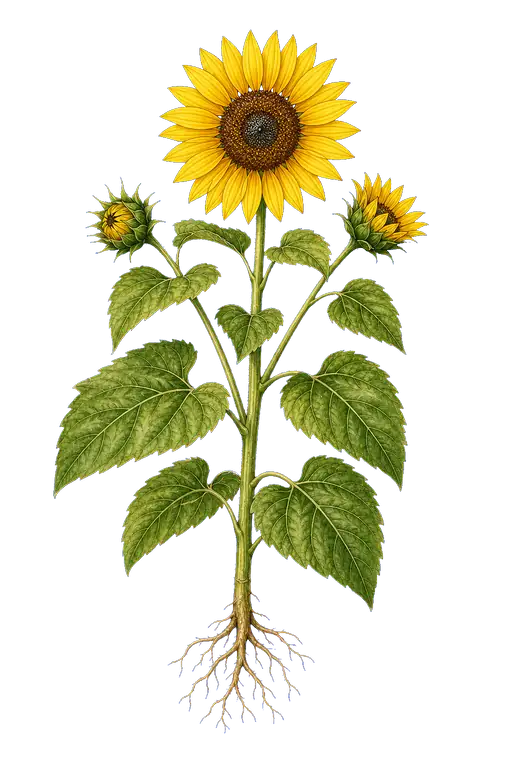
Asteraceae
Daisy/Sunflower family
Kharsiya belongs to the Asteraceae family.
The illustration represents the family — not necessarily this exact species.
Explore the Asteraceae familySnap it. Know it.
Point your camera at Kharsiya or any plant and SASYA identifies it instantly — on-device, offline, and private.
Common plant problems
If you are starting from symptoms instead of a diagnosis, use the plant disease symptom checker to narrow the cause before treating.
All plant problem & care guides