
Hirankhuri / Pink Emilia
Emilia sonchifolia
- Habit
- Herb
- Found in India
- Kerala, Maharashtra, Karnataka & more
- Flowering
- July-April
How to identify Hirankhuri
Identify Hirankhuri by combining habit, leaf characters, flower or fruit details, location, and its family pattern. Do not rely on one feature alone.
- Look for a herb habit.
- Confirm leaf arrangement: Alternate.
- Confirm leaf margin: Toothed.
- Confirm flower colour: Pink.
- Confirm flower arrangement: Head.
- In season, compare flowering and fruiting time: July-April.
- In India, compare location records such as Kerala, Maharashtra, Karnataka, Rajasthan and nearby regions.
Plant Details
- Scientific name
- Emilia sonchifolia
- Genus
- Emilia
- Family
- Asteraceae
- Habit
- Herb
- Habitat
- Open deciduous forests and Agricultural fields
- Habitat type
- Forest
- Distribution
- Tropical and sub tropical regions of Asia and Africa
- Found in India
- Kerala, Maharashtra, Karnataka, Rajasthan, Tamil Nadu, Uttarakhand, Himachal Pradesh, Madhya Pradesh, Meghalaya, West Bengal, Mizoram, Telangana, Assam, Arunachal Pradesh, Goa, Gujarat, Jammu & Kashmir, Jharkhand, Manipur
- Flowering & fruiting
- July-April
- Conservation status
- Not Evaluated (NE)
Leaf characters
- Leaf arrangement
- AlternaterecordedOne leaf per node, arranged in a spiral or zigzag up the stem.“The leaf pattern is alternate with winged petioles.” — Wikipedia, CC BY-SA 4.0
- Leaf margin
- ToothedrecordedA saw-like or jagged edge (serrate or dentate).“The leaves on the upper end of the stem are smaller than the leaves on the lower end of the stem and are often coarsely toothed.” — Wikipedia, CC BY-SA 4.0
- Leaf surface
- Glabrous (smooth, hairless)recorded
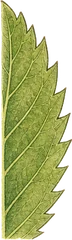
Typical of the family
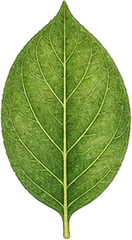
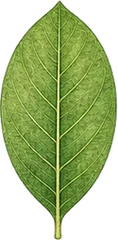
Characters marked “recorded” are for Hirankhuri itself; the rest are typical of the Asteraceae family.
Flower & fruit characters
- Flower colour
- Pinkrecorded
- Flower arrangement
- HeadrecordedA dense, tight cluster of many small stalkless flowers, packed into a rounded or flat head.“The inflorescence is often dichotomous, with 3 to 6 stalked flower heads and whorled bracts below.” — Wikipedia, CC BY-SA 4.0
- Fruit type
- AchenerecordedA small, dry, single-seeded fruit that does not split open.“There are two types of seed, which are defined by the color of the achene.” — Wikipedia, CC BY-SA 4.0
Typical of the family
- Flower symmetry
- Actinomorphic (radially symmetrical)
- Inflorescence
- Head
- Fruit
- Achene
Characters marked “recorded” are for Hirankhuri itself; the rest are typical of the Asteraceae family — flowering plants only.
Local Names
- Hindi
- हिरनखुरि Hirankhuri, हिरनकुरि Hirankuri
- Bengali
- Sadhimodi, Sachimodi
- Tamil
- Muyalccevi, Mayarcevi
- Kannada
- Ili kivi gida, Elikivi gida, Elikivisoppu
- Malayalam
- Mulshevi, Muyalccevi
- Marathi
- Sadamandee, Panom, undrachi
About Hirankhuri
Pink Emilia (Emilia sonchifolia) belongs to the Asteraceae family, where it grows as a herb. In India it has been recorded in Kerala, Maharashtra, Karnataka and 16 other states. It grows in open deciduous forests and Agricultural fields. Flowering and fruiting run from July to April.
Uses
It is grown for parts that are eaten and long used in traditional medicine. Those medicinal uses are traditional attributions, not medical advice.
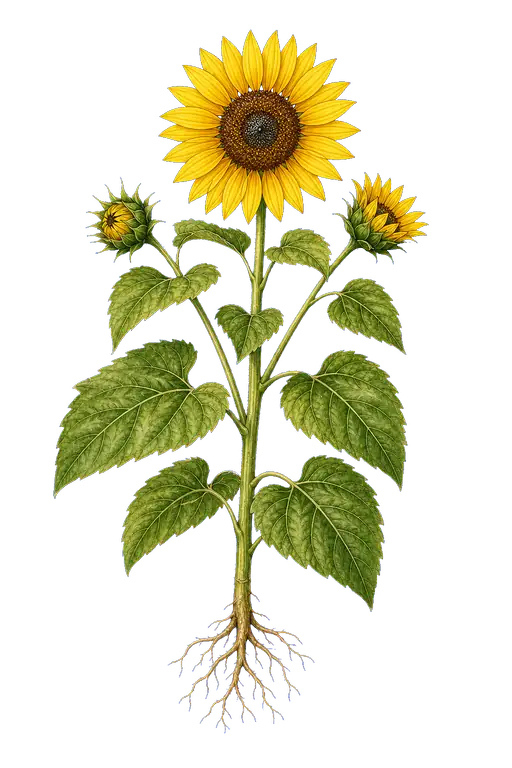
Asteraceae
Daisy/Sunflower family
Hirankhuri belongs to the Asteraceae family.
The illustration represents the family — not necessarily this exact species.
Explore the Asteraceae familySnap it. Know it.
Point your camera at Hirankhuri or any plant and SASYA identifies it instantly — on-device, offline, and private.
Common plant problems
If you are starting from symptoms instead of a diagnosis, use the plant disease symptom checker to narrow the cause before treating.
All plant problem & care guides