
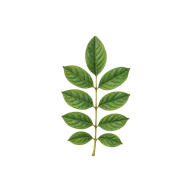
As recorded for Kuhva-Te Palm
Dypsis lutescens
Kuhva-Te Palm / Bamboo Palm
Also known as Golden Cane Palm, Yellow Palm, Yellow Areca Palm
- Habit
- Palm (Cluster)
- Found in India
- Maharashtra, Tamil Nadu, Karnataka & more
- Flowering
- Throughout the year
Kuhva-Te Palm in regional languages
Find the name you know, then compare it with the botanical profile. Columns list recorded aliases; they are not paired translations. A Latin spelling appears only when it is present in the source record.
| Language | Regional script | Recorded Latin spelling |
|---|---|---|
| Mizo | Not recorded | Kuhva-te Palm |
See the original recorded names
- Mizo
- Kuhva-te Palm
Kuhva-Te Palm at a glance
Source-linked growing guidance. Adjust care to your climate, season and growing conditions. Unrecorded values are shown explicitly.
- Sunlight
- As a houseplant, give bright indirect light.
- Water & soil moisture
- Keep moist but not soggy during the growing season. Chrysalidocarpus lutescens (syn. Dypsis lutescens), NC State Extension Gardener Plant Toolbox ↗︎Checked
- Pot & placement
- Not yet verified Research in progress
- Pet safety
- Not known to be toxic: dogs, cats, horses
Outdoors NC State lists full sun to partial shade.
Chrysalidocarpus lutescens (syn. Dypsis lutescens), NC State Extension Gardener Plant Toolbox ↗︎CheckedASPCA: non-toxic to dogs, cats and horses. This source covers pets; a separate human rating is not established here.
Areca Palm, ASPCA Toxic and Non-toxic Plants ↗︎CheckedWater needs are conditional; these cards do not prescribe a fixed watering interval. Review dates belong to the individual source records.
Toxicity & contact hazards
What the sources report, with their scope intact. A missing rating stays unknown; a non-toxic listing doesn’t rule out irritation, injury or other hazards.
Reported toxicity
ASPCA: non-toxic to dogs, cats and horses.
Growing context & reported issues
Published observations about growing settings, size and common problems. These are context for a plant profile, rather than a diagnosis of the plant in front of you.
Growing setting
Grown as a houseplant in temperate climates; outdoors only in frost-free zones.
Reported pests & problems
Susceptible to scale, whiteflies and spider mites.
Ecology & growing context
- Native status · Kew WCVP
- WCVP records it as introduced in Andaman Is., Assam Kew dataset ↗︎
Kew WCVP dataset; listed synonym of Chrysalidocarpus lutescens. Dataset matching is separate from an individual regional review. Recorded worldwide native range: E. Madagascar.
- Recorded habitat
- Planted in botanical gardens
- Explore nearby plants
- Maharashtra →Tamil Nadu →Karnataka →
Occurrence records show where a plant has been recorded; they do not establish that it is native there. Compare local habitat and growing conditions when choosing plants for a garden.
How to identify Kuhva-Te Palm
Identify Kuhva-Te Palm by combining habit, leaf characters, flower or fruit details, location, and its family pattern. Do not rely on one feature alone.
- Look for a palm (cluster) habit.
- Check the distinctive field mark: Clustering multi-stemmed yellow-green canes.
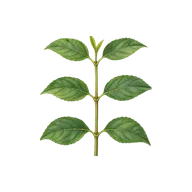
- Confirm leaf arrangement: Opposite.
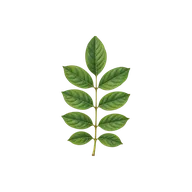
- Confirm leaf type: Pinnately compound.
- Confirm flower colour: Yellow.
- Confirm flower arrangement: Panicle.
- In season, compare flowering and fruiting time: Throughout the year.
Plant Details
- Scientific name
- Dypsis lutescens
- Genus
- Dypsis
- Family
- Arecaceae
- Habit
- Palm (Cluster)
- Habitat
- Planted in botanical gardens
- Habitat type
- Cultivated
- Native to
- Madagascar
- Distribution
- Cultivated in Other Tropics
- Found in India
- Maharashtra, Tamil Nadu, Karnataka, Andhra Pradesh, West Bengal, Telangana, Gujarat, Assam, Goa, Uttar Pradesh, Kerala, Madhya Pradesh, Delhi, Odisha, Uttarakhand, Bihar, Mizoram, Rajasthan
- Flowering & fruiting
- Throughout the year
- Conservation status
- Not Evaluated (NE)
Leaf characters
- Leaf arrangement
- OppositerecordedTwo leaves arise from the stem at the same point, facing each other.“Leaflet arrangement is opposite and their shape is linear to lanceolate.” — Wikipedia, CC BY-SA 4.0
- Leaf type
- Pinnately compoundrecordedLeaflets are arranged in rows along a central stalk, like a feather.“The leaves are upward-arching, 2–3 m (6 ft 7 in – 9 ft 10 in) long, and pinnate, with a yellow midrib.” — Wikipedia, CC BY-SA 4.0
- Leaf shape
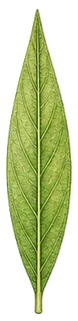
- LanceolaterecordedLong and narrow, tapering to a point, like a lance head.“Leaflet arrangement is opposite and their shape is linear to lanceolate.” — Wikipedia, CC BY-SA 4.0
Typical of the family
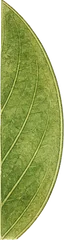

Characters marked “recorded” are for Kuhva-Te Palm itself; the rest are typical of the Arecaceae family.
Flower & fruit characters
- Flower colour
- Yellowrecorded“It bears 2-ft-long panicles of yellow flowers in summer.” — Wikipedia, CC BY-SA 4.0
- Flower arrangement
- PaniclerecordedA branching cluster of clusters.“It bears 2-ft-long panicles of yellow flowers in summer.” — Wikipedia, CC BY-SA 4.0
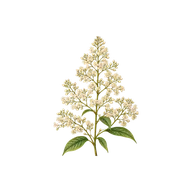
Typical of the family
- Inflorescence
- Panicle
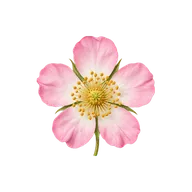
Characters marked “recorded” are for Kuhva-Te Palm itself; the rest are typical of the Arecaceae family — flowering plants only.
About Kuhva-Te Palm
Bamboo Palm (Dypsis lutescens) is a clustering palm in the Arecaceae family. In India it has been recorded in Maharashtra, Tamil Nadu, Karnataka and 15 other states. It is planted in botanical gardens. It flowers and fruits through much of the year.
Uses
In practice it is long used in traditional medicine, planted as an ornamental and stripped for fibre used in rope and matting. Those medicinal uses are traditional attributions, not medical advice.
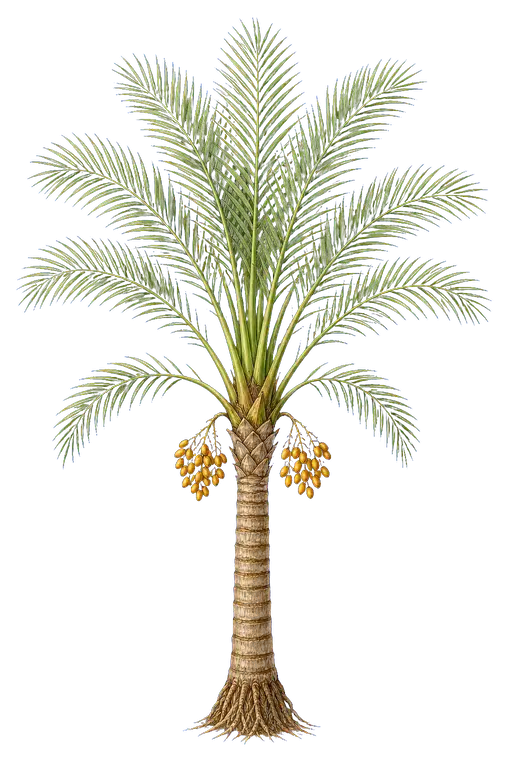
Arecaceae
Palm family
Kuhva-Te Palm belongs to the Arecaceae family.
The illustration represents the family — not necessarily this exact species.
Explore the Arecaceae familySnap it. Know it.
Point your camera at Kuhva-Te Palm or any plant and SASYA identifies it instantly — on-device, offline, and private.
Common plant problems
If you are starting from symptoms instead of a diagnosis, use the plant disease symptom checker to narrow the cause before treating.
All plant problem & care guides