
Morange / Mousa Nettle
Dendrocnide sinuata
- Habit
- Tree
- Found in India
- Tamil Nadu, Karnataka, Assam & more
- Flowering
- November-December
How to identify Morange
Identify Morange by combining habit, leaf characters, flower or fruit details, location, and its family pattern. Do not rely on one feature alone.
- Look for a tree habit.
- Check the distinctive field mark: Severe, long-lasting sting from leaf hairs.
- Confirm leaf arrangement: Alternate.
- Confirm leaf type: Simple.
- Confirm flower arrangement: Panicle.
- Confirm fruit type: Achene.
- In season, compare flowering and fruiting time: November-December.
Plant Details
- Scientific name
- Dendrocnide sinuata
- Genus
- Dendrocnide
- Family
- Urticaceae
- Habit
- Tree
- Habitat
- Moist deciduous forests and semi-Evergreen forests
- Habitat type
- Forest
- Native to
- Indo-Malayan
- Distribution
- Indo-Malayan
- Found in India
- Tamil Nadu, Karnataka, Assam, Kerala, Arunachal Pradesh, Maharashtra, Sikkim, West Bengal
- Flowering & fruiting
- November-December
- Conservation status
- Not Evaluated (NE)
Leaf characters
- Leaf arrangement
- AlternaterecordedOne leaf per node, arranged in a spiral or zigzag up the stem.“Leaves are simple, alternate, spiral, with stipule caducous (falling off prematurely or easily) and leaving scar Petiole is 2–6 centimetres (0.79–2.36 in) long, terete, with glandu” — Wikipedia, CC BY-SA 4.0
- Leaf type
- SimplerecordedA single, undivided leaf blade.“Leaves are simple, alternate, spiral, with stipule caducous (falling off prematurely or easily) and leaving scar Petiole is 2–6 centimetres (0.79–2.36 in) long, terete, with glandu” — Wikipedia, CC BY-SA 4.0
- Leaf shape
- EllipticrecordedWidest at the middle, tapering evenly at both ends.“Lamina parts of the leaves are 9.5–34 centimetres (3.7–13.4 in) x 2–11.5 centimetres (0.79–4.53 in), narrow oblanceolate to elliptic, apex acuminate, base attenuate-cuneate to obtu” — Wikipedia, CC BY-SA 4.0
- Leaf surface
- Hirsute (coarsely hairy)recorded
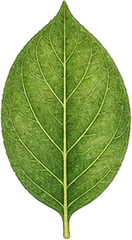
Typical of the family
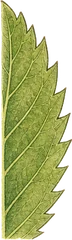
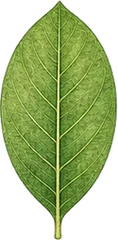
Characters marked “recorded” are for Morange itself; the rest are typical of the Urticaceae family.
Flower & fruit characters
- Flower arrangement
- PaniclerecordedA branching cluster of clusters.“Flowers with inflorescence axillary panicles, drooping, to 20 centimetres (7.9 in) long.” — Wikipedia, CC BY-SA 4.0
- Fruit type
- AchenerecordedA small, dry, single-seeded fruit that does not split open.“Fruit and seed are achenes.” — Wikipedia, CC BY-SA 4.0
Typical of the family
- Fruit
- Achene
Characters marked “recorded” are for Morange itself; the rest are typical of the Urticaceae family — flowering plants only.
Local Names
- Hindi
- Morange, Utigun
- Nepali
- Moringe
- Bengali
- Chorpata
- Tamil
- ஆனைச்சொரியன் Anaichorian, Otta-pilavu
- Kannada
- Malai Murugan
- Malayalam
- Kattanplavu, Aanayaviratti, Aanavannangi
About Morange
A member of the Urticaceae family, Mousa Nettle (Dendrocnide sinuata) is a tree. In India it has been recorded in Tamil Nadu, Karnataka, Assam and 5 other states. It grows in moist deciduous forests and semi-Evergreen forests. Flowering and fruiting run from November to December.
Uses
Locally it is long used in traditional medicine. Those medicinal uses are traditional attributions, not medical advice. Parts of this plant are reported as poisonous — treat it as unsafe to eat and wash your hands after handling.
Urticaceae
Nettle family
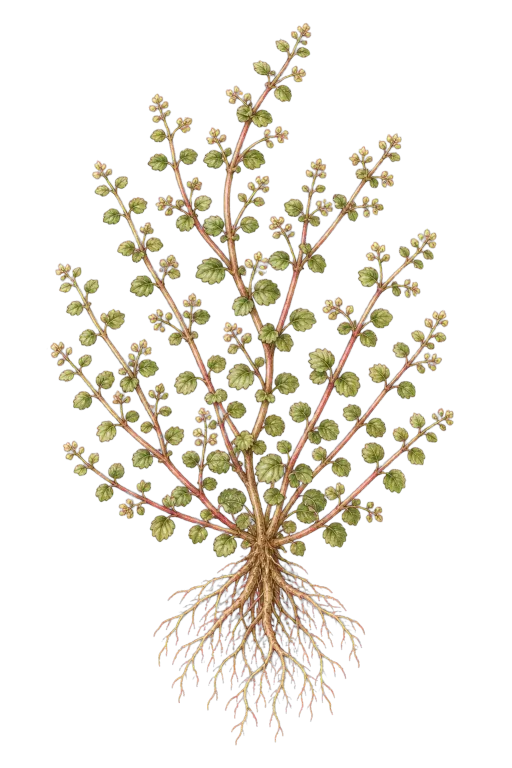
Morange belongs to the Urticaceae family.
The illustration represents the family — not necessarily this exact species.
Explore the Urticaceae familySnap it. Know it.
Point your camera at Morange or any plant and SASYA identifies it instantly — on-device, offline, and private.
Common plant problems
If you are starting from symptoms instead of a diagnosis, use the plant disease symptom checker to narrow the cause before treating.
All plant problem & care guides