
Palmarosa / Roha Grass
Cymbopogon martini
Also known as Rusa Grass, Geranium Grass, Lemon Grass
- Habit
- Herb
- Found in India
- Rajasthan, Maharashtra, Uttarakhand & more
- Flowering
- August-December
How to identify Palmarosa
Identify Palmarosa by combining habit, leaf characters, flower or fruit details, location, and its family pattern. Do not rely on one feature alone.
- Look for a herb habit.
- Check the distinctive field mark: Distilled for palmarosa/rusa essential oil.
- Confirm fruit surface: Smooth, not spiny.
- In season, compare flowering and fruiting time: August-December.
- In India, compare location records such as Rajasthan, Maharashtra, Uttarakhand, Chhattisgarh and nearby regions.
- Confirm it sits within the Poaceae family pattern, then compare close relatives before deciding it is Palmarosa.
Plant Details
- Scientific name
- Cymbopogon martini
- Genus
- Cymbopogon
- Family
- Poaceae
- Habit
- Herb
- Habitat
- Grasslands
- Habitat type
- Grassland
- Distribution
- Cultivated in most parts of the world
- Found in India
- Rajasthan, Maharashtra, Uttarakhand, Chhattisgarh, Himachal Pradesh, Madhya Pradesh, Punjab, Bihar, Gujarat, Jammu & Kashmir, Tamil Nadu, Uttar Pradesh, West Bengal
- Flowering & fruiting
- August-December
- Conservation status
- Not Evaluated (NE)
Leaf characters
- Arrangement
- Alternate
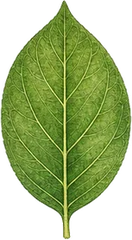


Typical of the Poaceae family — a field-mark hint, not measured for this exact species.
Flower & fruit characters
- Fruit surface
- Smooth, not spinyrecorded
Typical of the family
- Flower symmetry
- Actinomorphic (radially symmetrical)
- Inflorescence
- Spike
- Fruit
- Grain
Characters marked “recorded” are for Palmarosa itself; the rest are typical of the Poaceae family — flowering plants only.
Local Names
- Hindi
- गन्धबेल Gandhabel, गन्धभेज घास Gandhej-ghas, Makora, motiya
- Nepali
- पाम रोजा Paam Rojaa
- Tamil
- தைலப்புல், பாம்ரோஸ்
- Telugu
- kachi gaddi, kanchi, kashy gaddi
- Kannada
- ಅಂಚೆ ಹುಲ್ಲು Anche hullu, ಅಂಚಿ ಹುಲ್ಲು Anchi hullu
- Malayalam
- സാമ്ബരപ്പുല്ലു Sambarappullu
- Marathi
- Kusatan, Roshsagavath, Rusha
Palmarosa in India
This aromatic grass, known as गन्धबेल Gandhabel (Hindi), தைலப்புல் (Tamil), kachi gaddi (Telugu), ಅಂಚೆ ಹುಲ್ಲು Anche hullu (Kannada), സാമ്ബരപ്പുല്ലു Sambarappullu (Malayalam), Kusatan (Marathi), is grown for the fragrant oil distilled from its leaves. Cymbopogon martini is cultivated across Maharashtra, Rajasthan, Uttarakhand, Chhattisgarh, Himachal Pradesh, Madhya Pradesh, especially in drier regions.
Uses
Its leaves are steam-distilled for palmarosa oil, valued in perfumery and cosmetics for a rose-like scent, and used as a cheaper substitute or blending agent alongside true rose oil.
How to Identify Palmarosa
A tufted perennial grass with slender, aromatic leaves that release a rose-like fragrance when crushed. Flowering stems carry loose, silvery-pink panicles held well above the leaves.
Frequently Asked Questions
- What is Roha grass called in different Indian languages?
- गन्धबेल Gandhabel (Hindi); தைலப்புல் (Tamil); kachi gaddi (Telugu); ಅಂಚೆ ಹುಲ್ಲು Anche hullu (Kannada); സാമ്ബരപ്പുല്ലു Sambarappullu (Malayalam); Kusatan (Marathi).
- Why is it used instead of rose oil?
- Palmarosa oil has a similar rose-like fragrance to true rose oil but is far cheaper and easier to produce at scale, so it's often used as a substitute or blended with rose oil in perfumery.
- How can you identify it in the field?
- Crushing a leaf and noticing a distinct rose-like fragrance is the quickest field test, alongside its tufted growth habit and silvery-pink flower panicles.
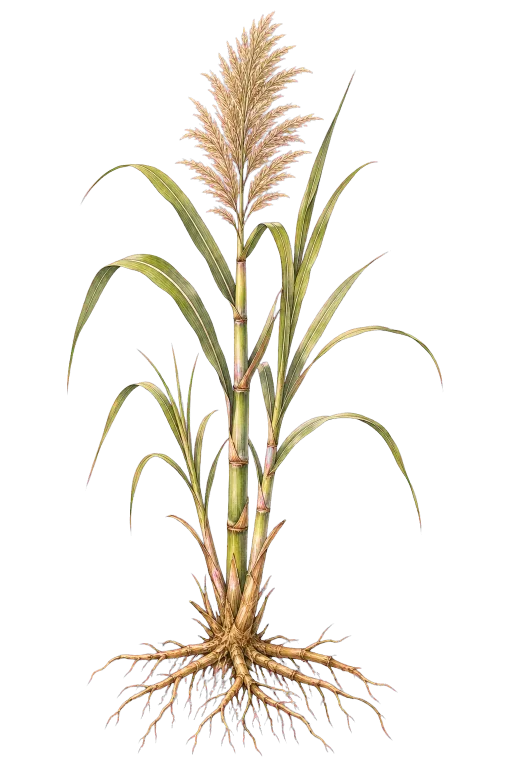
Poaceae
Grass family
Palmarosa belongs to the Poaceae family.
The illustration represents the family — not necessarily this exact species.
Explore the Poaceae familySnap it. Know it.
Point your camera at Palmarosa or any plant and SASYA identifies it instantly — on-device, offline, and private.
Common plant problems
If you are starting from symptoms instead of a diagnosis, use the plant disease symptom checker to narrow the cause before treating.
All plant problem & care guidesMore in Poaceae
View all PoaceaeSources: GBIF — Cymbopogon martini (India distribution & vernacular names) (CC BY 4.0) · Wikipedia — Cymbopogon martini (background/comprehension only) (CC BY-SA 4.0)