
Haladi / Turmeric
Curcuma longa
- Found in India
- Maharashtra, Kerala, Jammu & Kashmir & more
How to identify Haladi
Identify Haladi by combining habit, leaf characters, flower or fruit details, location, and its family pattern. Do not rely on one feature alone.
- Confirm leaf arrangement: Alternate.
- Confirm leaf type: Simple.
- Confirm flower colour: Yellow.
- In India, compare location records such as Maharashtra, Kerala, Jammu & Kashmir, West Bengal and nearby regions.
- Confirm it sits within the Zingiberaceae family pattern, then compare close relatives before deciding it is Haladi.
Plant Details
- Scientific name
- Curcuma longa
- Genus
- Curcuma
- Family
- Zingiberaceae
- Found in India
- Maharashtra, Kerala, Jammu & Kashmir, West Bengal, Andhra Pradesh, Chhattisgarh, Madhya Pradesh, Assam, Gujarat, Karnataka, Uttarakhand, Arunachal Pradesh, Himachal Pradesh, Odisha, Tamil Nadu, Uttar Pradesh
- Conservation status
- Not Evaluated (NE)
Leaf characters
- Leaf arrangement
- AlternaterecordedOne leaf per node, arranged in a spiral or zigzag up the stem.“The leaves are alternate and arranged in two rows.” — Wikipedia, CC BY-SA 4.0
- Leaf type
- SimplerecordedA single, undivided leaf blade.“The simple leaf blades are usually 76 to 115 cm (30–45 in) long and rarely up to 230 cm (7 ft 7 in).” — Wikipedia, CC BY-SA 4.0
- Leaf shape
- Broad lanceolaterecorded
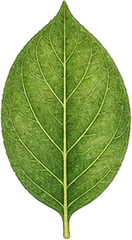
Typical of the family
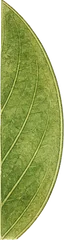

Characters marked “recorded” are for Haladi itself; the rest are typical of the Zingiberaceae family.
Flower & fruit characters
- Flower colour
- Yellowrecorded
Typical of the family
- Flower symmetry
- Zygomorphic (bilaterally symmetrical)
- Inflorescence
- Spike
- Fruit
- Capsule
Characters marked “recorded” are for Haladi itself; the rest are typical of the Zingiberaceae family — flowering plants only.
Local Names
- Hindi
- हलदी haladi
- Sanskrit
- हरिद्रा
- Tamil
- மஞ்சள்
- Telugu
- పసుపు
- Nepali
- हलेदो
- Sinhala
- කහ
About Haladi
Turmeric (Curcuma longa) belongs to the Zingiberaceae family. In India it has been recorded in Maharashtra, Kerala, Jammu & Kashmir and 13 other states.
Uses
Locally it is grown for parts that are eaten, long used in traditional medicine and a source of dye or tannin. Those medicinal uses are traditional attributions, not medical advice.
In culture
It turns up in ritual and festival use.
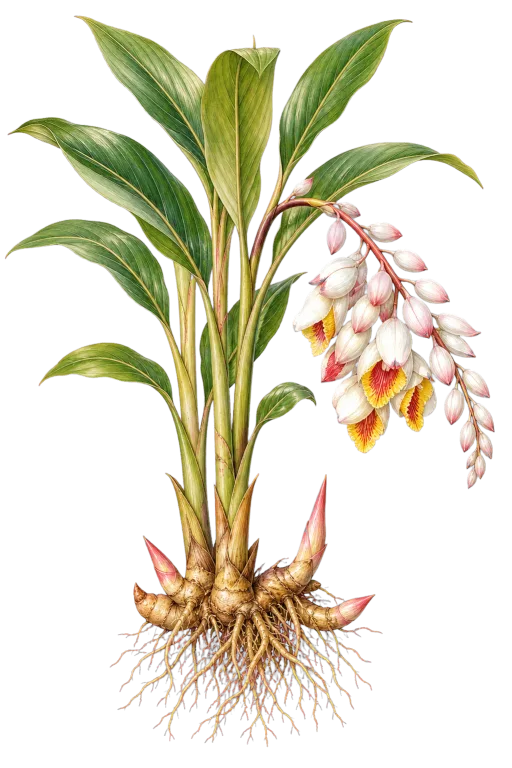
Zingiberaceae
Ginger family
Haladi belongs to the Zingiberaceae family.
The illustration represents the family — not necessarily this exact species.
Explore the Zingiberaceae familySnap it. Know it.
Point your camera at Haladi or any plant and SASYA identifies it instantly — on-device, offline, and private.
Common plant problems
If you are starting from symptoms instead of a diagnosis, use the plant disease symptom checker to narrow the cause before treating.
All plant problem & care guides