
Salphi / Fish-Tail Palm
Caryota urens
Also known as Solitary Toddy Palm, Indian Sago Palm, Jaggery Palm, Kittul
- Habit
- Palm (Columnar)
- Found in India
- Kerala, Maharashtra, Tamil Nadu & more
- Flowering
- December-August
Plant Details
- Scientific name
- Caryota urens
- Genus
- Caryota
- Family
- Arecaceae
- Habit
- Palm (Columnar)
- Habitat
- Shola forests
- Habitat type
- Forest
- Distribution
- India, Sri Lanka, Myanmar, Malaya Peninsula, Nepal
- Found in India
- Kerala, Maharashtra, Tamil Nadu, Karnataka, Gujarat, Goa
- Flowering & fruiting
- December-August
- Conservation status
- Not Evaluated (NE)
Leaf characters
- Arrangement
- Alternate



Typical of the Arecaceae family — a field-mark hint, not measured for this exact species.
Flower & fruit characters
Typical of the Arecaceae family — flowering plants only; individual species can differ.
Local Names
- Hindi
- Mari,सल्फी salphi
- Nepali
- जगर Jagar
- Tamil
- கொண்டல் பனை Kontalpanai
- Kannada
- ಬಗನೆ Bagane, ಬಗನಿ Bagani, ಬೈನೆ Baine
- Malayalam
- Anappana
- Marathi
- सुरमाड Surmad, भेरली माड Bherli Maad, भेरली माड
- Odia
- ସଳପ
- Assamese
- চেৱা তামোল
- Sinhala
- Kitul, කිතුල්
Salphi in India
This distinctive palm, known as Mari (Hindi), கொண்டல் பனை Kontalpanai (Tamil), ಬಗನೆ Bagane (Kannada), Anappana (Malayalam), सुरमाड Surmad (Marathi), is valued for its sap. Caryota urens is found across Kerala, Maharashtra, Tamil Nadu, Karnataka, Gujarat, Goa, typically in moist forest and often tapped commercially.
Uses
Its sap is tapped and either fermented into toddy or boiled down into a dark, distinctive jaggery, and the starchy pith has been used as a sago-like starch source in some regions.
How to Identify Salphi
A solitary palm, unusual for having doubly compound (bipinnate) fronds rather than the simple fan or feather leaves of most palms, with ragged, triangular leaflets shaped like a fish's tail — the source of its common name. It flowers from the top of the crown downward and dies after its lowest flower cluster fruits.
Frequently Asked Questions
- What is Fish-Tail Palm called in different Indian languages?
- Mari (Hindi); கொண்டல் பனை Kontalpanai (Tamil); ಬಗನೆ Bagane (Kannada); Anappana (Malayalam); सुरमाड Surmad (Marathi); ସଳପ (Odia).
- Why is it called 'fishtail palm'?
- Its leaflets are ragged-edged and roughly triangular, resembling the tail fin of a fish — an unusual leaflet shape among palms, most of which have simple fan or feather-shaped leaves.
- What is toddy?
- A mildly alcoholic drink made by fermenting the sap tapped from palms like Caryota urens, traditionally collected fresh each morning.
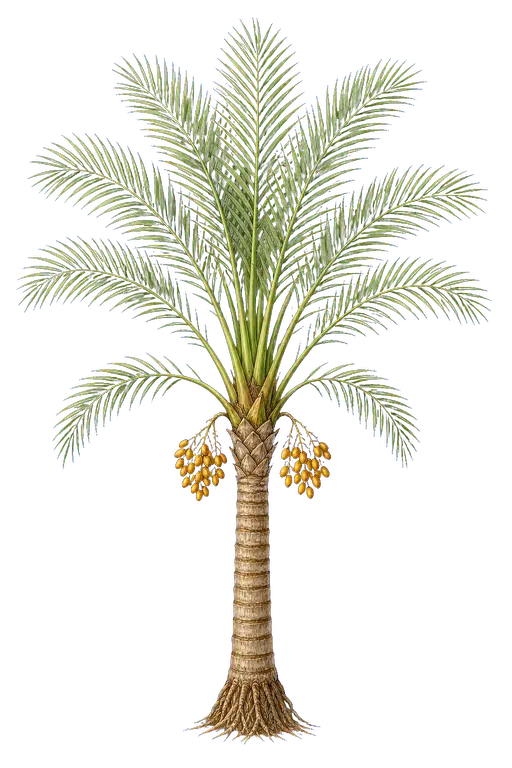
Arecaceae
Palm family
Salphi belongs to the Arecaceae family.
The illustration represents the family — not necessarily this exact species.
Explore the Arecaceae family →Snap it. Know it.
Point your camera at Salphi or any plant and SASYA identifies it instantly — on-device, offline, and private.
Common plant problems
All plant problem & care guides →More in Arecaceae
View all Arecaceae →Sources: GBIF — Caryota urens (India distribution & vernacular names) (CC BY 4.0) · Wikipedia — Caryota urens (background/comprehension only) (CC BY-SA 4.0)