
Gul-E-Ashrafi / Calendula
Calendula officinalis
- Habit
- Herb
- Found in India
- West Bengal, Delhi, Uttar Pradesh & more
- Flowering
- Throughout the year
How to identify Gul-E-Ashrafi
Identify Gul-E-Ashrafi by combining habit, leaf characters, flower or fruit details, location, and its family pattern. Do not rely on one feature alone.
- Look for a herb habit.
- Check the distinctive field mark: Cultivated culinary/medicinal marigold.
- Confirm leaf shape: Lanceolate.
- Confirm leaf margin: Toothed.
- Confirm flower colour: Orange.
- Confirm flower arrangement: Head.
- In season, compare flowering and fruiting time: Throughout the year.
Plant Details
- Scientific name
- Calendula officinalis
- Genus
- Calendula
- Family
- Asteraceae
- Habit
- Herb
- Habitat
- Cultivated in tropics
- Habitat type
- Cultivated
- Native to
- Europe
- Distribution
- India, Pakistan, China, Afghanisthan
- Found in India
- West Bengal, Delhi, Uttar Pradesh, Himachal Pradesh, Uttarakhand, Bihar, Gujarat, Haryana, Jammu & Kashmir, Arunachal Pradesh, Assam, Chhattisgarh, Madhya Pradesh, Sikkim, Tamil Nadu
- Flowering & fruiting
- Throughout the year
- Conservation status
- Not Evaluated (NE)
Leaf characters
- Leaf shape
- LanceolaterecordedLong and narrow, tapering to a point, like a lance head.“The leaves are oblong-lanceolate, 5–17 cm (2–7 in) long, hairy on both sides, and with margins entire or occasionally waved or weakly toothed.” — Wikipedia, CC BY-SA 4.0
- Leaf margin
- ToothedrecordedA saw-like or jagged edge (serrate or dentate).“The leaves are oblong-lanceolate, 5–17 cm (2–7 in) long, hairy on both sides, and with margins entire or occasionally waved or weakly toothed.” — Wikipedia, CC BY-SA 4.0
- Leaf surface
- PubescentrecordedCovered in short, soft hairs.“The leaves are oblong-lanceolate, 5–17 cm (2–7 in) long, hairy on both sides, and with margins entire or occasionally waved or weakly toothed.” — Wikipedia, CC BY-SA 4.0
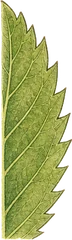
Typical of the family
- Arrangement
- Alternate
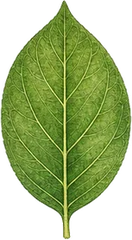

Characters marked “recorded” are for Gul-E-Ashrafi itself; the rest are typical of the Asteraceae family.
Flower & fruit characters
- Flower colour
- Orangerecorded
- Flower arrangement
- HeadrecordedA dense, tight cluster of many small stalkless flowers, packed into a rounded or flat head.“The inflorescences are yellow or orange, comprising a thick capitulum or flowerhead 4–7 cm (1+1⁄2–3 in) diameter surrounded by two rows of hairy bracts.” — Wikipedia, CC BY-SA 4.0
- Fruit type
- AchenerecordedA small, dry, single-seeded fruit that does not split open.“The fruit is a thorny curved achene.” — Wikipedia, CC BY-SA 4.0
Typical of the family
- Flower symmetry
- Actinomorphic (radially symmetrical)
- Inflorescence
- Head
- Fruit
- Achene
Characters marked “recorded” are for Gul-E-Ashrafi itself; the rest are typical of the Asteraceae family — flowering plants only.
Local Names
- Hindi
- गुले अशर्फ़ी Gul-e-Ashrafi, गेंदा Genda
About Gul-E-Ashrafi
Calendula (Calendula officinalis) belongs to the Asteraceae family, where it grows as a herb. In India it has been recorded in West Bengal, Delhi, Uttar Pradesh and 12 other states. It is cultivated in tropics. It flowers and fruits through much of the year.
Uses
In practice it is grown for parts that are eaten, long used in traditional medicine and distilled for an aromatic oil. Those medicinal uses are traditional attributions, not medical advice.
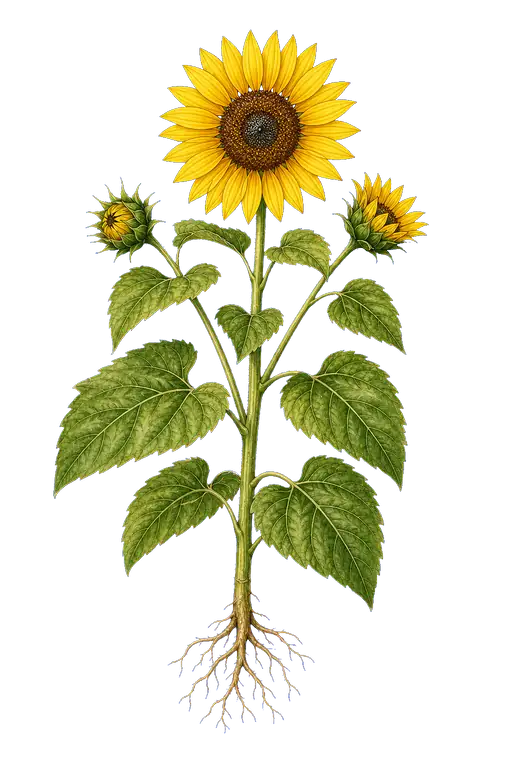
Asteraceae
Daisy/Sunflower family
Gul-E-Ashrafi belongs to the Asteraceae family.
The illustration represents the family — not necessarily this exact species.
Explore the Asteraceae familySnap it. Know it.
Point your camera at Gul-E-Ashrafi or any plant and SASYA identifies it instantly — on-device, offline, and private.
Common plant problems
If you are starting from symptoms instead of a diagnosis, use the plant disease symptom checker to narrow the cause before treating.
All plant problem & care guides