
Kiramar / Bracteated Birthwort
Aristolochia bracteolata
- Habit
- Climber
- Found in India
- Gujarat, Maharashtra, Tamil Nadu & more
- Flowering
- Throughout the year
Plant Details
- Scientific name
- Aristolochia bracteolata
- Genus
- Aristolochia
- Family
- Aristolochiaceae
- Habit
- Climber
- Habitat
- Often on plains to the coasts, in wastelands, along river banks, bunds of paddy fields etc
- Distribution
- India, Sri Lanka, Arabia, Tropical Africa
- Found in India
- Gujarat, Maharashtra, Tamil Nadu, Punjab, Rajasthan, Karnataka
- Flowering & fruiting
- Throughout the year
- Conservation status
- Not Evaluated (NE)
Leaf characters
- Arrangement
- Alternate
- Margin
- Variable
- Venation
- Variable

Typical of the Aristolochiaceae family — a field-mark hint, not measured for this exact species.
Local Names
- Hindi
- कीड़ामार Kiramar, कीटमार Kitamar
- Tamil
- Aadutheendapalai, Karunnikkoti, Putakampam
- Telugu
- గడపరాకు
- Kannada
- ಆಡುಮುಟ್ಟದಗಿಡ Adu Muttada gida, ಕುರಿಗಿಡ Kurigida, ಕತ್ತೆಕಿರುಬನಗಿಡ Kattekirubana gida
- Malayalam
- Attukottappala, Aduthinnapalai, ആടുതൊടാപ്പാല
- Marathi
- Gandhaari, Gindhaan, Keedamaari
About Kiramar
Bracteated Birthwort (Aristolochia bracteolata) is a climber belonging to the Aristolochiaceae family (Birthwort Family). It is typically found in often on plains to the coasts, in wastelands, along river banks, bunds of paddy fields etc. It occurs across India, Sri Lanka, Arabia, Tropical Africa. It flowers and fruits through much of the year. The species is valued in traditional medicine.
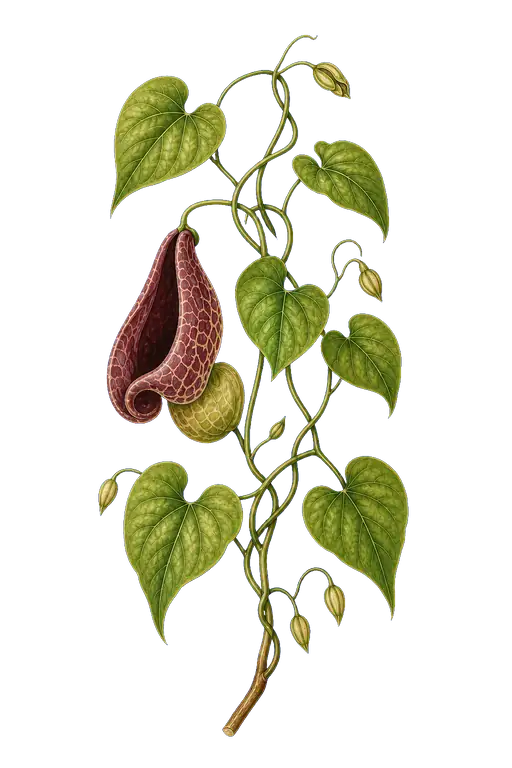
Aristolochiaceae
Birthwort Family
Kiramar belongs to the Aristolochiaceae family.
The illustration represents the family — not necessarily this exact species.
Explore the Aristolochiaceae family →Snap it. Know it.
Point your camera at Kiramar or any plant and SASYA identifies it instantly — on-device, offline, and private.