
Agar / Aloewood
Aquilaria malaccensis
- Habit
- Tree
- Found in India
- Arunachal Pradesh
- Flowering
- April-September
How to identify Agar
Identify Agar by combining habit, leaf characters, flower or fruit details, location, and its family pattern. Do not rely on one feature alone.
- Look for a tree habit.
- Check the distinctive field mark: Diseased/infected wood yields fragrant agarwood resin.
- In season, compare flowering and fruiting time: April-September.
- In India, compare location records such as Arunachal Pradesh.
- Confirm it sits within the Thymelaeaceae family pattern, then compare close relatives before deciding it is Agar.
Plant Details
- Scientific name
- Aquilaria malaccensis
- Genus
- Aquilaria
- Family
- Thymelaeaceae
- Habit
- Tree
- Habitat
- Cultivated
- Habitat type
- Cultivated
- Distribution
- Southeast Asia
- Found in India
- Arunachal Pradesh
- Flowering & fruiting
- April-September
- Conservation status
- CR
Local Names
- Hindi
- अगर agar
- Bengali
- আগর উদ্ভিদ
- Tamil
- அகில், காழ்வை
- Kannada
- ಅಗಿಲ್, ಅಗಿಲು Agil, ಕಾರಗಿಲ್
- Malayalam
- അകിൽ (Aquilaria malaccensis)
- Marathi
- अगरू
About Agar
Aloewood (Aquilaria malaccensis) is a tree in the Thymelaeaceae family. In India it has been recorded in Arunachal Pradesh. It is cultivated. Flowering and fruiting run from April to September.
Uses
In practice it is cut for timber and furniture, distilled for an aromatic oil and tapped for gum or resin. Parts of this plant are reported as poisonous — treat it as unsafe to eat and wash your hands after handling.
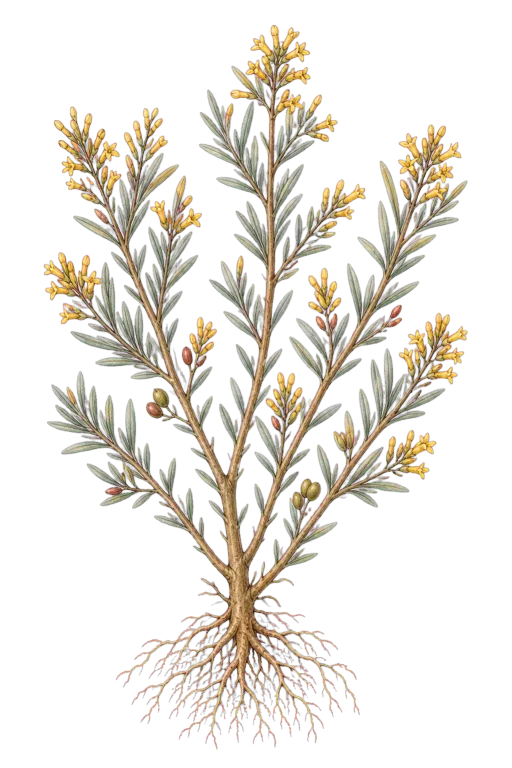
Thymelaeaceae
Daphne/Agarwood family
Agar belongs to the Thymelaeaceae family.
The illustration represents the family — not necessarily this exact species.
Explore the Thymelaeaceae familySnap it. Know it.
Point your camera at Agar or any plant and SASYA identifies it instantly — on-device, offline, and private.
Common plant problems
If you are starting from symptoms instead of a diagnosis, use the plant disease symptom checker to narrow the cause before treating.
All plant problem & care guides