
Safed Siris / Hill Siris
Albizia procera
Also known as White Siris Tree
- Habit
- Tree
- Found in India
- Maharashtra, Rajasthan, Madhya Pradesh & more
- Flowering
- April-December
How to identify Safed Siris
Identify Safed Siris by combining habit, leaf characters, flower or fruit details, location, and its family pattern. Do not rely on one feature alone.
- Look for a tree habit.
- Check the distinctive field mark: Pale smooth bark (white siris).
- Confirm leaf arrangement: Opposite.
- Confirm leaf type: Bipinnately compound.
- Confirm flower arrangement: Raceme.
- In season, compare flowering and fruiting time: April-December.
- In India, compare location records such as Maharashtra, Rajasthan, Madhya Pradesh, Assam and nearby regions.
Plant Details
- Scientific name
- Albizia procera
- Genus
- Albizia
- Family
- Mimosaceae
- Habit
- Tree
- Habitat
- Moist deciduous forests, along streams and sometimes planted
- Habitat type
- Wetland, Forest, Cultivated
- Distribution
- India, Andamans (India), Myanmar, Malesia, China
- Found in India
- Maharashtra, Rajasthan, Madhya Pradesh, Assam, Uttarakhand, Arunachal Pradesh, Bihar, Gujarat, Telangana, Chhattisgarh, Delhi, Odisha, Tamil Nadu
- Flowering & fruiting
- April-December
- Conservation status
- Not Evaluated (NE)
Leaf characters
- Leaf arrangement
- OppositerecordedTwo leaves arise from the stem at the same point, facing each other.“The leaves are bi-pinnate, with 2–5 pairs of sub-opposite pinnae and a 10–30 centimeter rachis.” — Wikipedia, CC BY-SA 4.0
- Leaf type
- Bipinnately compoundrecordedThe leaf is divided twice — each 'leaflet' is itself a row of smaller leaflets, giving a fine, fern-like look.“The leaves are bi-pinnate, with 2–5 pairs of sub-opposite pinnae and a 10–30 centimeter rachis.” — Wikipedia, CC BY-SA 4.0
- Leaf shape
- Feathery bipinnate leafletsrecorded
Typical of the family
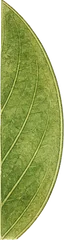
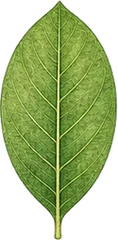
Characters marked “recorded” are for Safed Siris itself; the rest are typical of the Mimosaceae family.
Flower & fruit characters
- Flower arrangement
- RacemerecordedIndividual stalked flowers arranged along a central stem, opening from bottom to top.“these are borne on racemes 8–25 centimeters long.” — Wikipedia, CC BY-SA 4.0
Typical of the family
- Flower symmetry
- Actinomorphic (radially symmetrical)
- Inflorescence
- Head
- Fruit
- Legume
Characters marked “recorded” are for Safed Siris itself; the rest are typical of the Mimosaceae family — flowering plants only.
Local Names
- Hindi
- Safed Siris, Safed siris
- Nepali
- सेतो शिरीष Seto Shireesh, कराही रुख Karaahee Rukh, Karaahi, Seto siris
- Tamil
- Konda vaghe
- Telugu
- Tella Chinduga, Tella chinduga
- Kannada
- ಬಿಕುಲ್ Bikul, ಬೆಳ್ಳಟ್ಟೆ Bellatte, ಅಥಂಜಿ Athanji, Belari
- Malayalam
- Jalavaka, Chalayaka, വെള്ളവാക
- Marathi
- किनई Kinayi, पांढरा शिरीष Pandhra Shirish, Kinhai, Kinkal
- Assamese
- Koroi, Tantari-asing
- Urdu
- Sarapatri sirsi
About Safed Siris
Hill Siris (Albizia procera) is a tree in the Mimosaceae family. In India it has been recorded in Maharashtra, Rajasthan, Madhya Pradesh and 10 other states. It grows in moist deciduous forests, along streams and sometimes planted. Flowering and fruiting run from April to December.
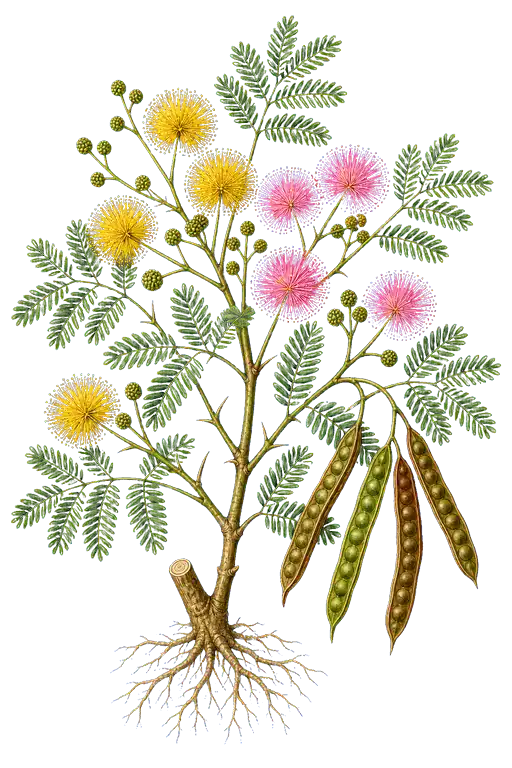
Mimosaceae
Mimosa/Acacia family
Safed Siris belongs to the Mimosaceae family.
The illustration represents the family — not necessarily this exact species.
Explore the Mimosaceae familySnap it. Know it.
Point your camera at Safed Siris or any plant and SASYA identifies it instantly — on-device, offline, and private.
Common plant problems
If you are starting from symptoms instead of a diagnosis, use the plant disease symptom checker to narrow the cause before treating.
All plant problem & care guides