

Typical of the Mimosaceae family
Acacia catechu
Khair / Black Cutch खैर
Hindi name · See all regional names ↓
Also known as Cutch Tree, White Kutch
- Habit
- Tree
- Found in India
- Maharashtra, Rajasthan, Karnataka & more
- Flowering
- March-December
Khair in regional languages
Find the name you know, then compare it with the botanical profile. Columns list recorded aliases; they are not paired translations. A Latin spelling appears only when it is present in the source record.
| Language | Regional script | Recorded Latin spelling |
|---|---|---|
| Hindi | खैर · सेनेगालिया | khair, senegaliya |
| Nepali | खयर | Not recorded |
| Bengali | খয়ের | Not recorded |
| Tamil | மாரோடம் · செங்கருங்காலி | Not recorded |
| Telugu | కాచు · నల్లచండ్ర | Not recorded |
| Kannada | ಅಕೇಶಿಯ ಕ್ಯಾಟೆಚು | Not recorded |
| Malayalam | കരിങ്ങാലി · ഖദിര | Acacia catechu |
| Marathi | खैर | Not recorded |
See the original recorded names
- Hindi
- खैर khair,सेनेगालिया senegaliya
- Nepali
- खयर
- Bengali
- খয়ের
- Tamil
- மாரோடம், செங்கருங்காலி
- Telugu
- కాచు, నల్లచండ్ర
- Kannada
- ಅಕೇಶಿಯ ಕ್ಯಾಟೆಚು
- Malayalam
- കരിങ്ങാലി, Acacia catechu, ഖദിര
- Marathi
- खैर
Ecology & growing context
- Native status · Kew WCVP
- WCVP native range includes Assam, India, West Himalaya Kew dataset ↗︎
Kew WCVP dataset; listed synonym of Senegalia catechu. Dataset matching is separate from an individual regional review. Recorded worldwide native range: Indian Subcontinent to China (Yunnan) and W. Indo-China.
- Recorded habitat
- Dry deciduous forests
- Explore nearby plants
- Maharashtra →Rajasthan →Karnataka →
Occurrence records show where a plant has been recorded; they do not establish that it is native there. Compare local habitat and growing conditions when choosing plants for a garden.
How to identify Khair
Identify Khair by combining habit, leaf characters, flower or fruit details, location, and its family pattern. Do not rely on one feature alone.
- Look for a tree habit.
- Check the distinctive field mark: Heartwood boiled to produce catechu extract.
- Confirm leaf shape: Feathery bipinnate leaflets.
- In season, compare flowering and fruiting time: March-December.
- In India, compare location records such as Maharashtra, Rajasthan, Karnataka, Tamil Nadu and nearby regions.
- Confirm it sits within the Mimosaceae family pattern, then compare close relatives before deciding it is Khair.
Plant Details
- Scientific name
- Acacia catechu
- Genus
- Acacia
- Family
- Mimosaceae
- Habit
- Tree
- Habitat
- Dry deciduous forests
- Habitat type
- Forest
- Native to
- South Asia
- Distribution
- India, Myanmar, Pakistan, Nepal, Bhutone, Thailand, China, Taiwan. Introduced in Mauritius
- Found in India
- Maharashtra, Rajasthan, Karnataka, Tamil Nadu, Gujarat, Uttarakhand, West Bengal, Telangana, Himachal Pradesh, Assam, Chhattisgarh, Punjab, Madhya Pradesh, Arunachal Pradesh, Kerala, Uttar Pradesh, Andhra Pradesh, Jammu & Kashmir, Sikkim, Andaman & Nicobar Islands, Delhi, Goa, Haryana, Odisha, Bihar, Daman & Diu, Jharkhand, Meghalaya, Nagaland
- Flowering & fruiting
- March-December
- Conservation status
- Not Evaluated (NE)
Leaf characters
- Leaf shape
- Feathery bipinnate leafletsrecorded

Typical of the family
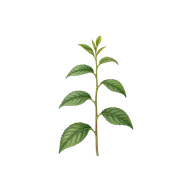



Characters marked “recorded” are for Khair itself; the rest are typical of the Mimosaceae family.
Flower & fruit characters
- Inflorescence
- Head
- Fruit
- Legume


Typical of the Mimosaceae family — flowering plants only; individual species can differ.
Khair in India
This thorny tree, known as खैर (Hindi), மாரோடம் (Tamil), కాచు (Telugu), ಅಕೇಶಿಯ ಕ್ಯಾಟೆಚು (Kannada), കരിങ്ങാലി (Malayalam), खैर (Marathi), is the source of kattha (catechu), a familiar paan ingredient. Acacia catechu is found across Maharashtra, Rajasthan, Karnataka, Tamil Nadu, Gujarat, Uttarakhand, typically in dry deciduous forest.
Uses
Its heartwood is boiled down to produce kattha (catechu extract), used in paan and for tanning and dyeing, and the tree's hard, durable wood has been used for tool handles and construction.
How to Identify Khair
A thorny deciduous tree with feathery, bipinnate leaves and small paired spines at the leaf base. Small pale yellow flower spikes appear in the rainy season, followed by flat, thin, papery pods.
Frequently Asked Questions
- What is Black Cutch called in different Indian languages?
- खैर (Hindi); மாரோடம் (Tamil); కాచు (Telugu); ಅಕೇಶಿಯ ಕ್ಯಾಟೆಚು (Kannada); കരിങ്ങാലി (Malayalam); खैर (Marathi); খয়ের (Bengali).
- What is kattha?
- A reddish-brown extract boiled down from Acacia catechu heartwood, traditionally chewed as part of paan alongside betel leaf and areca nut.
- Is khair the same as regular acacia gum?
- No — khair is valued for its heartwood extract (kattha) and tannins, distinct from gum arabic, which comes from different Acacia species valued for their sap-derived gum.
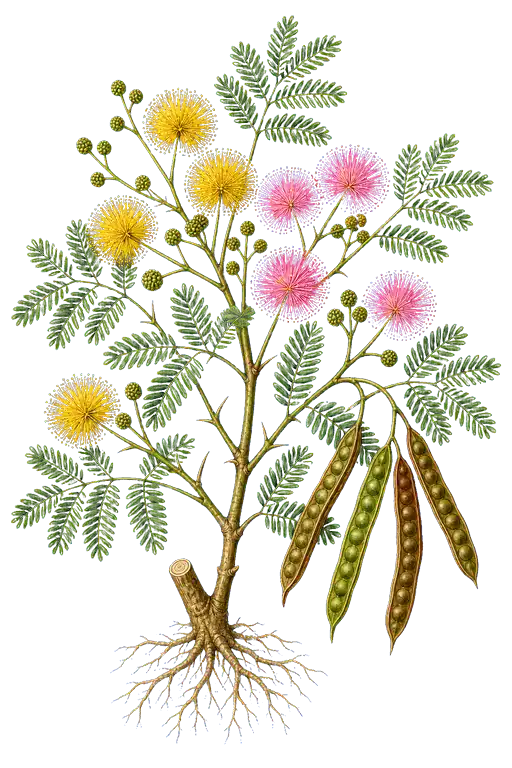
Mimosaceae
Mimosa/Acacia family
Khair belongs to the Mimosaceae family.
The illustration represents the family — not necessarily this exact species.
Explore the Mimosaceae familySnap it. Know it.
Point your camera at Khair or any plant and SASYA identifies it instantly — on-device, offline, and private.
Common plant problems
If you are starting from symptoms instead of a diagnosis, use the plant disease symptom checker to narrow the cause before treating.
All plant problem & care guidesMore in Mimosaceae
View all MimosaceaeSources: GBIF — Acacia catechu (India distribution & vernacular names) (CC BY 4.0) · Wikipedia — Acacia catechu (background/comprehension only) (CC BY-SA 4.0)