Droseraceae family
Sundew Family
3 catalogue species · Order Caryophyllales
The Droseraceae family (Sundew Family) is a botanical family placed in the order Caryophyllales. In the SASYA catalogue it spans 3 species. Its members are predominantly herbs. Several members are valued in traditional medicine. Familiar examples include Tropical Sundew and Shield Sundew.
Explore the species roster ↓Field identification keys
Compare several features together. These are typical family patterns; individual species can vary. Observe without tasting or handling unfamiliar plants.
- Stem cross-section
- Round
- Leaf arrangement
- Alternate
- Distinctive marker
- Leaves covered in sticky, glistening glandular hairs that curl inward to trap and digest insects; flowers held on a leafless stalk clear of the traps.
Familiar members: Kandulessa · Paamgaa · Mukhajali
Species in Droseraceae
3 of 3 species
Native status is regional. Range tags distinguish Kew WCVP dataset matches from individual reviews. Pet-filter records report no known toxicity to cats and dogs; some sources cover a genus or cultivar. Review the source context. Missing values are excluded, and no rating establishes suitability to eat or freedom from other hazards.
| Botanical name | Common & regional names | Origin & reviewed pet status |
|---|---|---|
| Drosera indica | Kandulessa Shield Sundew
+1 languages
| Native: India ↗︎ Range reviewIndividually reviewed range. Native status applies to the stated region. |
| Drosera peltata | Paamgaa Shield Sundew
| Not listed native: India ↗︎ Kew datasetKew WCVP dataset; accepted-name match. Dataset matching is separate from an individual regional review. Recorded worldwide native range: SE. Australia, New Zealand North I.. Not listed native does not establish introduction or absence from India. |
| Drosera burmanni | Mukhajali Tropical Sundew
+2 languages
| Native: Assam, India ↗︎ Kew datasetKew WCVP dataset; accepted-name match. Dataset matching is separate from an individual regional review. Recorded worldwide native range: Trop. & Subtrop. Asia to W. Pacific. |
Leaves covered in glistening, sticky-tipped glandular hairs that curl inward to trap and digest small insects landing on the glue-like droplets; regular, five-petalled flowers are held on a leafless stalk well clear of the sticky leaf traps below.
One of the plant kingdom's most active carnivores — the glandular hairs not only glue insects in place but visibly curl inward around trapped prey within minutes, drawing it toward the leaf's centre to digest.
Which Droseraceae species is this?
Answer what you can see and narrow it down to a single Droseraceae species.
To check whether a plant belongs to Droseraceae, compare the leaf arrangement, leaf type, flower symmetry, fruit type, and one distinctive marker together. A single feature can mislead; the family pattern is the combination.
Learn the full family-identification methodTypical leaf characters
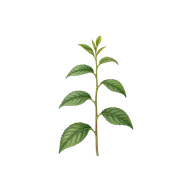 ArrangementAlternate
- TypeVariable
- MarginVariable
- VenationVariable
Characters typical of the family — individual species can vary.
Families that can look similar
Cactaceae
Compare against Cactaceae when the plant shares similar leaves, flowers, or fruit. Confirm by checking the full family pattern.
Compare CactaceaePolygonaceae
Compare against Polygonaceae when the plant shares similar leaves, flowers, or fruit. Confirm by checking the full family pattern.
Compare PolygonaceaeNepenthaceae
Compare against Nepenthaceae when the plant shares similar leaves, flowers, or fruit. Confirm by checking the full family pattern.
Compare NepenthaceaeAmaranthaceae
Compare against Amaranthaceae when the plant shares similar leaves, flowers, or fruit. Confirm by checking the full family pattern.
Compare AmaranthaceaeMeet Droseraceae in the field
Point your camera, explore possible matches and compare the field marks. Identification runs on your phone, offline and private.
Download SASYA — Free