
Amaranthaceae
Amaranth family
The amaranth family (now including the goosefoots/Chenopodiaceae), encompassing important grain crops (amaranth, quinoa), spinach (Spinacia), and beetroot (Beta). Many are adapted to arid, saline, or disturbed habitats. Flowers are small and inconspicuous, often with papery bracts.
Browse all 35 species ↓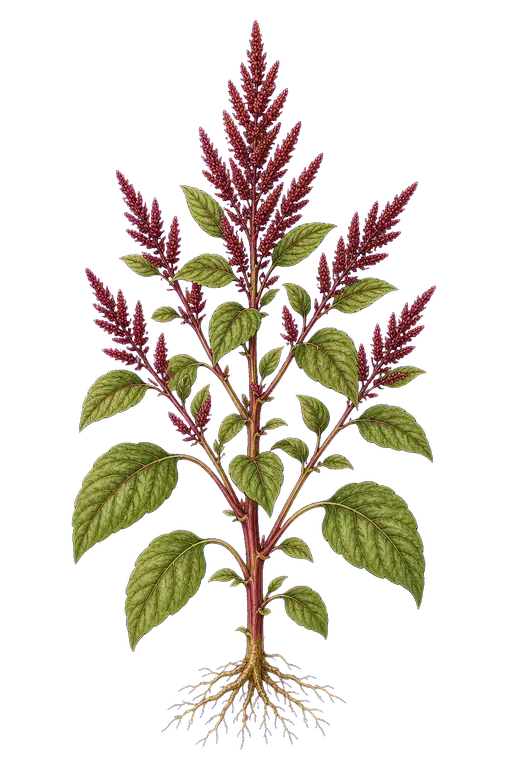
Small, petal-less flowers in dense clusters, each cupped by three often colourful, papery bracts.
Common, fast-growing weeds of disturbed soil — most are edible as a cooked leaf vegetable despite the weedy reputation.
Which Amaranthaceae species is this?
Answer what you can see and narrow it down to a single Amaranthaceae species.
How to recognise the Amaranthaceae family
- 01
Small flowers with scarious (papery) tepals
- 02
Often adapted to saline or dry conditions
- 03
Utricle or achene fruit; C4 photosynthesis common
To check whether a plant belongs to Amaranthaceae, compare the leaf arrangement, leaf type, flower symmetry, fruit type, and one distinctive marker together. A single feature can mislead; the family pattern is the combination.
Learn the full family-identification methodTypical leaf characters
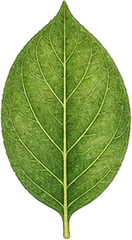
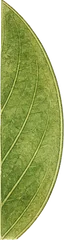
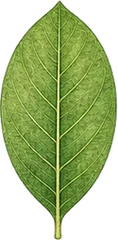
Characters typical of the family — individual species can vary.
Typical flower & fruit
- Flower symmetryActinomorphic (radially symmetrical)
- InflorescenceSpike
- FruitAchene
Typical of the family — flowering plants only; species can vary.
Notable members
Families that can look similar
Polygonaceae
Compare against Polygonaceae when the plant shares similar leaves, flowers, or fruit. Confirm by checking the full family pattern.
Compare PolygonaceaeAizoaceae
Compare against Aizoaceae when the plant shares similar leaves, flowers, or fruit. Confirm by checking the full family pattern.
Compare AizoaceaeNyctaginaceae
Compare against Nyctaginaceae when the plant shares similar leaves, flowers, or fruit. Confirm by checking the full family pattern.
Compare NyctaginaceaeChenopodiaceae
Compare against Chenopodiaceae when the plant shares similar leaves, flowers, or fruit. Confirm by checking the full family pattern.
Compare ChenopodiaceaeAll 35 species in AMARANTHACEAE
- Devil's Horse Whip, Prickly Chaff Flower, Rough ChaffAchyranthes aspera
- Devil's HorsewhipAchyranthes aspera var. argentea
- Ox KneeAchyranthes bidentata
- Pink Chaff FlowerAchyranthes coynei
- Kapok BushAerva javanica
- PolpolaAerva lanata
- Node Flower AllmaniaAllmania nodiflora var. aspera
- CalicoplantAlternanthera bettzickiana
- Smooth Joy WeedAlternanthera paronychioides
- Aligator WeedAlternanthera philoxeroides
- Khaki WeedAlternanthera pungens
- Joy Weed; Dwarf Copperleaf; Sessile Joy WeedAlternanthera sessilis
- SanguinariaAlternanthera tenella
- Red AmaranthAmaranthus cruentus
- Purple AmaranthAmaranthus graecizans subsp. thellungianus
- Smooth PigweedAmaranthus hybridus
- Spiny Amaranth, Prickly AmaranthAmaranthus spinosus
- Joseph's CoatAmaranthus tricolor
- Slender Amaranth, Wild AmaranthAmaranthus viridis
- Silverspiked Cock's Comb, Quail GrassCelosia argentea
- Quail GrassCelosia cristata
- Small Prickly Chaff-Flower PlantCyathula prostrata
- False AmaranthDigera muricata
- Prostrate Globe-AmaranthGomphrena celosioides
- GomphrenaGomphrena globosa
- Mountain KnotgrassOuret lanata
- Forest BurrPupalia lappacea
- SpinachSpinacia oleracea
- Achyranthes aspera var. rubrofusca
- Aerva sanguinolenta
- Allmania nodiflora
- Allmania nodiflora var. procumbens
- Alternanthera ficoidea
- Celosia polygonoides
- Trichurus monsoniae
Identify any Amaranthaceae plant in seconds
Point your camera and SASYA names the species on-device — offline and private.
Download SASYA — Free