
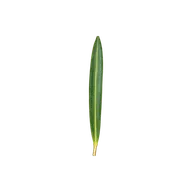
As recorded for Kandulessa
Drosera indica
Kandulessa / Shield Sundew അക്കരപ്പുത
Malayalam name · See all regional names ↓
- Habit
- Herb
- Found in India
- Maharashtra, Telangana, Karnataka & more
- Flowering
- August-March
Kandulessa in regional languages
Find the name you know, then compare it with the botanical profile. Columns list recorded aliases; they are not paired translations. A Latin spelling appears only when it is present in the source record.
| Language | Regional script | Recorded Latin spelling |
|---|---|---|
| Hindi | Not recorded | Kandulessa |
| Kannada | Not recorded | hula hidaka, krimi naashini |
| Malayalam | അക്കരപ്പുത | Drosera indica |
| Marathi | गवती दवबिंदू | Gawati davbindu |
See the original recorded names
- Hindi
- Kandulessa
- Kannada
- hula hidaka, krimi naashini
- Malayalam
- അക്കരപ്പുത, Drosera indica
- Marathi
- गवती दवबिंदू Gawati davbindu, गवती दवबिंदू
Ecology & growing context
- Reviewed native status
- Native to India within a wider range across tropical and southern Africa, Madagascar, and tropical and subtropical Asia. Source ↗︎
Individually reviewed range. Native status applies to the stated region.
- Recorded habitat
- Wet areas in moist deciduous forests, also in the plains
- Small plant. Big appetite.
- An insect-eating plant of wet ground and watersides. A completely different kind of aggressive green to get curious about. It doesn’t just grow; it hunts. Admire its evolutionary grit, but respect its boundaries. Field source ↗︎
- Explore nearby plants
- Maharashtra →Telangana →Karnataka →
Occurrence records show where a plant has been recorded; they do not establish that it is native there. Compare local habitat and growing conditions when choosing plants for a garden.
How to identify Kandulessa
Identify Kandulessa by combining habit, leaf characters, flower or fruit details, location, and its family pattern. Do not rely on one feature alone.
- Look for a herb habit.
- Check the distinctive field mark: Narrow erect sticky leaves.
- Confirm leaf shape: Linear.
- In season, compare flowering and fruiting time: August-March.
- In India, compare location records such as Maharashtra, Telangana, Karnataka, Goa and nearby regions.
- Confirm it sits within the Droseraceae family pattern, then compare close relatives before deciding it is Kandulessa.
Plant Details
- Scientific name
- Drosera indica
- Genus
- Drosera
- Family
- Droseraceae
- Habit
- Herb
- Habitat
- Wet areas in moist deciduous forests, also in the plains
- Native to
- Tropical Africa, Tropical Asia, Australia
- Distribution
- India, Tropical Africa, Madagascar, Sri Lanka, Japan, New Guinea, Australia
- Found in India
- Maharashtra, Telangana, Karnataka, Goa, Kerala, Puducherry, Tamil Nadu, Chhattisgarh, West Bengal
- Flowering & fruiting
- August-March
- Conservation status
- Least Concern (LC)
Leaf characters
- Leaf shape
- LinearrecordedVery long and narrow with roughly parallel sides.“Leaves are narrowly linear, up to 10 cm [4 in] long with 1–1.5 cm [0.4–0.6 in] pedicels.” — Wikipedia, CC BY-SA 4.0
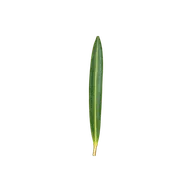
Typical of the family
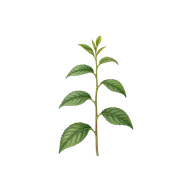
Characters marked “recorded” are for Kandulessa itself; the rest are typical of the Droseraceae family.
About Kandulessa
Shield Sundew (Drosera indica) is a herb in the Droseraceae family. In India it has been recorded in Maharashtra, Telangana, Karnataka and 6 other states. It grows in wet areas in moist deciduous forests, also in the plains. Flowering and fruiting run from August to March.
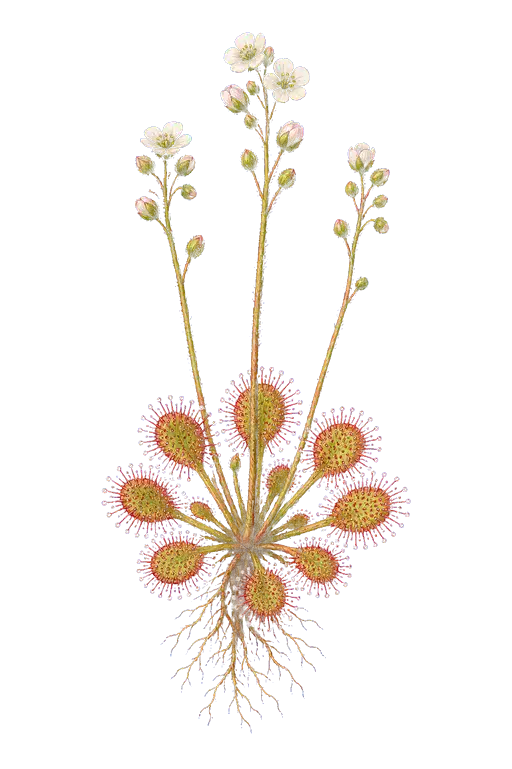
Droseraceae
Sundew Family
Kandulessa belongs to the Droseraceae family.
The illustration represents the family — not necessarily this exact species.
Explore the Droseraceae familySnap it. Know it.
Point your camera at Kandulessa or any plant and SASYA identifies it instantly — on-device, offline, and private.
Common plant problems
If you are starting from symptoms instead of a diagnosis, use the plant disease symptom checker to narrow the cause before treating.
All plant problem & care guides