
Cactaceae
Cactus family
Stem succulents with areoles (specialized spine-bearing structures). Leaves reduced to spines. All true cacti are native to the Americas but many are naturalized in India.
Browse all 14 species ↓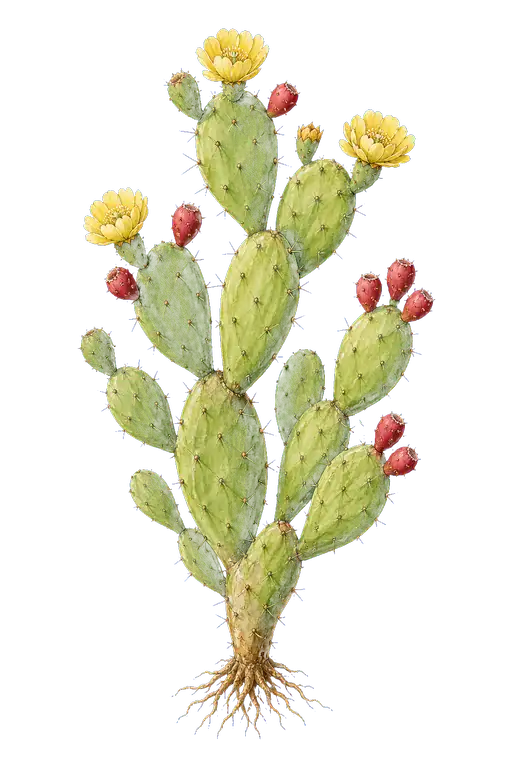
Succulent, usually leafless stems studded with areoles — small cushion-like pads that are the only place spines, hairs, and new growth emerge from; large, many-petalled radial flowers open directly from an areole and ripen into a fleshy berry.
Nearly all photosynthesis happens in the green, water-storing stem itself since true leaves are reduced to spines — an extreme adaptation to arid conditions found almost nowhere else in the plant kingdom.
Which Cactaceae species is this?
Answer what you can see and narrow it down to a single Cactaceae species.
How to recognise the Cactaceae family
- 01
Leaf arrangement: absent/reduced
- 02
Leaf type: succulent
- 03
Growth forms: succulent/shrub/tree
- 04
Inflorescence: solitary
- 05
Fruit: berry
To check whether a plant belongs to Cactaceae, compare the leaf arrangement, leaf type, flower symmetry, fruit type, and one distinctive marker together. A single feature can mislead; the family pattern is the combination.
Learn the full family-identification methodTypical leaf characters

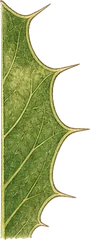
Characters typical of the family — individual species can vary.
Typical flower & fruit
- Flower symmetryActinomorphic (radially symmetrical)
- InflorescenceSolitary
- FruitBerry
Typical of the family — flowering plants only; species can vary.
Notable members
Families that can look similar
Chenopodiaceae
Compare against Chenopodiaceae when the plant shares similar leaves, flowers, or fruit. Confirm by checking the full family pattern.
Compare ChenopodiaceaePolygonaceae
Compare against Polygonaceae when the plant shares similar leaves, flowers, or fruit. Confirm by checking the full family pattern.
Compare PolygonaceaeSolanaceae
Compare against Solanaceae when the plant shares similar leaves, flowers, or fruit. Confirm by checking the full family pattern.
Compare SolanaceaeAnnonaceae
Compare against Annonaceae when the plant shares similar leaves, flowers, or fruit. Confirm by checking the full family pattern.
Compare AnnonaceaeAll 14 species in CACTACEAE
- Fairy Castle CactusAcanthocereus tetragonus
- Column Cactus, Hedge CactusCereus peruvianus
- Easter Lily CactusEchinopsis oxygona
- Belle De Nuit, Lady Of The Night, Night-Blooming Cereus, Queen Of The NightEpiphyllum oxypetalum
- Moon CactusGymnocalycium mihanovichii
- Benecke Fishhook CactusMammillaria beneckei
- Gold Lace CactusMammillaria elongata
- Thimble CactusMammillaria vetula
- Cocheneal PlantOpuntia cochenillifera
- Prickly PearOpuntia dillenii
- Common Prickly-Pear, OpuntiaOpuntia elatior
- Rose CactusPereskia grandiflora
- Crab CactusSchlumbergera truncata
- Night-Blooming CereusSelenicereus undatus
Identify any Cactaceae plant in seconds
Point your camera and SASYA names the species on-device — offline and private.
Download SASYA — Free