

Ashwagandha
Withania somnifera
Also known as Winter Cherry
- Habit
- Undershrub
- Found in India
- Maharashtra, Rajasthan, Punjab & more
- Flowering
- April-December
How to identify Ashwagandha
Identify Ashwagandha by combining habit, leaf characters, flower or fruit details, location, and its family pattern. Do not rely on one feature alone.
- Look for a undershrub habit.
- Confirm leaf shape: Elliptic.
- Confirm flower colour: Green.
- Confirm fruit type: Papery-husked berry.
- Use the leaf pattern: alternate leaf arrangement, simple leaves, entire leaf margins, pinnate venation.
- In season, compare flowering and fruiting time: April-December.
- In India, compare location records such as Maharashtra, Rajasthan, Punjab, Gujarat and nearby regions.
Plant Details
- Scientific name
- Withania somnifera
- Genus
- Withania
- Family
- Solanaceae
- Habit
- Undershrub
- Distribution
- India, Sri Lanka, Mediterranean, Canary Islands, South Africa
- Found in India
- Maharashtra, Rajasthan, Punjab, Gujarat, Karnataka, Uttar Pradesh, Tamil Nadu, Uttarakhand, Delhi, Himachal Pradesh, West Bengal, Andhra Pradesh, Haryana, Kerala, Madhya Pradesh, Telangana, Bihar, Chandigarh, Jammu & Kashmir
- Flowering & fruiting
- April-December
- Conservation status
- Not Evaluated (NE)
Leaf characters
- Leaf shape
- EllipticrecordedWidest at the middle, tapering evenly at both ends.“Leaves are dull green, elliptic, and usually up to 10–12 cm (3.9–4.7 in) long.” — Wikipedia, CC BY-SA 4.0
Typical of the family
- Arrangement
- Alternate
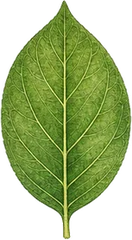

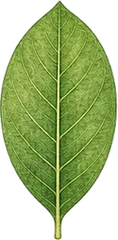
Characters marked “recorded” are for Ashwagandha itself; the rest are typical of the Solanaceae family.
Flower & fruit characters
- Flower colour
- GreenrecordedGreen or greenish“The flowers are small, green, and bell-shaped.” — Wikipedia, CC BY-SA 4.0
- Fruit type
- Papery-husked berryrecorded
Typical of the family
- Flower symmetry
- Actinomorphic (radially symmetrical)
- Inflorescence
- Cyme
- Fruit
- Berry
Characters marked “recorded” are for Ashwagandha itself; the rest are typical of the Solanaceae family — flowering plants only.
Local Names
- Hindi
- असगन्ध Asgandh, अश्वगंधा Ashwagandha, हयगंधा Haya-Gandha,अश्वगंधा ashvagandha
- Nepali
- अश्वगन्धा Ashwagandhaa, अश्वगन्धा
- Bengali
- অশ্বগন্ধা Asbagandha, অশ্বগন্ধা
- Tamil
- அசையு Acaiyu, அசுவகந்தி Acuvakanti, அசுவம் Acuvam, அமுக்கிரா
- Telugu
- అశ్వగంధ Ashwagandha, దొమ్మడోలు Dommadolu, పెన్నేరు Penneru, అశ్వగంధ
- Kannada
- ಅಂಗರ ಬೇರು/ಗಡ್ಡೆ Angara beru/gadde, ಅಶ್ವಗಂಧ Ashwagandha, ಹಿರೇಮದ್ದಿನ ಗಿಡ Hiremaddina gida, ಅಶ್ವಗಂಧ
- Malayalam
- അമുക്കുരം Amukkuram, പേവെട്ടി Pevetti, അമുക്കുരം
- Marathi
- अश्वगंधा Ashwagandha, आस्कंद Askanda, ढोरगुंज Dorgunja, अश्वगंध
- Sanskrit
- अश्वगन्धा
- Gujarati
- અશ્વગંધા
- Odia
- ଅଶ୍ୱଗନ୍ଧା
- Punjabi
- ਅਸ਼ਵਗੰਧਾ
- Assamese
- অশ্বগন্ধা
- Urdu
- اشوگندھا
Ashwagandha in India
Ashwagandha is perhaps the best-known herb in modern Ayurveda — असगन्ध Asgandh (Hindi), அசையு Acaiyu (Tamil), అశ్వగంధ Ashwagandha (Telugu), ಅಂಗರ ಬೇರು/ಗಡ್ಡೆ Angara beru/gadde (Kannada), അമുക്കുരം Amukkuram (Malayalam), अश्वगंधा Ashwagandha (Marathi), the 'Indian winter cherry'. Withania somnifera is recorded across Maharashtra, Rajasthan, Punjab, Gujarat, Uttar Pradesh, Karnataka, on dry, disturbed and waste ground.
Uses
Its roots are a classical Ayurvedic rasayana, traditionally taken as a powder for vitality and stress — an attributed traditional use described for information, not medical advice. It is now cultivated commercially, with Madhya Pradesh and Rajasthan major producers.
How to Identify Ashwagandha
A short, greyish, finely hairy shrublet with dull oval leaves. Small bell-shaped greenish-yellow flowers are followed by tiny orange-red berries enclosed in a papery, lantern-like husk (like a small Cape gooseberry) — a clue to its nightshade family.
Frequently Asked Questions
- What is Winter Cherry called in different Indian languages?
- असगन्ध Asgandh (Hindi); அசையு Acaiyu (Tamil); అశ్వగంధ Ashwagandha (Telugu); ಅಂಗರ ಬೇರು/ಗಡ್ಡೆ Angara beru/gadde (Kannada); അമുക്കുരം Amukkuram (Malayalam); अश्वगंधा Ashwagandha (Marathi); অশ্বগন্ধা Asbagandha (Bengali); અશ્વગંધા (Gujarati); ଅଶ୍ୱଗନ୍ଧା (Odia); ਅਸ਼ਵਗੰਧਾ (Punjabi); अश्वगन्धा (Sanskrit).
- What part of ashwagandha is used?
- Chiefly the root, dried and powdered, which is a classical Ayurvedic rasayana; this is a traditional, attributed use and not medical advice.
- Where is ashwagandha grown in India?
- It grows wild on dry waste ground and is cultivated commercially, especially in Madhya Pradesh and Rajasthan.
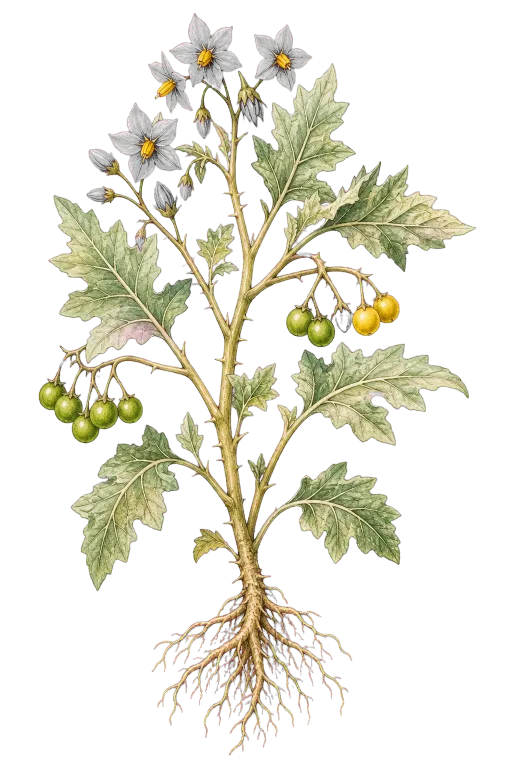
Solanaceae
Nightshade/Tomato family
Ashwagandha belongs to the Solanaceae family.
The illustration represents the family — not necessarily this exact species.
Explore the Solanaceae familySnap it. Know it.
Point your camera at Ashwagandha or any plant and SASYA identifies it instantly — on-device, offline, and private.
Common plant problems
If you are starting from symptoms instead of a diagnosis, use the plant disease symptom checker to narrow the cause before treating.
All plant problem & care guidesMore in Solanaceae
View all SolanaceaeSources: GBIF — Withania somnifera (India distribution & vernacular names) (CC BY 4.0) · iNaturalist — Withania somnifera (regional names, India observations) (CC BY 4.0) · Wikipedia — Withania somnifera (background/comprehension only) (CC BY-SA 4.0)