
Vanda / Checkered Vanda
Vanda tessellata
- Habit
- Herb
- Found in India
- Maharashtra, Madhya Pradesh, West Bengal & more
- Flowering
- March-October
How to identify Vanda
Identify Vanda by combining habit, leaf characters, flower or fruit details, location, and its family pattern. Do not rely on one feature alone.
- Look for a herb habit.
- Check the distinctive field mark: Large flat tessellated (checkered) blue-purple flowers.
- Confirm leaf shape: Linear.
- Confirm flower colour: Purple.
- Confirm flower arrangement: Raceme.
- In season, compare flowering and fruiting time: March-October.
- In India, compare location records such as Maharashtra, Madhya Pradesh, West Bengal, Chhattisgarh and nearby regions.
Plant Details
- Scientific name
- Vanda tessellata
- Genus
- Vanda
- Family
- Orchidaceae
- Habit
- Herb
- Habitat
- Dry and moist deciduous forests and also in the plains
- Habitat type
- Forest
- Native to
- Indian subcontinent
- Distribution
- India, Sri Lanka, Myanmar, Nepal, China, Himalayas
- Found in India
- Maharashtra, Madhya Pradesh, West Bengal, Chhattisgarh, Andhra Pradesh, Gujarat, Odisha, Tamil Nadu, Karnataka, Jharkhand, Rajasthan, Telangana, Kerala, Uttarakhand, Arunachal Pradesh, Bihar, Goa, Uttar Pradesh
- Flowering & fruiting
- March-October
- Conservation status
- Not Evaluated (NE)
Leaf characters
- Leaf shape
- LinearrecordedVery long and narrow with roughly parallel sides.“Leaves succulent, 15–20 cm, long, linear, recurved, complicate.” — Wikipedia, CC BY-SA 4.0
Typical of the family
- Arrangement
- Alternate


Characters marked “recorded” are for Vanda itself; the rest are typical of the Orchidaceae family.
Flower & fruit characters
- Flower colour
- PurplerecordedPurple or violet
- Flower arrangement
- RacemerecordedIndividual stalked flowers arranged along a central stem, opening from bottom to top.“Flowers in 6–10 flowered racemes, reaching with the peduncle 15–25 cm long.” — Wikipedia, CC BY-SA 4.0
- Fruit type
- CapsulerecordedA dry fruit from a fused ovary that splits open at maturity to release seeds.“Capsules 7.5–9 cm long, narrowly clavate-oblong with acute ribs.” — Wikipedia, CC BY-SA 4.0
Typical of the family
- Flower symmetry
- Zygomorphic (bilaterally symmetrical)
- Inflorescence
- Raceme
- Fruit
- Capsule
Characters marked “recorded” are for Vanda itself; the rest are typical of the Orchidaceae family — flowering plants only.
Local Names
- Hindi
- वांदा Vanda, Nai, Perasara
- Nepali
- हरचुर Harachur, गाइतबारे Gaaitabaare
- Bengali
- রাস্না Rasna, নই Nai, দেশি রাস্না
- Tamil
- Kantanakuli, Vanda tessellata, vanda roxburghii
- Telugu
- Chittiveduri, Kanapabandanika
- Kannada
- Bandanike, Badanika, Vandaka
- Malayalam
- മരവഞ്ചി
- Marathi
- Aasna, रास्ना
About Vanda
Checkered Vanda (Vanda tessellata) is a herb in the Orchidaceae family. In India it has been recorded in Maharashtra, Madhya Pradesh, West Bengal and 15 other states. It grows in dry and moist deciduous forests and also in the plains. Flowering and fruiting run from March to October.

Orchidaceae
Orchid family
Vanda belongs to the Orchidaceae family.
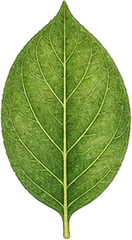
The illustration represents the family — not necessarily this exact species.
Explore the Orchidaceae familySnap it. Know it.
Point your camera at Vanda or any plant and SASYA identifies it instantly — on-device, offline, and private.
Common plant problems
If you are starting from symptoms instead of a diagnosis, use the plant disease symptom checker to narrow the cause before treating.
All plant problem & care guides