

Imli / Tamarind Tree
Tamarindus indica
Also known as Indian Date, Sampalok
- Habit
- Tree
- Found in India
- Maharashtra, Tamil Nadu, Telangana & more
- Flowering
- April-December
How to identify Imli
Identify Imli by combining habit, leaf characters, flower or fruit details, location, and its family pattern. Do not rely on one feature alone.
- Look for a tree habit.
- Check the distinctive field mark: Iconic tamarind pods with sour edible pulp.
- Confirm leaf arrangement: Opposite.
- Confirm leaf type: Pinnately compound.
- Confirm flower colour: Yellow.
- Confirm flower arrangement: Raceme.
- Use the leaf pattern: alternate leaf arrangement, compound leaves, entire leaf margins, pinnate venation.
Plant Details
- Scientific name
- Tamarindus indica
- Genus
- Tamarindus
- Family
- Caesalpiniaceae
- Habit
- Tree
- Habitat
- Planted
- Habitat type
- Cultivated
- Native to
- Tropical Africa
- Distribution
- Tropics of the World
- Found in India
- Maharashtra, Tamil Nadu, Telangana, Karnataka, Rajasthan, Kerala, Andhra Pradesh, West Bengal, Gujarat, Odisha, Chhattisgarh, Goa, Assam, Madhya Pradesh, Puducherry, Uttar Pradesh, Jharkhand, Mizoram, Uttarakhand, Haryana, Delhi, Arunachal Pradesh, Bihar, Daman & Diu, Himachal Pradesh, Meghalaya, Nagaland
- Flowering & fruiting
- April-December
- Conservation status
- Not Evaluated (NE)
Leaf characters
- Leaf arrangement
- OppositerecordedTwo leaves arise from the stem at the same point, facing each other.“The pinnate leaves with opposite leaflets give a billowing effect in the wind.” — Wikipedia, CC BY-SA 4.0
- Leaf type
- Pinnately compoundrecordedLeaflets are arranged in rows along a central stalk, like a feather.“The evergreen leaves are alternately arranged and paripinnately compound.” — Wikipedia, CC BY-SA 4.0
- Leaf shape
- EllipticrecordedWidest at the middle, tapering evenly at both ends.“The leaflets are bright green, elliptic-ovular, pinnately veined, and less than 15 centimetres (6 inches) in length.” — Wikipedia, CC BY-SA 4.0
- Leaf venation
- PinnaterecordedOne main central vein with side veins branching off it, like a feather.“The leaflets are bright green, elliptic-ovular, pinnately veined, and less than 15 centimetres (6 inches) in length.” — Wikipedia, CC BY-SA 4.0

Typical of the family

Characters marked “recorded” are for Imli itself; the rest are typical of the Caesalpiniaceae family.
Flower & fruit characters
- Flower colour
- Yellowrecorded
- Flower arrangement
- RacemerecordedIndividual stalked flowers arranged along a central stem, opening from bottom to top.“Flowers are 2.5 cm (1 in) wide, five-petalled, borne in small racemes, and yellow with orange or red streaks.” — Wikipedia, CC BY-SA 4.0
Typical of the family
- Flower symmetry
- Zygomorphic (bilaterally symmetrical)
- Inflorescence
- Raceme
- Fruit
- Legume
Characters marked “recorded” are for Imli itself; the rest are typical of the Caesalpiniaceae family — flowering plants only.
Local Names
- Hindi
- Imli इमली,इमली imali, amla, amlika
- Nepali
- तित्री
- Bengali
- Amli, তেঁতুল
- Tamil
- Puli புளி, புளி, புளிய மரம்
- Telugu
- Chinta, చింతచెట్టు, చింత
- Kannada
- ಹುಣಿಸೆ Hunise, ಹುಣಸೆ Hunase, ಹುಣುಸೆ Hunuse
- Malayalam
- പുളി, പുളിമരം, വാളൻപുളി
- Marathi
- Chinch, चिंच
- Sinhala
- සියඹලා
Imli in India
The tamarind is a huge, long-lived shade tree and a kitchen essential — Imli इमली (Hindi), Puli புளி (Tamil), Chinta (Telugu), ಹುಣಿಸೆ Hunise (Kannada), പുളി (Malayalam), Chinch (Marathi). Tamarindus indica is planted along roads and in villages across Maharashtra, Tamil Nadu, Telangana, Karnataka, Rajasthan, Kerala, many trees standing for a century or more.
Uses
The sour pulp of the pod is indispensable in Indian cooking — in sambar, rasam, chutneys and tamarind rice — and is sold pressed into blocks. The pulp also has attributed uses in traditional remedies, and the dense wood is prized for tools and boards.
How to Identify Imli
A large evergreen with a broad crown and fine, feathery leaves of many small paired leaflets that fold at night. The brittle, brown, knobbly pods hold sticky dark-brown pulp around hard seeds. Pale yellow flowers with red veining appear before the pods.
Frequently Asked Questions
- What is Tamarind Tree called in different Indian languages?
- Imli इमली (Hindi); Puli புளி (Tamil); Chinta (Telugu); ಹುಣಿಸೆ Hunise (Kannada); പുളി (Malayalam); Chinch (Marathi); Amli (Bengali).
- What is tamarind (imli) used for in cooking?
- Its sour pulp is a primary souring agent in South Indian dishes like sambar and rasam, in tamarind rice, and in chutneys and sauces across India.
- How long does a tamarind tree live?
- Tamarind is very long-lived — village and roadside trees commonly survive well over a hundred years.
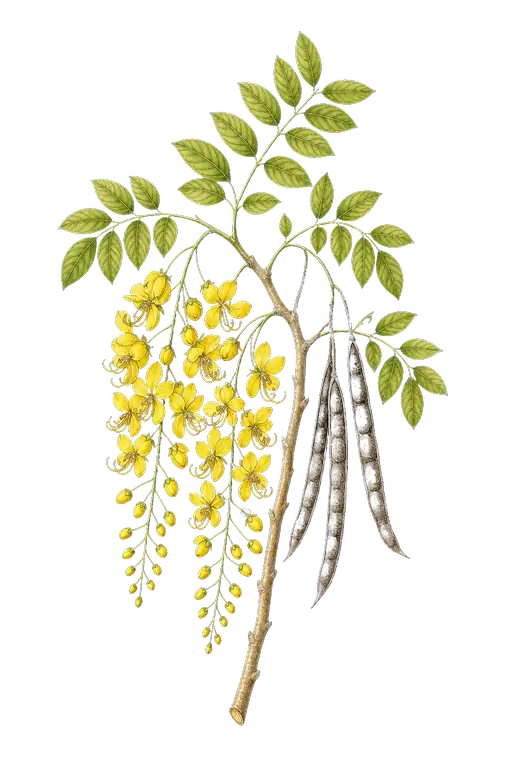
Caesalpiniaceae
Senna family
Imli belongs to the Caesalpiniaceae family.
The illustration represents the family — not necessarily this exact species.
Explore the Caesalpiniaceae familySnap it. Know it.
Point your camera at Imli or any plant and SASYA identifies it instantly — on-device, offline, and private.
Common plant problems
If you are starting from symptoms instead of a diagnosis, use the plant disease symptom checker to narrow the cause before treating.
All plant problem & care guidesMore in Caesalpiniaceae
View all CaesalpiniaceaeSources: GBIF — Tamarindus indica (India distribution & vernacular names) (CC BY 4.0) · iNaturalist — Tamarindus indica (regional names, India observations) (CC BY 4.0) · Wikipedia — Tamarindus indica (background/comprehension only) (CC BY-SA 4.0)