

Chandni / East Indian Rosebay
Tabernaemontana divaricata
Also known as Pinwheel Flower
- Habit
- Tree
- Found in India
- Maharashtra, Kerala, Tamil Nadu & more
- Flowering
- Throughout the year
How to identify Chandni
Identify Chandni by combining habit, leaf characters, flower or fruit details, location, and its family pattern. Do not rely on one feature alone.
- Look for a tree habit.
- Check the distinctive field mark: Double pinwheel-shaped white flowers, popular ornamental.
- Confirm flower colour: White.
- Use the leaf pattern: opposite leaf arrangement, simple leaves, entire leaf margins, pinnate venation.
- In season, compare flowering and fruiting time: Throughout the year.
- In India, compare location records such as Maharashtra, Kerala, Tamil Nadu, Assam and nearby regions.
- Confirm it sits within the Apocynaceae family pattern, then compare close relatives before deciding it is Chandni.
Plant Details
- Scientific name
- Tabernaemontana divaricata
- Genus
- Tabernaemontana
- Family
- Apocynaceae
- Habit
- Tree
- Native to
- India
- Distribution
- Tropics of the World
- Found in India
- Maharashtra, Kerala, Tamil Nadu, Assam, West Bengal, Rajasthan, Telangana, Andhra Pradesh, Goa, Madhya Pradesh, Odisha, Meghalaya, Uttar Pradesh, Karnataka, Bihar, Delhi, Gujarat, Chhattisgarh, Tripura, Uttarakhand, Haryana, Mizoram, Puducherry, Himachal Pradesh, Jammu & Kashmir, Jharkhand, Arunachal Pradesh, Punjab
- Flowering & fruiting
- Throughout the year
- Conservation status
- Not Evaluated (NE)
Leaf characters
- Arrangement
- Opposite
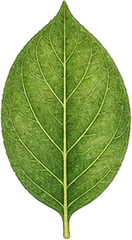


Characters marked “recorded” are for Chandni itself; the rest are typical of the Apocynaceae family.
Flower & fruit characters
- Flower colour
- Whiterecorded
Typical of the family
- Flower symmetry
- Actinomorphic (radially symmetrical)
- Inflorescence
- Cyme
- Fruit
- Follicle
Characters marked “recorded” are for Chandni itself; the rest are typical of the Apocynaceae family — flowering plants only.
Local Names
- Hindi
- चांदनी Chandni, पिण्डपुष्प Pindpushp, पिण्डीतगर Pinditagar
- Nepali
- चाँदनी Chaandanee, कागते फूल Kaagate Phool, चाँदनी फूल
- Bengali
- বেলি Beli, জংলি টগর Jongali Tagar, কাঠ মালতি Katha Malati, জংলি টগর বা কাঠ মালতি
- Tamil
- நந்தியார்வட்டை Nandiarvattai, நந்தியாவட்டை
- Telugu
- గ్రంధితగరపు Grandhitagarapu, నందివర్ధనము Nandivardhanamu, నంద్యవారిఁయము Nandyavaraimu, నందివర్ధనం
- Kannada
- ಮದ್ದರಸ ಗಿಡ Maddarasa Gida, ನಂದಿಬಟ್ಟಲು Nandibattalu, ನಂದ್ಯಾವರ್ತ Nandyaavarta
- Malayalam
- നന്ത്യാർവട്ടം Nandyaarvattam, തഗരം Tagaram, നന്ത്യാർവട്ടം
- Marathi
- अनंत Ananta, नांदेट Nandeta, तगर Tagara
- Gujarati
- ચાંદની, ટગર
- Sinhala
- වතු සුද්ද
Chandni in India
Chandni is a tidy evergreen shrub covered in pure white pinwheel flowers — चांदनी Chandni (Hindi), நந்தியார்வட்டை Nandiarvattai (Tamil), గ్రంధితగరపు Grandhitagarapu (Telugu), ಮದ್ದರಸ ಗಿಡ Maddarasa Gida (Kannada), നന്ത്യാർവട്ടം Nandyaarvattam (Malayalam), अनंत Ananta (Marathi). Tabernaemontana divaricata is planted across Maharashtra, Kerala, Assam, Tamil Nadu, West Bengal, Andhra Pradesh in gardens and especially temple yards.
Uses
It is grown as an ornamental and temple-garden shrub, and its scentless (or faintly evening-scented) white flowers are used in worship and offerings. The plant has attributed uses in traditional medicine, but its milky sap marks it as a member of the dogbane family — ornamental, not edible.
How to Identify Chandni
A neat, much-branched evergreen with glossy, dark, pointed leaves and milky sap. The flowers are white, five-petalled and characteristically pinwheel-shaped, single or frilly-double, borne for much of the year.
How to Keep It Healthy in India
Chandni is a forgiving garden shrub if it gets light, drainage and room for its roots. In Indian homes it does well in large pots, compound borders and temple gardens with morning sun or bright filtered light; deep shade gives leaves but fewer flowers. Keep the soil evenly moist in summer, then reduce watering during long wet monsoon spells so the pot is not constantly soggy. A compost top-dress before the monsoon and a light flowering feed during active growth are enough. Prune after flowering flushes to keep the plant bushy and remove weak inner stems that invite scale insects and mealybugs.
Frequently Asked Questions
- What is East Indian Rosebay called in different Indian languages?
- चांदनी Chandni (Hindi); நந்தியார்வட்டை Nandiarvattai (Tamil); గ్రంధితగరపు Grandhitagarapu (Telugu); ಮದ್ದರಸ ಗಿಡ Maddarasa Gida (Kannada); നന്ത്യാർവട്ടം Nandyaarvattam (Malayalam); अनंत Ananta (Marathi); বেলি Beli (Bengali); ચાંદની (Gujarati).
- Why is chandni planted near temples?
- Its clean white pinwheel flowers are used in worship and offerings, and the tidy evergreen shrub flowers for much of the year, making it a popular temple-garden plant.
- Does crape jasmine have a scent?
- The flowers are largely scentless by day, sometimes faintly fragrant in the evening — it is grown more for its look than its smell.
- How do I get more flowers on chandni?
- Give it brighter light, avoid waterlogged soil, prune lightly after flowering, and feed modestly during warm active growth rather than using heavy nitrogen fertiliser.
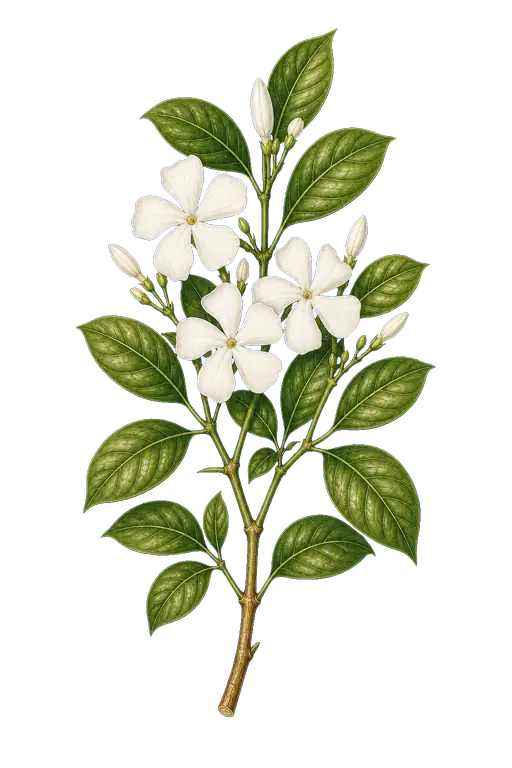
Apocynaceae
Dogbane family
Chandni belongs to the Apocynaceae family.
The illustration represents the family — not necessarily this exact species.
Explore the Apocynaceae familySnap it. Know it.
Point your camera at Chandni or any plant and SASYA identifies it instantly — on-device, offline, and private.
Common plant problems
If you are starting from symptoms instead of a diagnosis, use the plant disease symptom checker to narrow the cause before treating.
All plant problem & care guidesMore in Apocynaceae
View all ApocynaceaeSources: GBIF — Tabernaemontana divaricata (India distribution & vernacular names) (CC BY 4.0) · iNaturalist — Tabernaemontana divaricata (regional names, India observations) (CC BY 4.0) · Wikipedia — Tabernaemontana divaricata (background/comprehension only) (CC BY-SA 4.0)