Bhurat / Turkey Berry
Solanum torvum
Also known as Devil's Fig
- Habit
- Shrub
- Found in India
- Kerala, Karnataka, Tamil Nadu & more
- Flowering
- Throughout the year
How to identify Bhurat
Identify Bhurat by combining habit, leaf characters, flower or fruit details, location, and its family pattern. Do not rely on one feature alone.
- Look for a shrub habit.
- Confirm leaf arrangement: Opposite.
- Confirm leaf shape: Ovate.
- Confirm flower colour: White.
- Confirm flower arrangement: Corymb.
- In season, compare flowering and fruiting time: Throughout the year.
- In India, compare location records such as Kerala, Karnataka, Tamil Nadu, Maharashtra and nearby regions.
Plant Details
- Scientific name
- Solanum torvum
- Genus
- Solanum
- Family
- Solanaceae
- Habit
- Shrub
- Habitat
- Degraded forests and also in the plains
- Habitat type
- Forest
- Native to
- Pantropical
- Distribution
- Naturalized in Tropics
- Found in India
- Kerala, Karnataka, Tamil Nadu, Maharashtra, West Bengal, Mizoram, Telangana, Andhra Pradesh, Assam, Uttarakhand, Sikkim, Odisha, Arunachal Pradesh, Meghalaya, Goa, Tripura, Chhattisgarh, Gujarat, Manipur, Puducherry, Madhya Pradesh, Rajasthan, Andaman & Nicobar Islands, Haryana, Himachal Pradesh, Jammu & Kashmir, Jharkhand, Nagaland, Uttar Pradesh
- Flowering & fruiting
- Throughout the year
- Conservation status
- Not Evaluated (NE)
Leaf characters
- Leaf arrangement
- OppositerecordedTwo leaves arise from the stem at the same point, facing each other.“The leaves are opposite or one per node, broadly ovate with the border entire or deeply lobed.” — Wikipedia, CC BY-SA 4.0
- Leaf shape
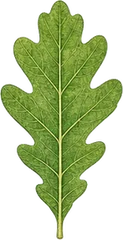
- OvaterecordedEgg-shaped, broader near the base.“The leaves are opposite or one per node, broadly ovate with the border entire or deeply lobed.” — Wikipedia, CC BY-SA 4.0
- Leaf margin
- LobedrecordedThe edge is divided into rounded or pointed sections that don't reach the midrib.“The leaves are opposite or one per node, broadly ovate with the border entire or deeply lobed.” — Wikipedia, CC BY-SA 4.0
Typical of the family
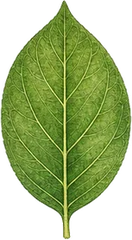
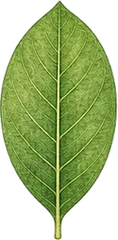
Characters marked “recorded” are for Bhurat itself; the rest are typical of the Solanaceae family.
Flower & fruit characters
- Flower colour
- Whiterecorded
- Flower arrangement
- CorymbrecordedA flat-topped cluster where outer flower stalks are longer than inner ones.“The flowers are white, tubular with 5 pointed lobes, and grouped in corymbiform cymes.” — Wikipedia, CC BY-SA 4.0
- Fruit type
- BerryrecordedA fleshy fruit with seeds embedded directly in the pulp, no central stone.“The fruits are berries that grow in clusters of tiny green spheres (ca.” — Wikipedia, CC BY-SA 4.0
Typical of the family
- Flower symmetry
- Actinomorphic (radially symmetrical)
- Inflorescence
- Cyme
- Fruit
- Berry
Characters marked “recorded” are for Bhurat itself; the rest are typical of the Solanaceae family — flowering plants only.
Local Names
- Hindi
- Bhurat, Bhankatiya
- Nepali
- सेतो विही Seto Bihi, ठुलो विहीं Thulo Bihin, कचेर Kacher
- Bengali
- Tita bagoon, তিত বেগুন
- Tamil
- சுண்டைக்காய் Sundaikkai, சுண்டை
- Telugu
- Kottuvastu, ఉస్తికాయలు
- Kannada
- ಚುಂಡೆ Chunde, ಚಿಟ್ಟಬದನೆ Chittabadane, ಕಾಡುಸೊಂಡೆ Kaadu sonde
- Malayalam
- Anachunda, ആനച്ചുണ്ട
- Marathi
- Marang
About Bhurat
Turkey Berry (Solanum torvum) belongs to the Solanaceae family, where it grows as a shrub. In India it has been recorded in Kerala, Karnataka, Tamil Nadu and 26 other states. It grows in degraded forests and also in the plains. It flowers and fruits through much of the year.
Uses
It is grown for parts that are eaten and long used in traditional medicine. Those medicinal uses are traditional attributions, not medical advice.
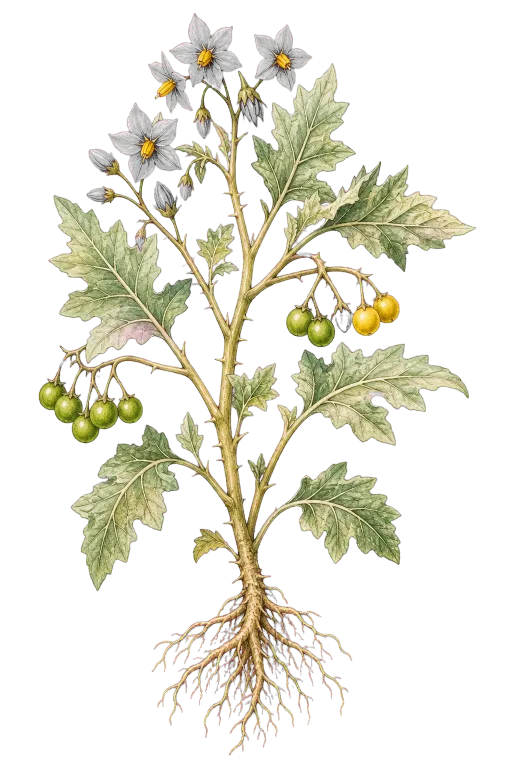
Solanaceae
Nightshade/Tomato family
Bhurat belongs to the Solanaceae family.
The illustration represents the family — not necessarily this exact species.
Explore the Solanaceae familySnap it. Know it.
Point your camera at Bhurat or any plant and SASYA identifies it instantly — on-device, offline, and private.
Common plant problems
If you are starting from symptoms instead of a diagnosis, use the plant disease symptom checker to narrow the cause before treating.
All plant problem & care guides