
Mokoi / Black Nightshade
Solanum nigrum
Also known as Apple Of Sodom, American Black Nightshade, Common Nightshade
- Habit
- Herb
- Found in India
- Uttar Pradesh, Uttarakhand, Maharashtra & more
- Flowering
- Throughout the year
How to identify Mokoi
Identify Mokoi by combining habit, leaf characters, flower or fruit details, location, and its family pattern. Do not rely on one feature alone.
- Look for a herb habit.
- Confirm flower colour: White.
- Confirm fruit type: Berry.
- Use the leaf pattern: alternate leaf arrangement, simple leaves, toothed leaf margins, pinnate venation.
- In season, compare flowering and fruiting time: Throughout the year.
- In India, compare location records such as Uttar Pradesh, Uttarakhand, Maharashtra, West Bengal and nearby regions.
- Confirm it sits within the Solanaceae family pattern, then compare close relatives before deciding it is Mokoi.
Plant Details
- Scientific name
- Solanum nigrum
- Genus
- Solanum
- Family
- Solanaceae
- Habit
- Herb
- Habitat
- Degraded moist deciduous forest and also waste places
- Native to
- Old World tropics
- Distribution
- Cosmopolitan
- Found in India
- Uttar Pradesh, Uttarakhand, Maharashtra, West Bengal, Karnataka, Rajasthan, Gujarat, Jammu & Kashmir, Punjab, Tamil Nadu, Himachal Pradesh, Assam, Delhi, Kerala, Bihar, Madhya Pradesh, Arunachal Pradesh, Chhattisgarh, Haryana, Manipur, Nagaland, Odisha, Sikkim
- Flowering & fruiting
- Throughout the year
- Conservation status
- Not Evaluated (NE)
Leaf characters
- Arrangement
- Alternate
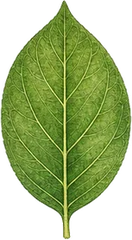
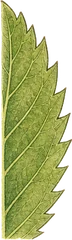
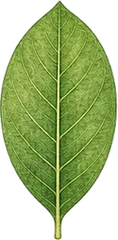
Characters marked “recorded” are for Mokoi itself; the rest are typical of the Solanaceae family.
Flower & fruit characters
- Flower colour
- Whiterecorded
- Fruit type
- BerryrecordedA fleshy fruit with seeds embedded directly in the pulp, no central stone.“The berry is mostly 6 to 8 mm (0.24 to 0.31 in) in diameter, dull black or purple-black.” — Wikipedia, CC BY-SA 4.0
Typical of the family
- Flower symmetry
- Actinomorphic (radially symmetrical)
- Inflorescence
- Cyme
- Fruit
- Berry
Characters marked “recorded” are for Mokoi itself; the rest are typical of the Solanaceae family — flowering plants only.
Local Names
- Hindi
- Mokoi मोकोय
- Tamil
- மணதக்காளி Manatakkali
- Telugu
- Kasaka
- Kannada
- ಕಾಕಿ Kaaki, ಕಾಚಿ Kaachi ಗಣಿಕೆ Ganike, ಬೆಲ್ಲಗಣಿಕೆ Bellaganike
- Malayalam
- Mulaku-thakkali
- Marathi
- Laghukavali
Mokoi in India
Makoy is a common small herb of gardens and waste ground whose ripe berries are eaten — Mokoi मोकोय (Hindi), மணதக்காளி Manatakkali (Tamil), Kasaka (Telugu), ಕಾಕಿ Kaaki (Kannada), Mulaku-thakkali (Malayalam), Laghukavali (Marathi). Solanum nigrum is recorded across Uttar Pradesh, Uttarakhand, Maharashtra, West Bengal, Punjab, Karnataka, springing up on cultivated and disturbed soil.
Uses
The fully ripe black berries are eaten as a wild fruit and the leaves cooked as a green (manathakkali keerai in the south), and the plant has attributed uses in Ayurveda. Important: unripe green berries and foliage contain solanine and can be toxic, so only fully ripe berries are eaten.
How to Identify Mokoi
A soft, bushy herb with oval, wavy-edged leaves. It carries small star-shaped white flowers with a yellow centre in little drooping clusters, followed by pea-sized berries that ripen from green to glossy black.
Frequently Asked Questions
- What is Black nightshade called in different Indian languages?
- Mokoi मोकोय (Hindi); மணதக்காளி Manatakkali (Tamil); Kasaka (Telugu); ಕಾಕಿ Kaaki (Kannada); Mulaku-thakkali (Malayalam); Laghukavali (Marathi).
- Are makoy berries safe to eat?
- Only the fully ripe black berries are eaten; unripe green berries and the leaves contain solanine and can be toxic, so avoid them.
- What is makoy used for?
- Ripe berries are eaten as a wild fruit, the leaves cooked as a green (manathakkali keerai), and the plant has attributed traditional uses in Ayurveda.
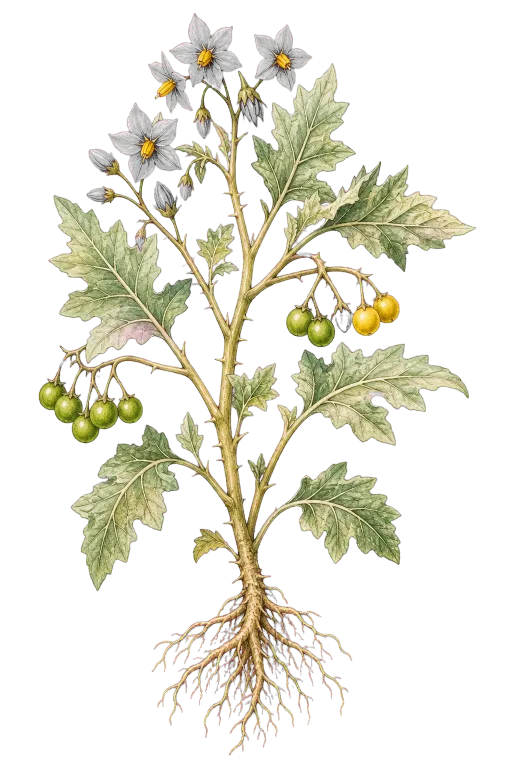
Solanaceae
Nightshade/Tomato family
Mokoi belongs to the Solanaceae family.
The illustration represents the family — not necessarily this exact species.
Explore the Solanaceae familySnap it. Know it.
Point your camera at Mokoi or any plant and SASYA identifies it instantly — on-device, offline, and private.
Common plant problems
If you are starting from symptoms instead of a diagnosis, use the plant disease symptom checker to narrow the cause before treating.
All plant problem & care guidesMore in Solanaceae
View all SolanaceaeSources: GBIF — Solanum nigrum (India distribution & vernacular names) (CC BY 4.0) · iNaturalist — Solanum nigrum (regional names, India observations) (CC BY 4.0) · Wikipedia — Solanum nigrum (background/comprehension only) (CC BY-SA 4.0)