
Chirpoti / American Black Nightshade
Solanum americanum
- Habit
- Herb
- Found in India
- Tamil Nadu, Telangana, Karnataka & more
- Flowering
- March-November
How to identify Chirpoti
Identify Chirpoti by combining habit, leaf characters, flower or fruit details, location, and its family pattern. Do not rely on one feature alone.
- Look for a herb habit.
- Confirm leaf arrangement: Alternate.
- Confirm leaf margin: Toothed.
- Confirm flower colour: White.
- Confirm fruit type: Berry.
- In season, compare flowering and fruiting time: March-November.
- In India, compare location records such as Tamil Nadu, Telangana, Karnataka, Kerala and nearby regions.
Plant Details
- Scientific name
- Solanum americanum
- Genus
- Solanum
- Family
- Solanaceae
- Habit
- Herb
- Habitat
- Degraded moist deciduous forest areas and riversides, also in the plains
- Found in India
- Tamil Nadu, Telangana, Karnataka, Kerala, Uttarakhand, Maharashtra, West Bengal, Assam, Andhra Pradesh, Rajasthan, Uttar Pradesh, Odisha, Arunachal Pradesh, Delhi, Jammu & Kashmir, Madhya Pradesh, Meghalaya, Mizoram, Bihar, Chhattisgarh, Himachal Pradesh, Puducherry, Punjab, Sikkim, Andaman & Nicobar Islands, Haryana, Jharkhand, Manipur
- Flowering & fruiting
- March-November
Leaf characters
- Leaf arrangement
- AlternaterecordedOne leaf per node, arranged in a spiral or zigzag up the stem.“The leaves are alternate on the branch, and vary greatly in size, up to 10 centimetres (4 in) long and 7 cm (3 in) broad, with a 4 cm (1+1⁄2 in) petiole and a coarsely wavy or toot” — Wikipedia, CC BY-SA 4.0
- Leaf margin
- ToothedrecordedA saw-like or jagged edge (serrate or dentate).“The leaves are alternate on the branch, and vary greatly in size, up to 10 centimetres (4 in) long and 7 cm (3 in) broad, with a 4 cm (1+1⁄2 in) petiole and a coarsely wavy or toot” — Wikipedia, CC BY-SA 4.0

Typical of the family
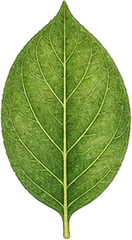
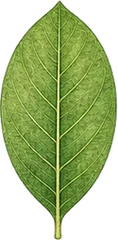
Characters marked “recorded” are for Chirpoti itself; the rest are typical of the Solanaceae family.
Flower & fruit characters
- Flower colour
- Whiterecorded
- Fruit type
- BerryrecordedA fleshy fruit with seeds embedded directly in the pulp, no central stone.“The fruit is a shiny black berry 5–10 millimetres (1⁄4–3⁄8 in) diameter, containing numerous small seeds.” — Wikipedia, CC BY-SA 4.0
Typical of the family
- Flower symmetry
- Actinomorphic (radially symmetrical)
- Inflorescence
- Cyme
- Fruit
- Berry
Characters marked “recorded” are for Chirpoti itself; the rest are typical of the Solanaceae family — flowering plants only.
Local Names
- Hindi
- चिर्पोटी Chirpoti, Gurkamai, Gurkkamai
- Tamil
- Kakachi
- Telugu
- Gajuchettu, Kaachi, Kaakamaachi
- Kannada
- ಕಾಕಿ Kaaki, ಕಾಚಿ Kaachi, ಬೆಲ್ಲಗಣಿಕೆ Bellaganike
- Malayalam
- Manatakkali, Nelen-tsjunda, Karimtakkali
- Marathi
- Kaamoni, Lalgooka batooli
About Chirpoti
American Black Nightshade (Solanum americanum) belongs to the Solanaceae family, where it grows as a herb. In India it has been recorded in Tamil Nadu, Telangana, Karnataka and 25 other states. It grows in degraded moist deciduous forest areas and riversides, also in the plains. Flowering and fruiting run from March to November.
Uses
Locally it is grown for parts that are eaten and long used in traditional medicine. Those medicinal uses are traditional attributions, not medical advice. Parts of this plant are reported as poisonous — treat it as unsafe to eat and wash your hands after handling.
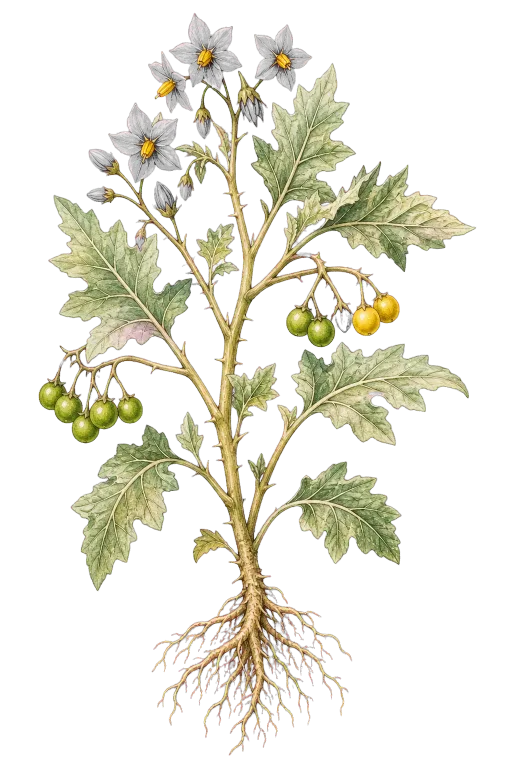
Solanaceae
Nightshade/Tomato family
Chirpoti belongs to the Solanaceae family.
The illustration represents the family — not necessarily this exact species.
Explore the Solanaceae familySnap it. Know it.
Point your camera at Chirpoti or any plant and SASYA identifies it instantly — on-device, offline, and private.
Common plant problems
If you are starting from symptoms instead of a diagnosis, use the plant disease symptom checker to narrow the cause before treating.
All plant problem & care guides