

As recorded for Adavi Tangadi
Senna surattensis
Adavi Tangadi / Sulphur Flowered Senna
Also known as Glaucous Cassia, Kolomona, Scrambled Egg Bush
- Habit
- Shrub
- Found in India
- Karnataka, Rajasthan, Gujarat & more
- Flowering
- August-January
Adavi Tangadi in regional languages
Find the name you know, then compare it with the botanical profile. Columns list recorded aliases; they are not paired translations. A Latin spelling appears only when it is present in the source record.
| Language | Regional script | Recorded Latin spelling |
|---|---|---|
| Kannada | Not recorded | Adavi tangadi, Bettadavare, Hannorpe |
| Marathi | Not recorded | Motha farvad |
See the original recorded names
- Kannada
- Adavi tangadi, Bettadavare, Hannorpe
- Marathi
- Motha farvad
Ecology & growing context
- Native status · Kew WCVP
- WCVP native range includes Andaman Is., Assam, India, West Himalaya Kew dataset ↗︎
Kew WCVP dataset; accepted-name match. Dataset matching is separate from an individual regional review. Recorded worldwide native range: Indian Subcontinent to Myanmar.
- Recorded habitat
- Common in almost all dry deciduous forests of the Eastern Ghats
- Explore nearby plants
- Karnataka →Rajasthan →Gujarat →
Occurrence records show where a plant has been recorded; they do not establish that it is native there. Compare local habitat and growing conditions when choosing plants for a garden.
How to identify Adavi Tangadi
Identify Adavi Tangadi by combining habit, leaf characters, flower or fruit details, location, and its family pattern. Do not rely on one feature alone.
- Look for a shrub habit.
- Check the distinctive field mark: Glaucous blue-green leaflets.
- Confirm leaf arrangement: Alternate.
- Confirm leaf type: Pinnately compound.
- Confirm flower colour: Yellow.
- In season, compare flowering and fruiting time: August-January.
- In India, compare location records such as Karnataka, Rajasthan, Gujarat, Maharashtra and nearby regions.
Plant Details
- Scientific name
- Senna surattensis
- Genus
- Senna
- Family
- Caesalpiniaceae
- Habit
- Shrub
- Habitat
- Common in almost all dry deciduous forests of the Eastern Ghats
- Habitat type
- Forest
- Native to
- Southeast Asia
- Distribution
- Extended to China, Formosa, Australia. Cultivated in Many countries
- Found in India
- Karnataka, Rajasthan, Gujarat, Maharashtra, Tamil Nadu, Telangana, Uttarakhand, Himachal Pradesh
- Flowering & fruiting
- August-January
- Conservation status
- Not Evaluated (NE)
Leaf characters
- Leaf arrangement
- AlternaterecordedOne leaf per node, arranged in a spiral or zigzag up the stem.“Leaves are compound, alternate.” — Wikipedia, CC BY-SA 4.0
- Leaf type
- Pinnately compoundrecordedLeaflets are arranged in rows along a central stalk, like a feather.“Leaflets number at 8-20, which are opposite, pinnately compound, paripinnate, upper leaflets are largest.” — Wikipedia, CC BY-SA 4.0
- Leaf shape
- ObovaterecordedEgg-shaped but broader near the tip rather than the base.“Leaflet blades are egg-shaped, oblong to obovate, 2.5-10 cm in length, 0.8-3 cm in width, base is round-shaped or cuneate, at times lopsided.” — Wikipedia, CC BY-SA 4.0
- Leaf surface
- PubescentrecordedCovered in short, soft hairs.“Petiole is 2-6.5 cm long, channeled, thinly hairy.” — Wikipedia, CC BY-SA 4.0
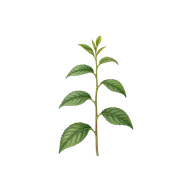

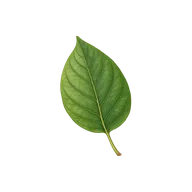

Typical of the family

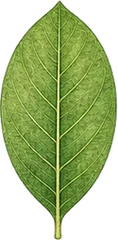
Characters marked “recorded” are for Adavi Tangadi itself; the rest are typical of the Caesalpiniaceae family.
Flower & fruit characters
- Flower colour
- Yellowrecorded
Typical of the family
- Inflorescence
- Raceme
- Fruit
- Legume
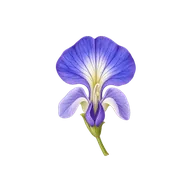
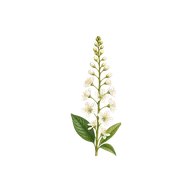
Characters marked “recorded” are for Adavi Tangadi itself; the rest are typical of the Caesalpiniaceae family — flowering plants only.
About Adavi Tangadi
Sulphur flowered Senna (Senna surattensis) belongs to the Caesalpiniaceae family, where it grows as a shrub. In India it has been recorded in Karnataka, Rajasthan, Gujarat and 5 other states. It grows in common in almost all dry deciduous forests of the Eastern Ghats. Flowering and fruiting run from August to January.
Uses
It is grown for parts that are eaten, planted as an ornamental and valued as a shade and avenue tree.
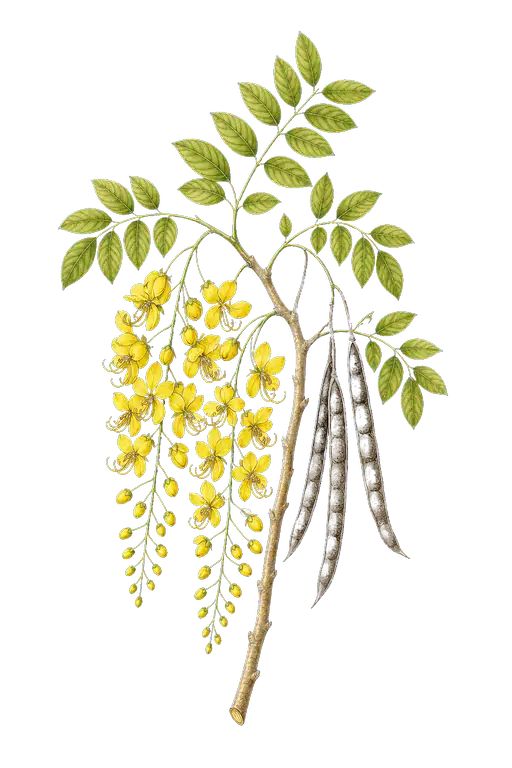
Caesalpiniaceae
Senna family
Adavi Tangadi belongs to the Caesalpiniaceae family.
The illustration represents the family — not necessarily this exact species.
Explore the Caesalpiniaceae familySnap it. Know it.
Point your camera at Adavi Tangadi or any plant and SASYA identifies it instantly — on-device, offline, and private.
Common plant problems
If you are starting from symptoms instead of a diagnosis, use the plant disease symptom checker to narrow the cause before treating.
All plant problem & care guides