
Kasaundi / Coffee Weed
Senna occidentalis
Also known as Negro Coffee, Stinking Weed, Coffee Senna, Foetid Senna, Septicweed
- Habit
- Undershrub
- Found in India
- Tamil Nadu, Kerala, Gujarat & more
- Flowering
- July-February
How to identify Kasaundi
Identify Kasaundi by combining habit, leaf characters, flower or fruit details, location, and its family pattern. Do not rely on one feature alone.
- Look for a undershrub habit.
- Check the distinctive field mark: Unpleasant smell when crushed (coffee weed).
- Confirm leaf type: Pinnately compound.
- Confirm leaf shape: Ovate.
- Confirm flower colour: Yellow.
- In season, compare flowering and fruiting time: July-February.
- In India, compare location records such as Tamil Nadu, Kerala, Gujarat, Karnataka and nearby regions.
Plant Details
- Scientific name
- Senna occidentalis
- Genus
- Senna
- Family
- Caesalpiniaceae
- Habit
- Undershrub
- Habitat
- Margins of scrub forests, occasional in low elevations and roadsides
- Native to
- Tropical America
- Distribution
- Pantropical weed
- Found in India
- Tamil Nadu, Kerala, Gujarat, Karnataka, Uttarakhand, Telangana, West Bengal, Uttar Pradesh, Andhra Pradesh, Maharashtra, Haryana, Rajasthan, Odisha, Delhi, Bihar, Punjab, Assam, Puducherry, Chandigarh, Chhattisgarh, Arunachal Pradesh, Himachal Pradesh, Jammu & Kashmir, Madhya Pradesh, Tripura
- Flowering & fruiting
- July-February
- Conservation status
- Not Evaluated (NE)
Leaf characters
- Leaf type
- Pinnately compoundrecordedLeaflets are arranged in rows along a central stalk, like a feather.“Its leaves are pinnate, 150–170 mm (5.9–6.7 in) long on a petiole 20–40 mm (0.79–1.57 in) long, with three to seven pairs of broadly elliptic to egg-shaped leaflets 50–70 mm (2.0–2” — Wikipedia, CC BY-SA 4.0
- Leaf shape
- OvaterecordedEgg-shaped, broader near the base.“Its leaves are pinnate, 150–170 mm (5.9–6.7 in) long on a petiole 20–40 mm (0.79–1.57 in) long, with three to seven pairs of broadly elliptic to egg-shaped leaflets 50–70 mm (2.0–2” — Wikipedia, CC BY-SA 4.0
Typical of the family
- Arrangement
- Alternate


Characters marked “recorded” are for Kasaundi itself; the rest are typical of the Caesalpiniaceae family.
Flower & fruit characters
- Flower colour
- Yellowrecorded
Typical of the family
- Flower symmetry
- Zygomorphic (bilaterally symmetrical)
- Inflorescence
- Raceme
- Fruit
- Legume
Characters marked “recorded” are for Kasaundi itself; the rest are typical of the Caesalpiniaceae family — flowering plants only.
Local Names
- Hindi
- Kasunda, Bari kasondi,कासौंदी kasaundi
- Nepali
- कसौडी Kasaudee, ताप्रे Taapre, चकमके Chakamake
- Bengali
- Kalkashunda, কলকাসুন্দা
- Tamil
- Nattam takarai, Payaverai, காசூந்தி
- Telugu
- Thangedu, కాసున్దీ, కసింద
- Kannada
- ಕಸಿಂದಿ Kasindi, ಕೋಲ್ತೊಗಚೆ Kolthogache, ಆನೆ ಚೊಗಟೆ Aane chogate, ಕಾಸುಂಡಿ
- Malayalam
- Mattantakara, കാസുണ്ടി, ഊളൻ തകര
- Marathi
- Ran-takda, Kasivda, Kasoda, कासुंदी
- Sanskrit
- कासुन्दी
- Gujarati
- કાસુંદિ
- Odia
- କାସୁନ୍ଦି
- Punjabi
- ਕਾਸੁੰਦੀ
- Assamese
- কাসুন্দি
- Urdu
- کاسندی
- Sinhala
- පැණි තෝර
About Kasaundi
Coffee Weed (Senna occidentalis) belongs to the Caesalpiniaceae family, where it grows as a low shrub. In India it has been recorded in Tamil Nadu, Kerala, Gujarat and 22 other states. It grows in margins of scrub forests, occasional in low elevations and roadsides. Flowering and fruiting run from July to February.
Uses
Parts of this plant are reported as poisonous — treat it as unsafe to eat and wash your hands after handling.
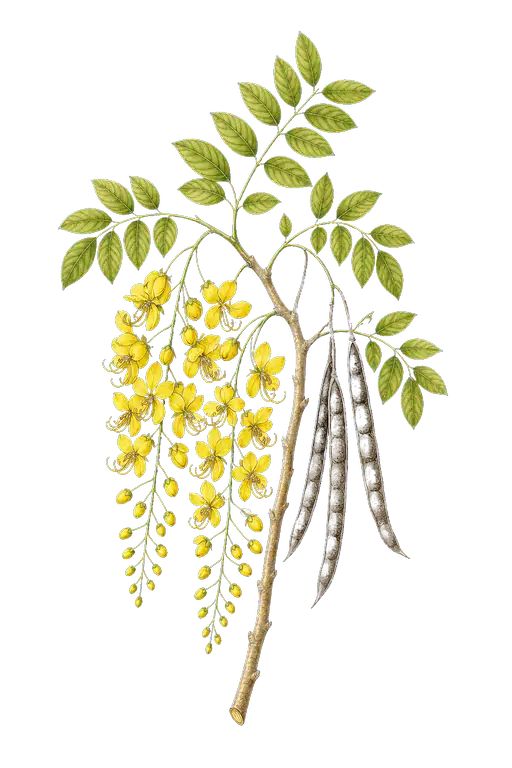
Caesalpiniaceae
Senna family
Kasaundi belongs to the Caesalpiniaceae family.
The illustration represents the family — not necessarily this exact species.
Explore the Caesalpiniaceae familySnap it. Know it.
Point your camera at Kasaundi or any plant and SASYA identifies it instantly — on-device, offline, and private.
Common plant problems
If you are starting from symptoms instead of a diagnosis, use the plant disease symptom checker to narrow the cause before treating.
All plant problem & care guides